






The Great Packing Showdown: Cubes vs. Bags
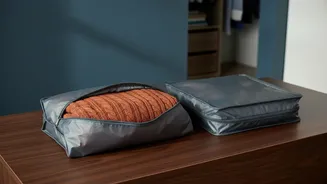
At first glance, packing cubes and compression bags seem to serve a similar purpose. Packing cubes are typically fabric, zippered pouches that function like portable drawers for your suitcase. They excel at sorting items—think one cube for shirts, another
for socks and underwear—making it easy to find what you need without disturbing your entire suitcase. Compression bags, on the other hand, are designed with one primary goal: to remove excess air and drastically reduce the volume of soft goods. These often come in two styles: bags that you manually roll to push air out through a one-way valve, or those that use a vacuum or pump to suck the air out. While both tools promise a more organized suitcase, their core functions are fundamentally different, and that difference becomes critical when dealing with winter apparel.
The Volume War: Why Air is the Enemy
Winter clothing's biggest packing sin isn't its weight, but its volume. Puffer jackets, down vests, wool sweaters, and fleece pullovers are all designed to trap air to keep you warm. While excellent for braving the cold, this trapped air makes them take up an enormous amount of luggage space. This is where compression bags decisively outperform packing cubes. By forcing out every bit of trapped air, a compression bag can shrink a bulky jacket or a stack of sweaters to a fraction of their original size. Packing cubes, even a type known as 'compression cubes' that feature an extra zipper for cinching, primarily provide structure and light compression. They don't remove air, meaning that puffy jacket will still remain, well, puffy. For winter gear, reducing this air-filled bulk is the key to creating significant space.
The Question of Organization
Advocates for packing cubes rightly praise their organizational prowess. Grouping outfits or clothing types into different cubes simplifies life on the road, allowing for quick unpacking and easy access. However, this advantage diminishes when packing large winter items. Your bulky ski jacket, a couple of thick sweaters, and thermal layers are already distinct items that are easy to identify. They don't benefit from being sorted into separate, smaller compartments in the same way that socks, T-shirts, and accessories do. Compression bags can still offer basic organization by separating clean clothes from dirty laundry or grouping all your sweaters into one compact, dense brick. While they may not offer the granular sorting of cubes, they provide enough separation for the types of items they are best suited for.
Addressing the Wrinkle Factor
A common concern with compression bags is that they can cause wrinkles. By tightly squeezing clothes, creases can set in. However, this is less of a problem with typical winter fabrics. Materials like down, fleece, and many knit sweaters are naturally resistant to wrinkling and often regain their shape quickly after being unpacked. Any minor creases on a fleece or inside a jacket lining are a small price to pay for the huge amount of space saved. For more delicate items like a cashmere sweater, careful folding before placing it in the bag can minimize deep-set wrinkles. In contrast, while packing cubes may cause fewer wrinkles, they do little to solve the primary problem of bulk, forcing you to pack fewer warm items or take a much larger suitcase.
The Verdict: The Right Tool for the Job
For the specific, challenging task of packing bulky winter clothing, compression bags are the clear winner. Their ability to physically remove air and dramatically shrink items like puffer jackets and woolens is a game-changer. While packing cubes are fantastic for organizing smaller items on summer holidays or business trips, they simply can’t compete on the front of pure volume reduction. The most seasoned travelers often employ a hybrid strategy: using one or two large compression bags for their bulkiest winter outerwear and sweaters, while using a couple of small packing cubes for their undergarments, socks, and other small accessories. This 'best of both worlds' approach pairs the unmatched space-saving power of compression bags with the organizational neatness of packing cubes.