


Understanding the Celestial Rain
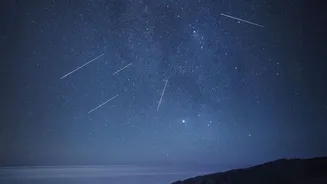
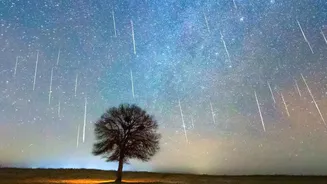
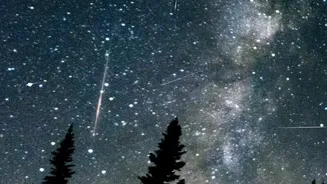
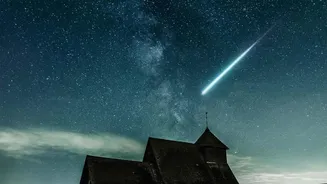
Meteor showers are cosmic light shows that occur when Earth passes through trails of debris left by comets or asteroids. These tiny particles, often no bigger than a grain of sand, burn up upon entering our atmosphere, creating the fleeting streaks we call
'shooting stars'. The Perseids, which peak in mid-August, originate from debris left by Comet Swift-Tuttle. They are known for their bright, fast meteors. The Orionids, which arrive in October, are born from the dust of the famous Halley's Comet. Both showers are annual events, offering reliable opportunities for breathtaking views.
Your 2026 Meteor Shower Calendar
Timing is everything. For 2026, the Perseid meteor shower peaked on the night of August 12-13 under ideal, moonless conditions, offering a fantastic display. If you missed it, don't worry—mark your calendar for next year. The upcoming main event is the Orionid meteor shower. This shower will be active from early October to early November. The peak night to watch is October 21-22, 2026. During its peak, you might see up to 20 meteors per hour in a perfectly dark sky. The best viewing window is typically after midnight and before dawn, when the radiant point in the constellation Orion is high in the sky.
Escape the City: Where to Watch
The key to a successful meteor shower viewing is escaping urban light pollution. The glow from cities can obscure all but the brightest meteors, reducing the spectacle to just a few faint streaks. For the best experience, head to non-metro areas where the sky is significantly darker. High-altitude cold deserts like Spiti Valley and Ladakh are considered premier stargazing destinations in India due to their clear, dry air and minimal light pollution. The Hanle Dark Sky Reserve in Ladakh is particularly renowned. Other excellent options include the vast, open expanse of the Rann of Kutch in Gujarat or desert camps around Jaisalmer in Rajasthan. Even hill stations like Coorg or remote spots in the Western Ghats can offer stunningly clear skies if you get far enough away from town centers.
A Viewer's Toolkit for a Perfect Night
You don't need any special equipment to enjoy a meteor shower—your eyes are the best tool for the job. Telescopes and binoculars have a narrow field of view, making them unsuitable for catching the random streaks of meteors. Instead, focus on comfort and patience. Find a wide-open space with an unobstructed view of the sky and lie on a blanket or a reclining chair. Give your eyes at least 20-30 minutes to fully adapt to the darkness; this means putting your phone away, as its bright screen will ruin your night vision. If you need a light, use a torch with a red filter, which is less disruptive to your eyes. Dress in warm layers, as even summer nights can get chilly when you're sitting still for hours.
Patience and Expectations
Watching a meteor shower is an exercise in patience. Meteors often appear in spurts, with lulls in between. Don't be discouraged if you don't see one immediately. The quoted rates of 20 (for Orionids) or 50-100 (for Perseids) meteors per hour are ideal figures for perfect, dark-sky conditions, viewed from a location where the radiant is directly overhead. Your actual count may be lower, but the experience is no less magical. The goal isn't just to count meteors, but to relax under the vastness of the night sky and witness a natural wonder. Look generally overhead rather than at one specific spot, as meteors can appear anywhere.