





First, Understand Their Fear
A pet’s fear of thunderstorms, sometimes called astraphobia, isn't just an overreaction. Their hearing is far more sensitive than ours, making the booming sounds of thunder truly deafening. Beyond the noise, experts suggest pets may also react to changes
in barometric pressure, the static electricity in the air, and the startling flashes of lightning. This multi-sensory assault can make them feel cornered and terrified. Recognizing the legitimacy of their fear is the first step toward helping them cope. The goal is not to eliminate a natural startle response, but to manage the overwhelming anxiety that follows.
Create a Soothing Safe Haven
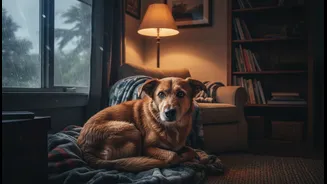
Before a storm ever begins, your pet needs a designated safe space where they can retreat. This shouldn't be a place you send them, but one they choose willingly. An ideal spot is an interior, windowless room like a closet or a bathroom, as this helps muffle sound and block lightning flashes. Make it comfortable with their favourite blankets, bedding, and a toy. If your dog is crate-trained, their crate can be their safe haven, but always leave the door open so they don't feel trapped. You can further enhance this sanctuary by playing soft music or using a white noise machine to mask the storm's sounds.
The Core Method: Desensitization
The most effective long-term solution is a training process called desensitization. This involves gradually exposing your pet to the sound of thunder in a controlled, safe environment. You can find thunderstorm audio recordings online. The key is to start with the volume so low it is barely audible—your pet should notice it but not react with fear. Hold short training sessions during calm weather, playing the sound for a few minutes. Over many sessions, you will slowly increase the volume, notch by notch. If your pet ever shows signs of anxiety, you have gone too fast. Lower the volume back to a comfortable level and proceed more slowly in future sessions. Patience is crucial for this process to work.
Add Positivity: Counter-Conditioning
Desensitization works best when paired with counter-conditioning—the process of changing your pet's fearful association with thunder into a positive one. While playing the thunder recording at a low, non-threatening volume, engage your pet in an activity they love. This could be offering high-value treats, playing their favorite game, or having a gentle grooming session. The goal is for your pet to learn that the distant rumble of thunder predicts something wonderful is about to happen. For example, every time a thunderclap sounds on the recording, give them a special treat they don't get any other time. This helps rewire their emotional response from fear to happy anticipation.
Helpful Tools and Calming Aids
Several products can supplement your training and provide immediate comfort. Anxiety wraps, such as the Thundershirt, apply gentle, constant pressure, which has a calming effect similar to swaddling an infant. Studies and owner reports suggest these can be effective for many pets. Pheromone diffusers or sprays, like Adaptil for dogs and Feliway for cats, mimic natural calming chemicals and can help reduce anxiety. There are also calming supplements containing ingredients like L-theanine or milk proteins, but it is always best to discuss these with a professional. For severe cases, veterinarians can prescribe anti-anxiety medications.
What to Do During a Storm
When a real storm hits, your priority is management. Your own calm demeanor is vital, as pets are highly attuned to our emotions. Avoid scolding or punishing your pet, as this will only increase their fear. Instead, speak in a soothing tone and let them stay near you if they wish, but don’t force interaction. Encourage them to go to their safe space. Close curtains to block lightning and use a TV, radio, or fan to help drown out the thunder. Offering a long-lasting chew or a food puzzle can also provide a welcome distraction.