






Why Your Shoes Are Part of the Problem
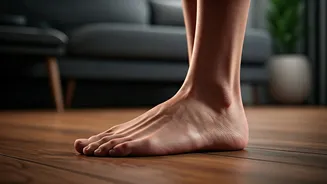
Our bodies are designed for movement over varied, natural terrain. However, most of us spend our days in cushioned, supportive shoes on hard, flat surfaces. While shoes protect our feet, they also act like a cast, preventing the hundreds of muscles, ligaments,
and nerves in our feet from doing their job. This sensory deprivation dulls proprioception—your body's awareness of its position in space. When your feet can't feel the ground properly, the signals sent up the kinetic chain to your ankles, knees, hips, and spine become distorted. The result? Your body compensates, often leading to slumped shoulders, a forward head position, and a misaligned pelvis—the hallmarks of poor posture.
The Magic of Grass and Uneven Ground
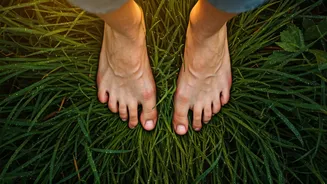
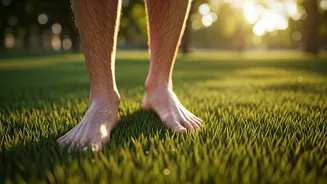
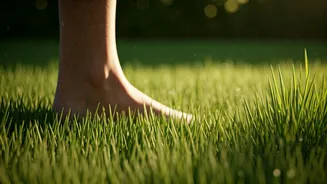
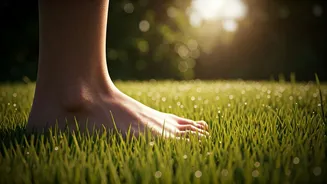
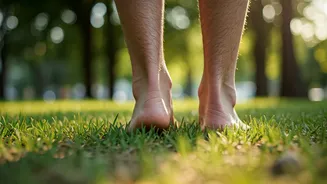
Stepping barefoot onto a soft, slightly uneven lawn is a powerful reset button for your neuromuscular system. Unlike a perfectly flat floor, the grass forces your feet to make constant, tiny micro-adjustments to maintain balance. This process awakens dormant muscles in your feet and ankles, strengthening them with every step. As the soles of your feet feel the texture of the grass and the gentle give of the soil, they send a flood of rich sensory information to your brain. This feedback helps your brain create a more accurate map of your body's alignment, allowing it to automatically correct imbalances and encourage a more upright, stable posture from the ground up.
Before You Begin: A Quick Safety Check
Before you kick off your shoes, take a moment to prepare. First, visually scan the area of the lawn you plan to use. Look for sharp objects like rocks, glass, or thorns. Choose a clean, well-maintained patch of grass. Second, if you're not used to being barefoot, start slowly. Begin with just five to ten minutes and gradually increase the duration as your feet adapt. It's normal to feel some initial tenderness, but you should not feel sharp pain. If you have a pre-existing foot condition, diabetes, or any issues with sensation in your feet, consult with a doctor or physiotherapist before you begin.
Drill 1: The Mindful Walk
This is the simplest yet most fundamental drill. Walk slowly and deliberately across the grass. Pay close attention to the sensation of your feet connecting with the earth. Notice how your heel makes initial contact, how your weight rolls through the midfoot, and how you push off with your toes. Try to land softly, as if you're trying to make no sound. Focus on keeping your head up, your shoulders relaxed and back, and your core gently engaged. This isn't about covering distance; it's about re-learning the natural mechanics of walking and tuning into the sensory feedback from the ground.
Drill 2: Toe Yoga and Grasping
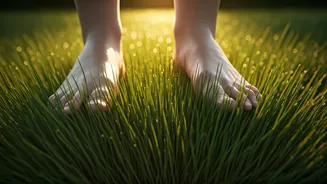
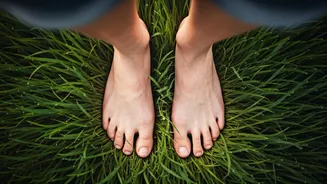
Modern shoes often squeeze our toes together, deactivating the crucial muscles that help create a stable base. To counteract this, practice 'toe yoga.' Stand with your feet flat on the grass and try to spread your toes as wide as possible, creating space between each one. Hold for a few seconds, then relax. Next, try to gently 'grasp' the grass with your toes, curling them down as if you're trying to pick something up. This action activates the intrinsic muscles on the underside of your foot, which are essential for supporting your arch. Repeat this spreading and grasping motion 10-15 times.
Drill 3: The Single-Leg Balance
Poor posture is often a symptom of instability. The single-leg balance is a fantastic way to challenge and improve it. Stand on one leg, keeping a slight bend in your standing knee. Focus your gaze on a fixed point in the distance to help you balance. You'll immediately feel the muscles in your foot and ankle working overtime to keep you stable on the uneven surface. Aim to hold for 30 seconds without letting your other foot touch the ground. If you wobble, that's a good thing—it means your stabiliser muscles are firing up. Switch legs and repeat three times on each side.