




The Challenge of the City Sky
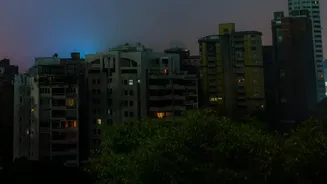
Living in a city comes with a constant glow. Streetlights, buildings, and cars create a phenomenon known as light pollution, a luminous blanket that washes out all but the brightest celestial objects. This makes traditional stargazing—once a simple matter
of looking up—a frustrating exercise in futility for millions. Identifying even prominent constellations can be nearly impossible when you can only see a handful of stars. This obstacle has historically meant that a true appreciation for the night sky was reserved for those who could travel far from urban centres. For most city residents, the universe above has remained largely invisible and unknown.
Your Smartphone, Your Planetarium
Enter the stargazing app. A new generation of mobile applications has turned the very device in your hand into a powerful and portable planetarium. By using your phone's built-in sensors, such as its GPS, compass, and gyroscope, these apps know your precise location and the exact direction you're pointing your device. This allows them to create a real-time, accurate map of the celestial sphere as seen from your vantage point. Apps like Star Walk 2, SkyView, and Stellarium Mobile have become indispensable tools, bridging the gap between the light-polluted urban environment and the vast cosmos beyond.
Augmented Reality Makes the Invisible Visible
The most transformative feature of these apps is augmented reality (AR). When you point your phone toward the sky, the app overlays a digital map directly onto your camera's live view. Suddenly, constellations are traced with lines, planets are labelled, and stars are identified by name, even if they are too faint for your naked eye to see through the urban haze. This technology doesn't just show you what's there; it helps you see the sky as it would appear without light pollution, effectively giving you a bionic view of the heavens. It removes the guesswork and turns a confusing scattering of dim lights into a navigable, understandable starscape.
An Astronomer in Your Pocket
Beyond simply identifying objects, these apps provide a wealth of knowledge that elevates the experience from mere observation to active learning. Tapping on any star, planet, or nebula can bring up detailed information about its distance, composition, history, and the mythology behind its name. Many apps feature a "time travel" function, allowing you to scroll forward or backward to see how the sky will look on a future night or how it appeared in the past. They also send notifications for celestial events like meteor showers, eclipses, or visible passes of the International Space Station (ISS), ensuring you never miss a must-see moment.
Practical Tools for Urban Viewing
Developers understand the specific challenges of urban astronomy and have built in features to help. Many apps include a special "night mode" that turns the screen red. This is crucial because red light has a minimal impact on your night vision, allowing your eyes to stay adapted to the dark while you consult your digital guide. Some applications also have settings that allow you to adjust the star magnitude, effectively filtering the map to show only the objects that should be visible from a light-polluted area. This helps manage expectations and focuses your attention on achievable targets, making for a more rewarding session.
Choosing Your Cosmic Guide
With numerous options available, finding the right app is a matter of preference. SkyView is often praised for its user-friendly interface and AR capabilities. Star Walk 2 is a favourite among beginners for its beautiful graphics and comprehensive data. Stellarium Mobile is revered for its realistic sky depiction and massive database, appealing to more serious hobbyists. Most offer free or "lite" versions, allowing you to experiment and discover which interface works best for you before committing. Regardless of your choice, each offers a powerful gateway to exploring the sky.