



The Human Packing List
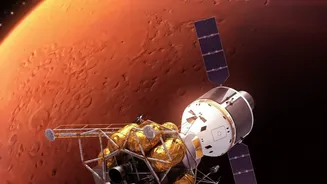
A human mission to Mars isn't a weekend trip; a round trip could last nearly three years. The basic needs for just one astronaut are staggering. An astronaut requires about 0.82 kilograms of oxygen, 1 kilogram of food, and 4 liters of water daily for drinking,
hygiene, and rehydrating meals. While advanced life support systems can recycle a significant portion of water and even generate oxygen from carbon dioxide, they aren't perfectly efficient and require mass, power, and maintenance. For a three-year mission with a crew of four, the food alone, without recycling, would amount to thousands of kilograms. For a five-year journey, that could be 3,000 kg of food per person. This doesn't even account for the packaging, which also becomes waste. This massive upfront weight is the single biggest hurdle, as every kilogram launched into space is incredibly expensive.
The Robotic Reality
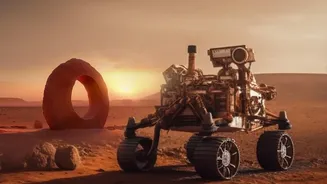
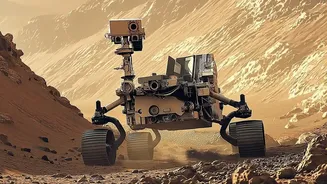
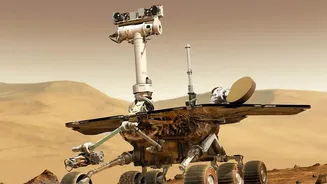
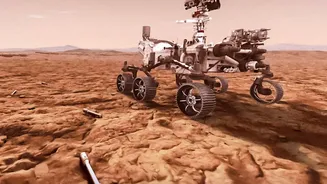
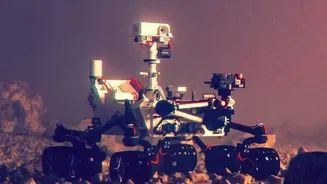
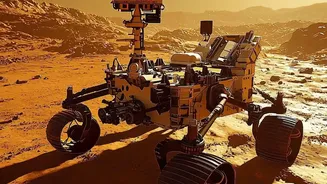
In stark contrast, a robotic rover's needs are elegantly simple. A machine like the Perseverance rover doesn't need to eat, drink, or breathe. Its primary requirement is electricity. Perseverance is powered by a Multi-Mission Radioisotope Thermoelectric Generator (MMRTG), which converts the heat from the decay of plutonium-238 into a steady flow of about 110 watts of electricity. This nuclear battery allows the rover to operate day and night, regardless of weather, for years. The entire power system weighs about 45 kilograms. The rover's other needs are commands from Earth and bandwidth to send back data. It is a marvel of efficiency, built to endure a hostile environment that would be instantly lethal to an unprotected human.
The Tyranny of Weight
The core of the human vs. robot debate is a concept known as the 'tyranny of the rocket equation'. In simple terms, every extra kilogram of payload requires more fuel to launch it, and that extra fuel itself has mass, which requires even more fuel to launch. It’s a compounding problem. The life support for a human crew—the food, water, oxygen, and the recycling systems—adds tens of thousands of kilograms to a mission. A robotic mission like Perseverance, weighing about 1,025 kilograms, cost around $2.7 billion. Estimates for a single human mission to Mars start at $100 billion and go much higher, largely because of the massive weight of the life support and crew habitat needed to keep astronauts safe and healthy.
The Case for Robots
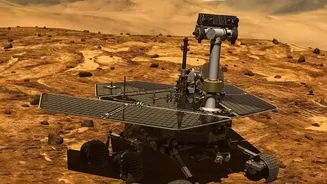
Beyond the cost and weight advantages, robots offer unparalleled safety and endurance. We can send them to regions that are too dangerous for human explorers. They can operate in extreme temperatures and radiation environments for years, far beyond their initial mission timelines. Rovers like Curiosity and Perseverance have completely reshaped our understanding of Mars, finding evidence of ancient water and potentially habitable environments, all while being controlled by scientists safely on Earth. The time delay in communication makes their progress slow, but it's steady, reliable, and poses no risk to human life.
The Case for Humans
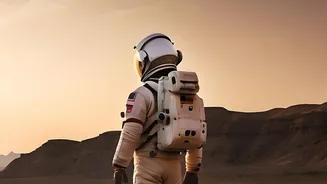
So why even consider sending people? The answer is speed and adaptability. A human geologist on Mars could accomplish in a single day what a rover might take a year to do. Humans can make intuitive leaps, solve unexpected problems, and perform complex tasks like drilling or climbing that are far beyond the capabilities of current robots. A rover must be painstakingly controlled, with every command carefully planned to avoid hazards. A human can walk around an obstacle, pick up a rock on a whim, and use their expertise to instantly recognize something important. Beyond the science, human exploration carries a profound inspirational and cultural value that a robot simply cannot match.
A Hybrid Future on Mars
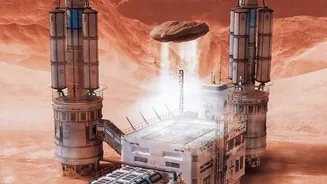
The future of Mars exploration likely isn't a choice between humans or robots, but a partnership. This is where concepts like In-Situ Resource Utilization (ISRU) come into play. The Perseverance rover carries an instrument called MOXIE, which has successfully demonstrated that it can produce oxygen from the thin carbon dioxide atmosphere of Mars. Future, scaled-up versions of this technology could produce breathable air for astronauts and, crucially, the oxygen needed for rocket propellant to return to Earth. This vision involves sending robotic missions first to prepare the site, producing and stockpiling water, fuel, and oxygen. When humans finally arrive, their landing site will be a pre-established base, significantly reducing the mass they need to bring from Earth.