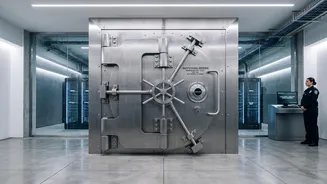








In what is being called the largest heist in history, crypto exchange Binance was hit by a staggering $6.3 billion theft. The event has sent shockwaves through the financial world, triggering a massive, ongoing effort to hunt down the culprits and recover
the digital fortune.
What Happened on October 29?
On the evening of October 29, 2026, hackers executed a swift and highly complex attack on Binance, the world's largest cryptocurrency exchange. In approximately 20 minutes, they siphoned away roughly $6.3 billion in various digital currencies, including Ethereum and Bitcoin, from the exchange's hot wallets across ten different blockchains. The attack's sophistication and speed stunned the industry. Initial reports from Binance suggested a compromised developer's laptop may have been the entry point, but later findings pointed to a more elaborate, four-month-long intrusion that gave attackers access to an internal system for signing transactions. The FBI has since officially attributed the attack to 'TraderTraitor', a hacking group linked to North Korea.
Binance's Immediate Response
Binance moved quickly to contain the damage. The exchange immediately suspended all withdrawals to prevent further losses. Working with stablecoin issuers like Tether and Circle, Binance and law enforcement partners were able to freeze approximately $2.8 to $3 billion of the stolen assets before the hackers could move them. Crucially, Binance's CEO Richard Teng publicly assured customers that their funds were safe and that the company would cover all losses from its own reserves and its Secure Asset Fund for Users (SAFU). By November 3, the exchange reported it had replenished 98% of the stolen tokens for its users.
The Global Hunt for Billions
The effort to track the remaining unfrozen billions is a high-tech cat-and-mouse game unfolding on the blockchain. Because most cryptocurrency transactions are recorded on a public, unchangeable ledger, investigators can follow the digital breadcrumbs. This process, known as blockchain analysis, is being led by firms like Chainalysis, TRM Labs, and Elliptic in collaboration with international law enforcement, including the FBI. The hackers are attempting to launder the funds by moving them through thousands of different wallets and using 'mixing' services, which blend stolen crypto with other funds to obscure its origin. Despite these tactics, every transaction leaves a trace, and investigators are meticulously mapping the flow of funds to identify points where they can be intercepted, typically when the thieves try to cash out at other exchanges.
Why Recovery Is So Difficult
While tracing the funds is possible, recovering them is a much greater challenge. Unlike traditional banking, cryptocurrency transactions are irreversible. Once the assets are in a wallet controlled by the hackers, they cannot be taken back without their private keys. The main hope for recovery lies in freezing the assets if they land in an account at a regulated, centralized exchange that requires customer identification (KYC). However, the hackers are sophisticated and patient, often letting funds sit for months or years before attempting to launder them in small amounts through decentralized platforms or less compliant exchanges. This makes the global coordination between exchanges and law enforcement absolutely critical to boxing the thieves in and seizing the assets.
A Test for the Crypto Industry
The historic heist is a major test for Binance and the broader crypto ecosystem. For its part, Binance's ability to quickly cover the massive loss and restore customer funds has been a key focus. The exchange began reopening withdrawals in phases on November 1, an action closely watched by the market. In the immediate aftermath, the platform saw significant outflows as spooked investors withdrew their holdings, though Binance reported that the activity was stabilizing. The incident has intensified calls for stronger security protocols and regulatory safeguards across the industry to prevent such attacks, which not only harm investors but also provide funding for sanctioned states like North Korea.