

More Than Just Magnification
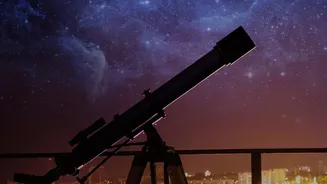
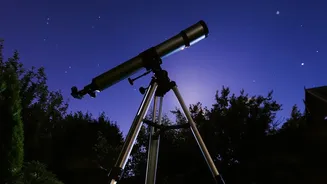
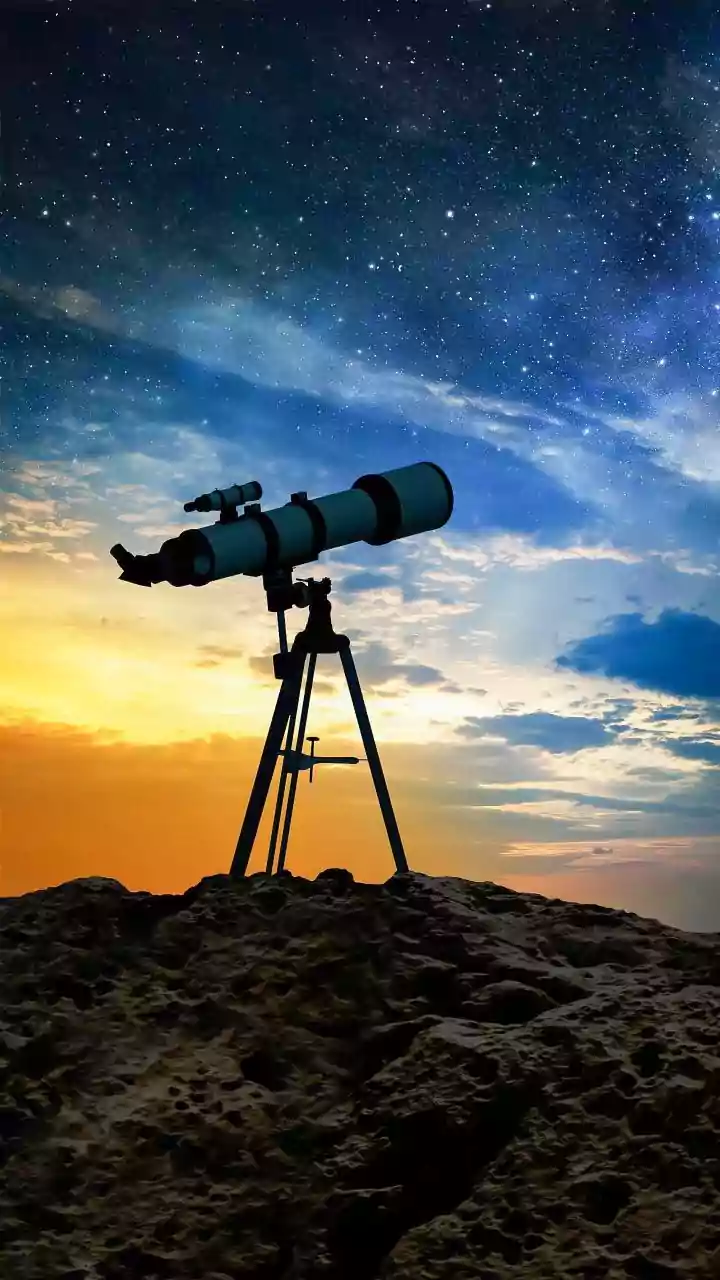
When it comes to capturing faint, faraway objects, the most important feature of a telescope isn't its magnification power, but its aperture. Aperture refers to the diameter of the telescope's main lens or mirror, and a larger aperture gathers more light.
Think of it like a bucket in the rain; a wider bucket collects more water in the same amount of time. For dim celestial targets like nebulae and galaxies, gathering as many photons as possible is the key. While high magnification can make an object appear larger, it also spreads the limited light out, resulting in a dim, blurry image if the aperture isn't large enough to provide a bright, clear view to begin with. Therefore, the telescope's primary job in deep-space astrophotography is not just to 'zoom in' but to act as a giant light-gathering funnel, concentrating faint cosmic light onto a single point: the camera sensor.
The Digital Eye's Revolution
This is where the second piece of the puzzle comes in: the modern camera sensor. For years, professional and serious amateur astronomers relied on specialized, cooled Charge-Coupled Device (CCD) cameras. These were known for their low noise and high image quality but were often expensive and complex. The game changed with the rapid advancement of Complementary Metal-Oxide-Semiconductor (CMOS) sensors—the same technology found in today's DSLR and mirrorless cameras. Once considered noisier and less sensitive than CCDs, modern CMOS sensors have largely closed the performance gap. They are now incredibly efficient at converting faint light into electrical signals, even during the long exposures needed to see deep-space objects. This technological leap has made high-quality astrophotography accessible, allowing enthusiasts to attach a standard DSLR or a dedicated CMOS astronomy camera to their telescope and achieve remarkable results.
The Power of Stacking Images
Even with a great telescope and sensor, a single long exposure has its limits and is susceptible to issues like satellite trails or electronic noise. The secret to a clean, detailed final picture is a technique called image stacking. Instead of taking one 30-minute exposure, an astrophotographer might take sixty 30-second exposures. Each individual shot, or 'sub-exposure', will look grainy and faint. However, by using specialized software, these multiple images can be precisely aligned and averaged together. The 'signal'—the actual light from the galaxy or nebula—is consistent in every frame, so it adds up and becomes stronger. The 'noise'—random electronic grain from the sensor—is different in every frame, so it gets averaged out and fades away. This process dramatically improves the signal-to-noise ratio, revealing incredibly faint details and colors that are completely invisible in any single shot.
Software: The Digital Darkroom
The final step happens on a computer, in what can be called the 'digital darkroom'. Capturing the light is only half the battle; processing the data is what truly brings the image to life. After stacking the raw images with programs like DeepSkyStacker or Sequator, photographers use powerful software like PixInsight or Adobe Photoshop to meticulously edit the result. This involves carefully 'stretching' the data to brighten the faint parts of the object without blowing out the bright stars, correcting colors, and enhancing detail. Recent advancements have even introduced AI-powered tools that can intelligently reduce noise or even remove stars to allow for easier editing of the nebula behind them. This careful post-processing transforms the faint, stacked data into the vibrant, detailed celestial portraits that inspire awe and curiosity.