

The Science of a Melting Mountain
The short answer to the headline's question is a resounding yes. While a single glacier collapse is a complex event, the trend is clear: rising global temperatures are severely destabilising the Himalayan cryosphere. According to the International Centre
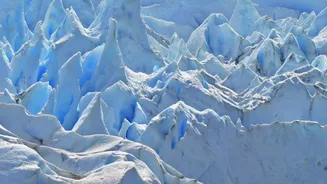
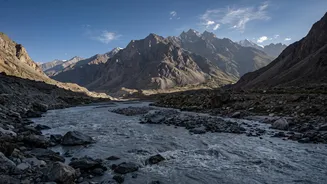
for Integrated Mountain Development (ICIMOD), glaciers in the Hindu Kush Himalaya (HKH) region are melting at an accelerating rate, with ice loss doubling since the year 2000. This isn't just about gentle melting; it's about creating the perfect conditions for catastrophic failure. Warmer air temperatures lead to several dangerous phenomena. Firstly, they accelerate the melting of the glacier's surface, creating vast lakes of meltwater. Secondly, this water can seep deep into the glacier's cracks and fissures, lubricating its base and making it more likely to slide. Finally, the permafrost—the permanently frozen ground that acts as a kind of high-altitude cement—is beginning to thaw, weakening the very rock walls that hold glaciers in place.
From Meltwater to Monster Floods
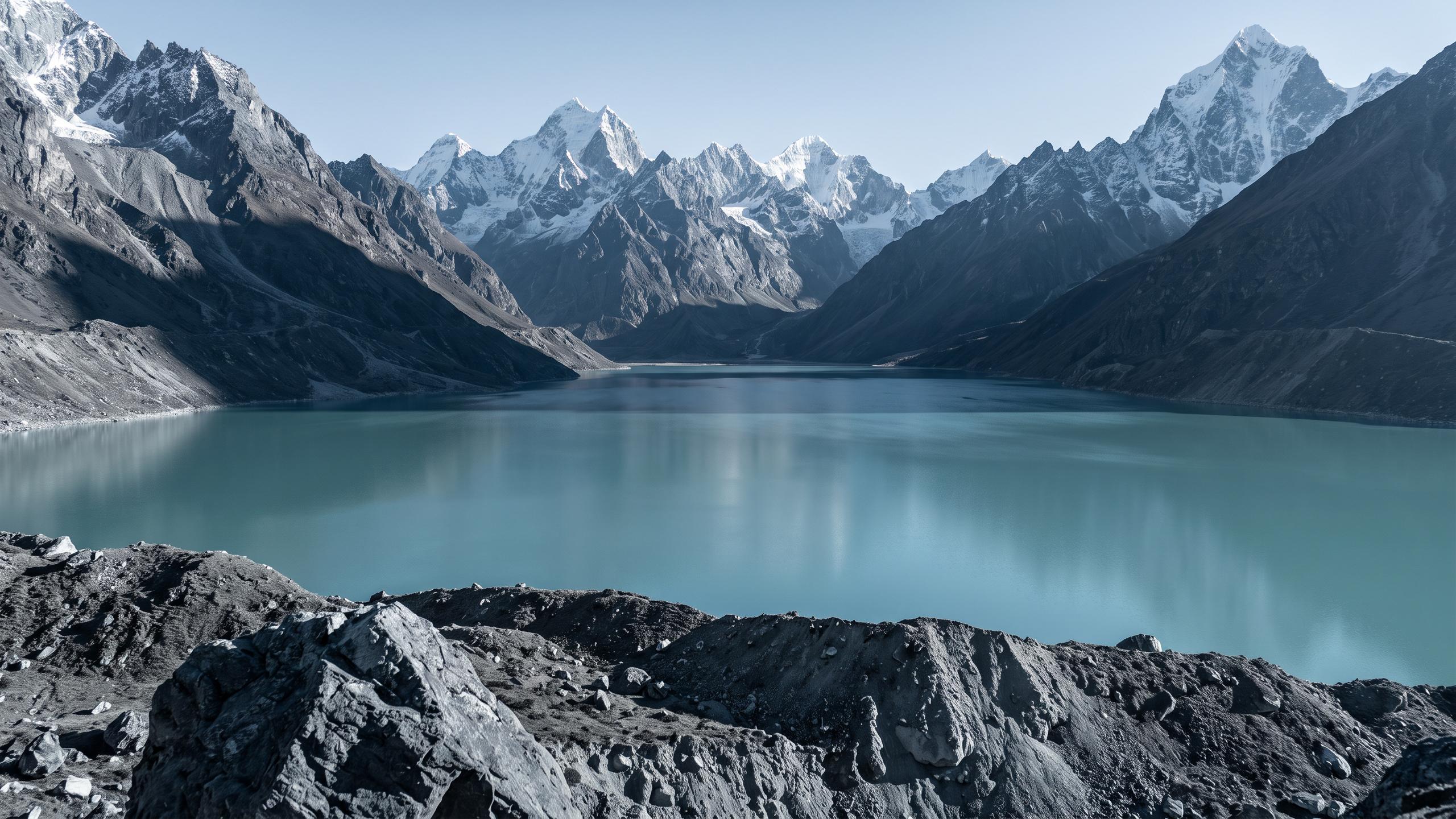
A direct glacier collapse, where a large piece of ice breaks off, is just one part of the danger. An equally, if not more, common threat is the Glacial Lake Outburst Flood, or GLOF. As glaciers retreat, they often leave behind large depressions that fill with meltwater, forming glacial lakes. These lakes are typically dammed by moraines—unstable walls of loose rock and debris left behind by the receding glacier. These moraine dams are incredibly fragile. A sudden surge of water from heavy rain, an avalanche of rock or ice falling into the lake, or even an earthquake can cause the dam to breach. When it does, it releases a devastating wall of water, mud, and boulders that can obliterate everything in its path for kilometres downstream. Nepal has recorded 26 GLOF events since 1977, and as its 3,800 glaciers continue to shrink, the number of potentially dangerous glacial lakes is growing. A recent analysis confirmed that there are at least 47 such high-risk lakes in Nepal alone.
A Region on High Alert
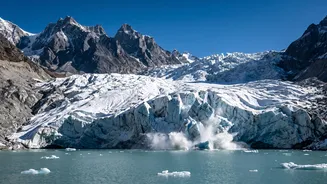
The warming in the Himalayas is happening faster than the global average. Reports from 2026 indicate that temperatures in the region are rising 0.3°C to 0.7°C more quickly, fuelling this rapid thaw. Disasters like the deadly flood on the Nepal-Tibet border in August 2026, which experts concluded was caused by a massive glacial collapse, underscore the lethal reality of this trend. That event, which killed over 160 people, was triggered by a huge portion of a glacier breaking away and crashing into the valley below. Experts analysing satellite imagery noted that a significant amount of snow had melted just before the disaster, suggesting warm conditions played a key role. This is part of a larger, worrying pattern. Between 1990 and 2020, the HKH region lost about 12% of its total glacier area. For mountain communities, this means the landscape itself is becoming unpredictable and dangerous.
The Ripple Effect for India
What happens in Nepal's mountains does not stay there. The Himalayas are rightly called the 'Water Towers of Asia', feeding ten major river systems, including the Indus, Ganga, and Brahmaputra, which are lifelines for India. Over 1.6 billion people depend on the water that flows from these glaciers. The accelerated melting has a dual effect. In the short term, it increases the risk of trans-boundary floods in states like Bihar, Uttar Pradesh, and Sikkim. The 2023 GLOF in Sikkim, which claimed over 90 lives, was a tragic reminder of this vulnerability. In the long term, the disappearance of these glaciers threatens India's water security. Less ice means reduced river flows during the dry seasons, which is critical for agriculture that a vast majority of India's population depends on. ICIMOD's 2026 reports highlighted that the Ganga and Brahmaputra basins have already experienced some of the largest losses in glacier area, signalling future water stress for hundreds of millions downstream.