
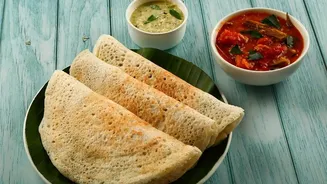


Why Cast Iron Is the Dosa's Best Friend
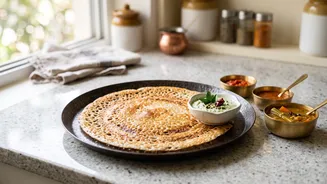
While non-stick pans are convenient, a traditional cast-iron tawa is the undisputed champion for making crispy dosas. The reason lies in its material properties. Cast iron is excellent at retaining and distributing heat evenly. This means once your tawa is hot,
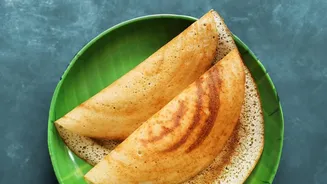
it stays hot across the entire surface, preventing the dreaded scenario of a burnt centre and pale, soft edges. This steady, consistent heat is crucial for cooking the thin batter layer quickly and evenly, which is the very definition of a crisp dosa. A well-maintained cast-iron pan also develops a natural non-stick surface, known as seasoning, which helps the dosa release cleanly without tearing.
The Art of Seasoning Your Tawa
Before you even think about heat, your tawa needs to be properly seasoned. Seasoning is a layer of polymerized oil that has bonded to the surface of the iron, creating a natural, slick coating. To season a new tawa, wash it to remove any factory coating, dry it completely, and then apply a thin layer of a high-smoke-point oil like sesame or groundnut oil. Heat the tawa on a medium flame for 10-15 minutes until it smokes lightly, then let it cool. Repeating this process a few times builds a robust, non-stick patina. For a well-seasoned pan, all you need is a light wipe of oil before each dosa, often applied with half an onion, which helps clean the surface and prevent sticking.
Finding the Temperature Sweet Spot
This is where most home cooks falter. The temperature of your tawa is everything. If it's too cool, the batter won't sizzle on contact, resulting in a thick, soft, and often sticky dosa. If it's blazing hot, the batter will seize and cook instantly, making it impossible to spread thinly and leading to burnt patches. The ideal temperature is between 180-200°C. The classic way to test this without a thermometer is the water-droplet test: sprinkle a few drops of water on the tawa. If they sizzle and evaporate immediately, it's ready. If they 'dance' or skitter across the surface, it might be slightly too hot; this is known as the Leidenfrost effect, where a layer of steam forms under the water. In this case, reduce the heat slightly or wipe the pan with a damp cloth to bring the temperature down just before pouring the batter.
The Two_Stage Heat Method
Professional kitchens often use a two_stage approach to heat. First, they preheat the tawa on medium_high to get it up to temperature quickly and evenly. Once the tawa is hot enough (as confirmed by the water test), they reduce the flame to medium_low right before pouring the batter. This lower temperature allows just enough time to spread the batter into a thin, even circle without it setting too fast. Once the batter is spread, the flame is often increased back to medium to cook the dosa until it's golden and crisp. This dynamic control of the flame is what separates a soft dosa from a crispy one.
Essential Technique and Batter Tips
Heat control works in tandem with your technique. A well_fermented batter, with a consistency like thin cream, is crucial ; batter that's too thick will result in a soft , pancake_like dosa . When you pour the batter , start from the centre and spread it outwards in a quick , confident spiral motion . Don't apply too much pressure . Drizzle a little oil or ghee around the edges after spreading to help with crisping and browning . Then , be patient . Don't try to lift the dosa until the edges start to turn golden brown and lift away from the tawa on their own . This is your sign that the base is cooked , crisp , and ready to be folded .