






The Investment Engine Is Revving Up
For years, the story of Indian investment was dominated by government spending. While public funds built roads, railways, and other critical infrastructure, the private sector largely remained on the sidelines. Now, that trend appears to be reversing.
Recent data points to a significant uptick in private capital expenditure, or 'capex'. In the first quarter of the 2026-27 financial year, India's economy grew by a robust 7.8%, with investment rising a strong 11.9%. This suggests the economic growth engine is becoming broader and more resilient. The share of investment in the economy, known as Gross Fixed Capital Formation, rose to 34.3% in the April-June quarter, a notable increase from 31.4% a year earlier. Analysts see this as confirmation of improving corporate capex momentum, marking the strongest investment figures since 2018, outside of pandemic-related volatility.
Why Are Companies Investing Now?
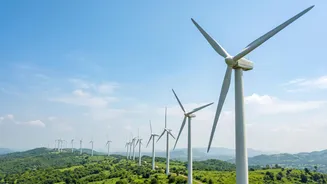
Several factors are converging to boost investor confidence. A key driver is the government's sustained push on public infrastructure, which is now 'crowding in' private capital by creating a better environment for business. Companies also have healthier balance sheets after a period of deleveraging, giving them the capacity to invest. Furthermore, industrial credit is growing at its fastest pace in a decade, indicating that funding is available for expansion. Policy support, such as the Production-Linked Incentive (PLI) schemes, has been crucial in encouraging manufacturing. This has spurred investment in new-age sectors like renewable energy, data centres, semiconductors, and electronics manufacturing, alongside traditional areas like infrastructure, real estate, and financial services.
The All-Important Link to Jobs
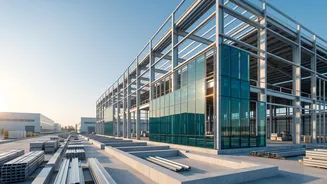
The fundamental connection between investment and employment is straightforward: when companies build new factories, expand operations, or enter new sectors, they need people. Private enterprises are the country's largest employers, and a capex-led boom has a multiplier effect, creating both direct jobs in construction and manufacturing, and indirect employment in logistics, services, and the wider supply chain. World Bank President Ajay Banga recently noted that while the government acts as an enabler, it is the private sector that ultimately creates jobs, highlighting the central role of micro, small, and medium-sized enterprises (MSMEs) in this effort. An investment-led growth cycle can reinforce consumption by putting more money into people's pockets, creating a virtuous cycle of economic activity.
Opportunities and Headwinds
While the rising investment is a positive indicator, its impact on employment may be nuanced. A significant portion of the new capital is flowing into high-tech and capital-intensive sectors like data centres and advanced manufacturing. While these create high-skill, high-wage jobs, they may not generate mass employment on the scale seen in past industrial booms. There is a recognised need to accelerate the shift of labour from low-productivity agriculture to more labour-intensive manufacturing and modern services. Furthermore, the recovery is still in its early stages and remains concentrated among a few large conglomerates, raising questions about whether it will broaden into a widespread investment cycle. Structural challenges like skill mismatches, regulatory predictability, and global economic uncertainty could also act as headwinds, potentially slowing momentum if not addressed.