



A New Era of Galactic Archaeology
Imagine trying to understand the complete history of a vast, ancient city by only looking at it from a high-flying airplane. You could see the overall shape, but the stories of its individual buildings, streets, and residents would be lost in a blur.
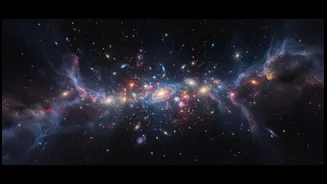
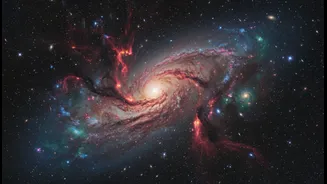
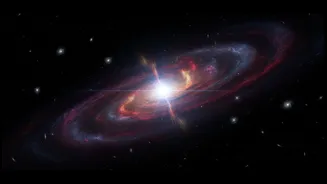
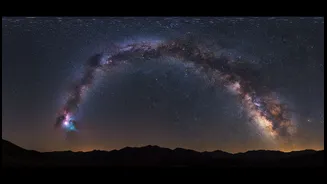
For decades, this was how astronomers studied the densest parts of our own Milky Way galaxy. But that is changing. A new field, dubbed 'galactic archaeology,' is using powerful new instruments to do something once thought impossible: resolve the blur into millions of individual points of light. Each of these points is a star, and each star is a fossil record holding clues to the galaxy's past. By studying these stellar fossils, we can piece together how the Milky Way formed and evolved over billions of years.
What 'Resolving' a Star Means
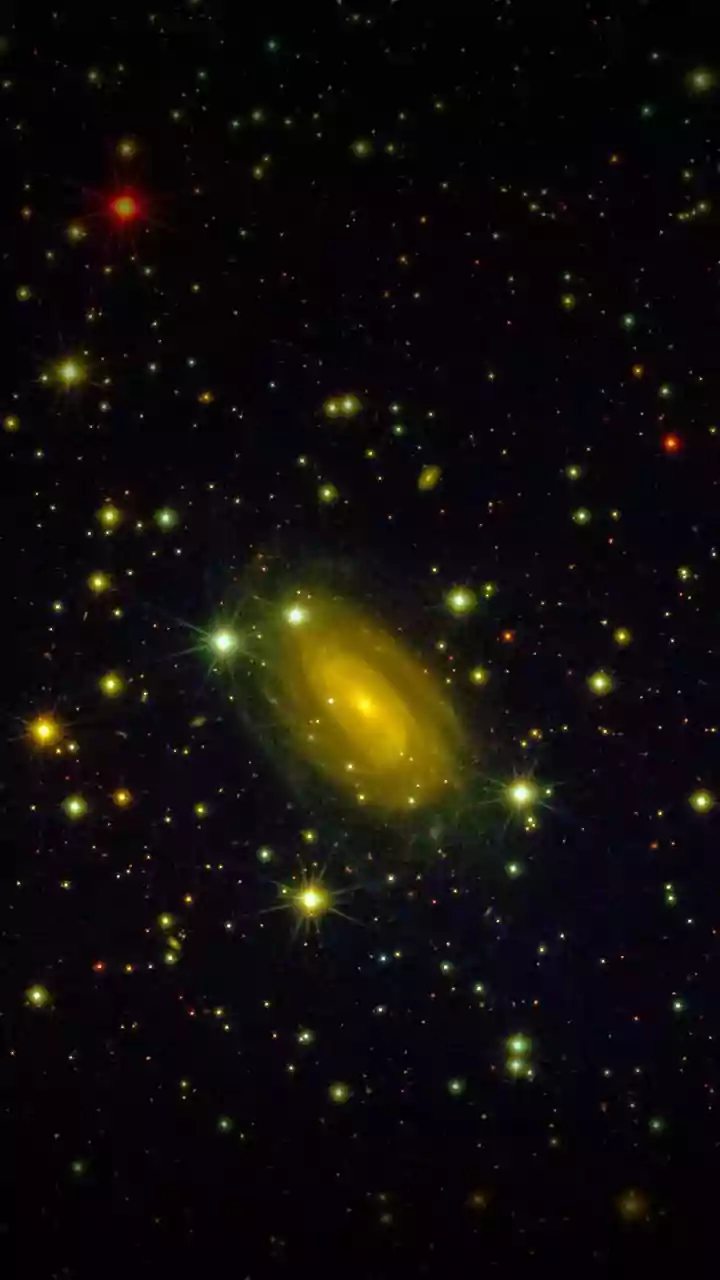
In astronomy, 'resolving' a star means being able to distinguish it as a single, separate object. This is incredibly difficult in crowded regions like a galaxy's core or in distant galaxies, where countless stars are packed so tightly together that their light merges into a collective glow. New technologies, especially the infrared capabilities of telescopes like the James Webb Space Telescope (JWST), can now pierce through the cosmic dust that has long obscured our view. This allows astronomers to see what looks like a grainy texture in images, which is actually a densely packed field of individual stars. This newfound clarity is akin to finally putting the city under a microscope, allowing us to examine every brick and cobblestone to learn its history.
The Stellar Fossil Record
Every star contains a chemical fingerprint of the gas cloud from which it was born. Very old stars, formed early in the universe's history, are made almost entirely of hydrogen and helium. Younger stars, by contrast, are enriched with heavier elements forged inside previous generations of massive stars that have since exploded as supernovae. By analyzing a star's chemical makeup, light, and motion, astronomers can determine its age and origin with remarkable precision. This is the core of galactic archaeology. When you can do this for millions of stars, you can create a detailed timeline of events, tracing when different parts of the galaxy formed, how they were enriched with new elements, and how they have moved over cosmic time.
Rewriting Our Galaxy's Biography
Early models of galaxy formation were based on broader observations. This new, high-resolution data is challenging old assumptions and adding crucial new details. For instance, recent studies based on resolved stars suggest the Milky Way's history was not a smooth, continuous process but one of dramatic bursts and collisions. Evidence points to our galaxy having merged with other, smaller galaxies in its past. Some research suggests the galaxy's thick disk began forming around 13 billion years ago, with a major burst of star formation occurring around 11 billion years ago, possibly triggered by a merger with a satellite galaxy. Another intense burst may have happened as recently as one billion years ago. These events are written in the ages and motions of the stars we can now see.
Beyond the Milky Way
This archaeological approach isn't limited to our own galaxy. By applying similar techniques to nearby galaxies like Centaurus A, astronomers are reconstructing their histories as well. Observations of Centaurus A with the JWST have revealed the scars of a major collision with another galaxy that happened billions of years ago. By resolving individual stars within it, scientists can map the aftermath of this cosmic merger and understand how such events shape galactic evolution. Comparing the histories of different galaxies helps build a universal picture of how these massive structures grow, from small beginnings into the grand spirals we see today.