

The End of the Straight Line
After years dominated by boxy sofas and rectangular tables, a new silhouette is defining modern Indian living rooms: the curve. This trend includes everything from sweeping, arc-shaped sofas that encourage conversation to oval coffee tables, round-backed
chairs, and arched mirrors that soften a room's geometry. Walk into a design-forward home in Mumbai or Bangalore, and you are likely to see these sculptural forms replacing the hard-edged furniture that once signified modernity. The movement is so significant that it's being called a fundamental change in how we approach comfort and aesthetics in our personal spaces, moving away from the clinical and towards the cocooning.
A Psychology of Comfort and Nature
So, why the sudden embrace of curves? The reasons are deeply psychological. Research suggests that the human brain is hardwired to perceive curved lines as more welcoming, gentle, and calming than sharp angles, which can feel confrontational. Curves echo forms found in nature—rolling hills, flowing rivers, and smooth stones—triggering a sense of ease and reducing stress. This turn towards natural shapes is a key part of a broader trend known as biophilic design: the idea of connecting our indoor spaces back to the natural world. In the concrete-heavy environments of urban India, creating a home that feels like a sanctuary has become a priority. Rounded furniture helps achieve this by making a room feel less rigid and more nurturing.
An Indian Adaptation of a Global Trend
While curved furniture is a global phenomenon, it has found a unique expression in India. The concept of biophilic design resonates deeply with traditional Indian architecture, which has always used elements like courtyards and verandas to blend the indoors with the outdoors. The modern Indian interpretation combines this inherent love for natural forms with contemporary materials. You'll see curved sofas upholstered in earthy, warm-toned fabrics like terracotta and olive, which are better suited to the Indian climate and lifestyle than stark whites. Materials like cane, rattan, and solid woods such as sheesham and teak are being used to craft these rounded pieces, adding a layer of handcrafted texture that feels both modern and rooted.
How to Style the Curve at Home
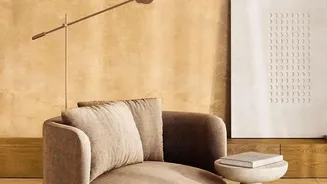
Adopting this trend doesn't require a complete overhaul. You can start small. A single barrel-shaped accent chair or a round ottoman can introduce the curved aesthetic and soften a room instantly. An oval or kidney-shaped coffee table is another effective way to break up the tyranny of straight lines. The key to success is balance. If you opt for a statement curved sofa, ground the space with a rectangular rug or linear bookshelves. This contrast between soft and sharp creates a dynamic, visually interesting space. For smaller urban apartments, where space is a premium, rounded furniture offers a practical advantage: it's easier to navigate around, with no sharp corners to bump into, which improves the flow of the room.