





Protected vs. Self-Transfer
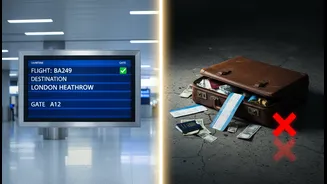
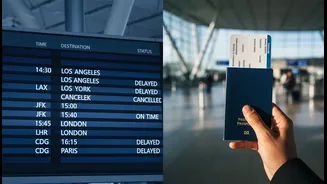
Understanding the difference between a 'protected connection' and a 'self-transfer' is crucial. A protected connection is when your entire journey, including all layovers, is on a single ticket or booking reference. The airline or airlines in the agreement
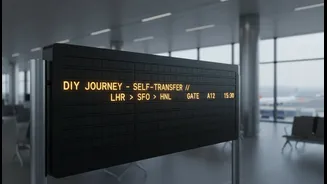
are responsible for getting you to your final destination. If a delay on one leg causes you to miss your connection, the airline is obligated to rebook you on the next available flight, usually at no extra cost. Your checked bags are also typically transferred automatically to your final destination. A self-transfer, on the other hand, involves booking two or more separate tickets. You might fly one airline into a hub and a different, unaffiliated airline out. From the airlines' perspectives, these are two independent journeys.
The Risks of Going It Alone
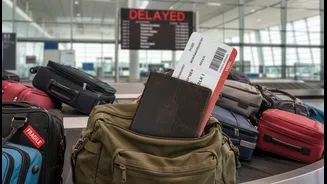
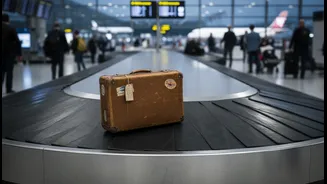
With a self-transfer, you become your own travel agent, and you absorb all the risk. If your inbound flight is delayed, cancelled, or even has a minor schedule change, the second airline has no obligation to help you. They will simply mark you as a 'no-show', and you'll likely forfeit the entire cost of that ticket. You will be responsible for buying a new, often very expensive, last-minute ticket to continue your journey. Furthermore, you are responsible for your own luggage. You must collect your checked bags, exit the secure area, go to the departures hall to re-check your bags with the next airline, and go through security all over again. This entire process can easily consume hours.
The Hidden Time-Eaters
A two-hour layover on paper can disappear in the blink of an eye during a self-transfer. The clock starts ticking the moment you land, but the real time-eaters are the processes that are seamless in a protected connection. You have to account for deplaning time, which can take 15-20 minutes. If arriving internationally, you must clear immigration and customs, which is highly variable. Then comes the wait at baggage claim. After collecting your bags, you may need to transfer to a different terminal, which can sometimes require a bus or train ride. Finally, you must check in for your next flight before the baggage drop-off cutoff time (usually 45-60 minutes before departure) and clear security again. A 30-minute flight delay can make this sequence impossible.
How Much Buffer Is Enough?
There is no single answer, but experts agree you need a significant buffer. For a domestic self-transfer within the same airport, a minimum of three to four hours is recommended. This gives you a cushion for minor delays and the process of re-checking bags. If you are travelling with only a carry-on, you might manage with slightly less time, but the risk remains. For an international self-transfer, the recommendation increases substantially. When factoring in immigration, customs, and the potential for longer queues, a buffer of four to six hours is considered a safer minimum. If your self-transfer involves changing airports within the same city (e.g., from London Heathrow to Gatwick), you should allow even more time, potentially five hours or more, to account for ground transportation.
When Does Self-Transfer Make Sense?
Despite the risks, self-transfers can be a valuable tool for savvy travellers. They make the most sense when the cost savings are substantial enough to absorb the potential price of a new ticket. They are also significantly less risky if you are travelling with carry-on luggage only, which eliminates the need to collect and re-check bags. Another scenario is when you intentionally plan a very long layover of eight hours or more, effectively turning it into a mini-trip to explore the connecting city. Finally, on some routes, particularly those involving low-cost carriers, a protected connection may not even be an option, leaving self-transfer as the only way to piece the journey together.