




India's Agricultural Lifeline
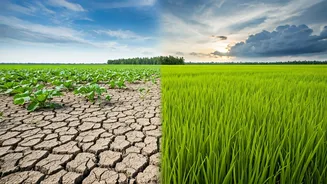
The Southwest monsoon, which brings nearly 70-75% of India's annual rainfall, is critical for the country's vast agriculture sector. [6, 15] A significant portion of India's farmland, nearly half, is rain-fed, meaning it lacks access to irrigation and depends
entirely on the monsoon for water. [3] This makes the Kharif or monsoon crops, sown in June and July, extremely vulnerable to rainfall patterns. These crops include essentials that form the bedrock of India's food security and daily meals: rice, pulses, maize, cotton, and soybean. [5, 6] A timely, well-distributed monsoon leads to bumper harvests, stable food prices, and healthy rural incomes. Conversely, a weak or erratic monsoon can disrupt this delicate balance. [10]
What 'Below Normal' Actually Means
The India Meteorological Department (IMD) has forecast that the 2026 monsoon could be 'below normal', a term that carries significant weight. [3] The IMD classifies rainfall based on the Long Period Average (LPA), which is the average rainfall received during the season over the last 50 years. [2] 'Normal' rainfall is defined as 96% to 104% of this average. 'Below normal' signifies rainfall between 90% and 95%, while a 'deficient' monsoon is anything below 90%. [9] As of late June 2026, the country has faced a significant rainfall deficit of over 40%, raising concerns about the ongoing Kharif sowing season. [2] This shortfall is largely attributed to the developing El Niño conditions in the Pacific Ocean, a climatic pattern known for weakening monsoon winds over India. [18, 19]
The Crops Most at Risk
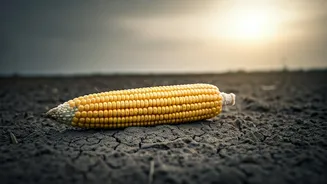
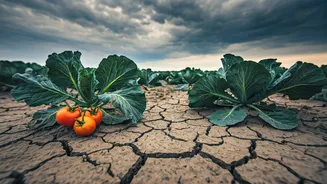
When rainfall is scarce, certain crops suffer more than others. The most vulnerable are water-intensive Kharif crops like rice (paddy), maize, and sugarcane. [2, 5] Pulses such as tur (arhar), urad, and moong, along with oilseeds like soybean and groundnut, are also heavily dependent on monsoon rains for good yields. [2, 6] A delay or deficit in rainfall can shrink the total area sown, stunt plant growth, and ultimately lead to lower production. While India currently has comfortable buffer stocks of staples like rice and wheat, a prolonged dry spell could specifically strain the supply of vegetables, pulses, and edible oils, which are not stockpiled to the same extent. [2, 15]
From Farm to Your Kitchen
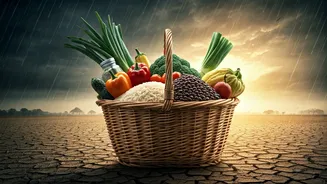
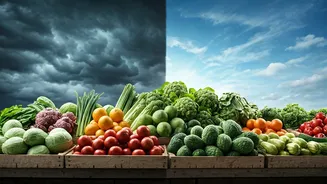
The connection between lower farm output and your grocery bill is a straightforward case of supply and demand. Reduced harvests mean less produce reaching the markets, creating a supply crunch. When demand remains constant, this scarcity pushes wholesale prices up. This increase gradually trickles down through the supply chain, from traders to retailers, and finally, to you, the consumer. The impact might not be immediate, but a sustained period of weak rainfall is a key driver of food inflation. [2] Economists note that while staple grain prices might be cushioned by government stocks, the prices of vegetables and pulses can become volatile, directly impacting the common household's budget. [4, 15]
Government's Mitigation Plan
The government is not sitting idle. The Agriculture Ministry has identified 315 districts across the country as being particularly vulnerable to a rainfall deficit, with 111 of them classified as 'most vulnerable' due to low irrigation coverage. [2] In response, contingency plans are being activated. States have been advised to promote the sowing of alternative, less water-intensive crops like millets and certain pulses. [2] There is also a push to use drought-tolerant seed varieties. Furthermore, the government can use its buffer stocks of rice and wheat to intervene in the market and stabilize prices if needed. Efforts are also being made to monitor the situation in real-time to provide timely advisories to farmers. [2, 21]