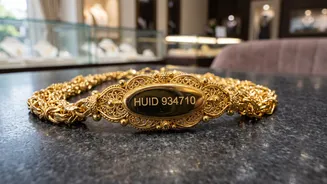







Gold is more than an investment in India; it's a foundation of trust. The mandatory hallmarking system was meant to secure this trust. But a recent review by the Comptroller and Auditor General (CAG) reveals significant gaps in enforcement.
What the CAG Report Uncovered
A draft report
from the Comptroller and Auditor General (CAG) has sent ripples through India's jewellery market by exposing serious lapses in the gold hallmarking system. The audit found that the Bureau of Indian Standards (BIS), the national standards body, failed to conduct mandatory annual inspections on a massive scale. Over a five-year period, more than 83% of registered jewellers were not inspected as required. In the financial year 2024-25 alone, over 81% of licensed jewellers—23,421 out of 28,865—were not checked. This lack of surveillance means that for a vast majority of sellers, there was no official follow-up to ensure they were consistently complying with purity standards after their initial registration. The BIS reportedly cited manpower shortages for the shortfall, an explanation the CAG found unconvincing.
Gaps at the Purity Testing Level
The concerns extend to the very places where gold is tested. The CAG also flagged significant shortcomings in the monitoring of Assaying and Hallmarking Centres (AHCs). These are the independent labs responsible for testing the purity of gold items and applying the six-digit Hallmark Unique Identification (HUID) number. The report revealed that the BIS fell short of its prescribed surveillance targets for these centres by 43.7%. This means nearly half the required checks on the checkers themselves were not performed. This raises critical questions about quality control at the core of the system, as these AHCs are the gatekeepers meant to guarantee that a 22-karat piece of jewellery truly contains 91.6% pure gold.
The Real-World Risk for Consumers
These regulatory gaps translate into tangible risks for millions of Indians who invest their savings in gold. The primary purpose of hallmarking is to protect consumers from being cheated on purity. If the system isn't being rigorously monitored, the hallmark itself loses some of its authority. A buyer might pay the price for 22-karat gold but receive an item of lower purity, resulting in a direct financial loss. These findings come at a time when industry bodies have also raised alarms about sophisticated methods of adulteration, using heavy metals like rhenium to increase weight without being detected by some standard tests. While the CAG report focuses on regulatory failure rather than adulteration, it highlights that the safety net designed to catch such issues has significant holes.
How to Be a Smarter, Safer Gold Buyer
While the system has flaws, the mandatory HUID is still the most powerful tool a consumer has. The responsibility now falls more heavily on the buyer to be vigilant. Before purchasing, every buyer should insist on seeing the three marks on any piece of gold jewellery: the BIS logo (a triangle), the purity grade (e.g., 22K916), and the six-character alphanumeric HUID. The most crucial step is to verify this HUID in real-time using the official 'BIS CARE' mobile app. Download the app and use the 'Verify HUID' feature before you pay. It should confirm the jeweller's details, the AHC that certified it, and the purity of the specific item in your hand. If the details don't match, or if the HUID isn't found, it's a major red flag.
Always Demand a Proper Bill
Finally, your invoice is your proof of purchase and a critical legal document. A proper bill for hallmarked jewellery should clearly mention the purity, net gold weight, any charges for stones, making charges, and, most importantly, the HUID number for each item. Any reluctance from a seller to provide a detailed bill with the HUID is a warning sign. The CAG's report is a necessary wake-up call for regulators to strengthen their enforcement. For consumers, it's a reminder that in a market built on trust, a little bit of personal verification goes a long way in protecting your hard-earned investment.