





Personal vs. Business Loan: What's the Right Fit?
The first step is to clarify your needs. Are you buying a new laptop for your freelance work, or are you setting up a registered agency with employees? Personal loans are versatile and often easier for individual freelancers to secure. They are typically
unsecured, meaning you don't need to offer collateral, and can be used for various purposes, from equipment purchases to managing cash flow during a slow month. Business loans are designed for more structured needs like expansion, hiring, or significant working capital. Lenders will assess your business's financial health, and these loans often have higher borrowing limits but may require collateral and a more detailed application process, including a business plan.
The Freelancer's Friend: Personal Loans
For many independent content creators, designers, and consultants, a personal loan is the most direct path to funding. In the past, irregular income made it difficult for freelancers to get approved, but many digital lenders and Non-Banking Financial Companies (NBFCs) now cater specifically to the self-employed. Instead of salary slips, lenders will ask for other proof of income, such as bank statements for the last 6-12 months, Income Tax Returns (ITR), and your PAN card. Maintaining a healthy credit score (ideally 700 or above) and showing consistent income in your bank account, even if it fluctuates, will significantly improve your chances of approval. These loans are typically processed quickly online and can be used for anything from upskilling courses to new gear.
Scaling Up: Business Loans and Equipment Finance
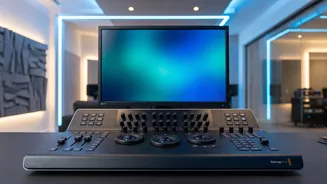
If your digital media work has evolved into a registered business entity like a sole proprietorship or a private limited company, a business loan is the more appropriate choice. Lenders will look for a business vintage of at least a few years and filed ITRs. These loans can fund major initiatives like a marketing campaign, hiring talent, or leasing an office. A specialised sub-category is equipment financing. If your primary need is to purchase expensive gear like high-end cameras, lighting, or editing stations, some lenders offer 'Digital Product Loans' or similar financing options. These may come with features like No-Cost EMI, making high-value purchases more manageable without a large upfront payment. Some lenders even have specific loan products for professionals like photographers and videographers.
Don't Overlook Government Schemes
The Indian government offers several schemes to support micro, small, and medium enterprises (MSMEs), which can include digital media professionals and their businesses. The Pradhan Mantri MUDRA Yojana (PMMY) is a flagship scheme providing collateral-free loans up to ₹10 lakh. It is divided into three categories: 'Shishu' (up to ₹50,000) for those just starting, 'Kishor' (₹50,001 to ₹5 lakh) for existing enterprises looking to expand, and 'Tarun' (₹5 lakh to ₹10 lakh) for established businesses. These loans can be availed through most banks and NBFCs for non-farm income-generating activities, which includes a wide range of services provided by digital professionals. Other schemes like Stand-Up India, which supports entrepreneurs who are women or from SC/ST communities, can also be a valuable source of funding.
Preparing Your Application for Success
Regardless of the loan type you choose, preparation is key. First, get your documents in order. This includes your KYC documents (Aadhaar, PAN card), proof of address, bank statements for at least the last six months, and the last 2-3 years of ITR filings. Second, know your credit score and take steps to improve it if necessary. A score above 700 is generally preferred by lenders. Third, be clear about the purpose of the loan. For business loans, having a detailed plan that outlines how the funds will be used to generate revenue can make a significant difference. Finally, avoid applying to multiple lenders at once, as each 'hard inquiry' can slightly lower your credit score.