


What Officially Happened?
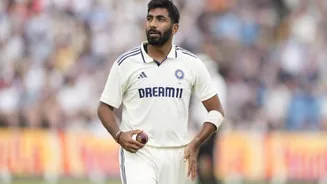
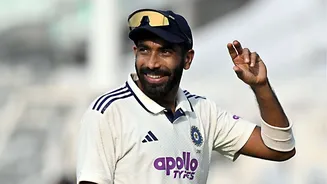
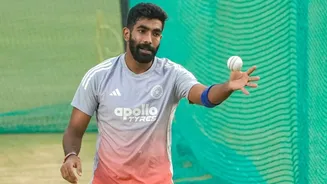
Team India will travel to Sri Lanka for the series starting August 15 without their pace spearhead. According to reports, Jasprit Bumrah has been ruled out as he has not fully recovered from a knee injury sustained during the recent ODI series against
England. He was initially named in the squad subject to a fitness clearance, but after assessment at the Centre of Excellence (CoE) in Bengaluru, the BCCI's medical team has opted for a cautious approach. Despite undergoing rehabilitation, Bumrah reportedly still feels discomfort, and the management has decided against rushing him back, especially for the rigours of Test cricket.
Is This Another Major Setback?
Yes, and it fits a deeply worrying pattern. While the current issue is a knee injury sustained while fielding, Bumrah's career has been punctuated by significant time on the sidelines, most notably due to recurring back problems. A stress fracture in his back in 2019 was followed by another major back injury in 2022, which eventually required surgery in 2023 and kept him out of several major tournaments. This latest withdrawal, though for a different issue, adds to the narrative of a generational talent whose body is struggling to cope with the demands of international cricket. The decision to pull him from the Sri Lanka series underscores a clear strategy from the BCCI: prioritize long-term preservation over short-term gains, even if it means missing a World Test Championship series.
The Root Cause: A Blessing and a Curse
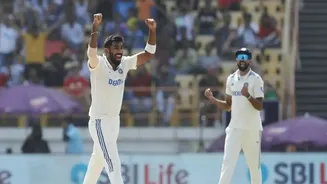
To understand why Bumrah faces these issues, you have to look at what makes him a genius in the first place: his unique bowling action. Unlike the classical, long-run-up fast bowlers, Bumrah employs a short, shuffling approach before an explosive, sling-shot delivery. His action involves significant hyperextension of the elbow and a braced front leg, which act like a catapult to generate high speeds from a minimal run-up. Biomechanical experts note this puts incredible, repetitive stress on his back, shoulders, and core. This unorthodox motion is what creates his deceptive pace and awkward angles, making him a nightmare for batters. However, it also makes him far more susceptible to stress-related injuries than most of his peers, a risk that experts warned about early in his career.
The Unavoidable Factor: Workload
Bumrah isn't just a Test specialist; he has been India's premier bowler across all three formats for years. When fit, he is indispensable in Tests, ODIs, and T20Is, not to mention his commitments in the IPL. This relentless schedule offers very little time for his body to recover from the biomechanical strain of his action. While workload management is a modern cricket buzzword, it is an absolute necessity for a player like Bumrah. The board has previously given him waivers from domestic cricket and rested him during bilateral series, acknowledging that his physical case is unique. However, the constant cycle of high-stakes tournaments and series means that even with careful planning, the sheer volume of high-intensity bowling takes an inevitable toll.
What Next for Bumrah and India?
In the immediate term, India will head to Sri Lanka with a pace attack led by Mohammed Siraj and Prasidh Krishna, a combination that lacks Bumrah's experience and fear factor on subcontinent pitches. For Bumrah, the road ahead is a frustratingly familiar one: more rehabilitation and a carefully managed return. The larger question is how he and the BCCI can chart a sustainable path forward. Does he need to specialize in certain formats? Will his training regimen need further evolution to build resilience without sacrificing his unique strengths? These are the complex challenges that need solving to ensure that one of India’s greatest match-winners can have a career defined by his brilliance, not by his battles with injury.