





The Warming Wonder: Ginger
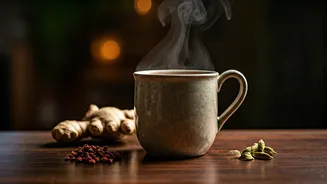
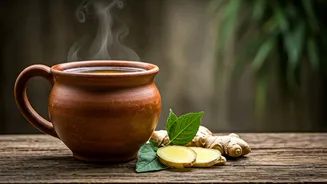
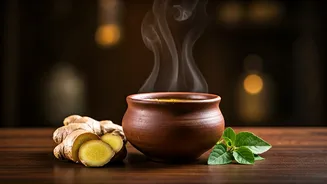
That sharp, pungent bite of ginger (adrak) is your first line of defence against monsoon maladies. For centuries, this humble root has been an Ayurvedic staple, and modern science backs up its traditional uses. It's a natural diaphoretic, meaning it helps
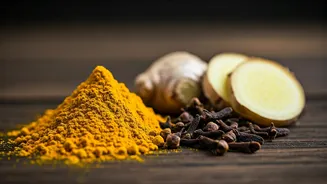
warm you from the inside out—a welcome and deeply comforting feeling on a damp, chilly day. More importantly, ginger is packed with gingerol, a bioactive compound with powerful anti-inflammatory and antioxidant effects. This makes it brilliant for soothing a sore throat, calming an upset stomach, and fighting the nausea that can accompany seasonal bugs. During the monsoons, our digestive fire ('agni') is said to be weaker, leading to indigestion and bloating. Ginger stimulates digestive enzymes, helping your system process food more efficiently and preventing that sluggish, heavy feeling. A cup of hot ginger tea isn't just a comforting ritual; it's a potent brew that helps clear respiratory congestion and gives your immune system a much-needed kickstart. Whether you grate it into your morning chai, add it to a simmering dal, or simply chew on a small, crystallised piece, incorporating ginger into your daily routine is one of the easiest ways to stay resilient.
The Golden Guardian: Turmeric
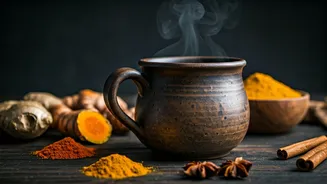
No Indian kitchen is complete without the vibrant yellow hue of turmeric (haldi), and during the monsoon, its value skyrockets. This spice is more than just a colouring agent for our curries; it's a veritable pharmacy in a jar. The magic lies in curcumin, its main active compound, which boasts incredible anti-inflammatory, antiseptic, and immune-modulating properties. Think of it as your body's personal, golden-hued security guard. When the damp weather and drop in temperature make you more susceptible to infections, curcumin works tirelessly to reduce inflammation and help your body fight off invading pathogens. This is why a glass of warm 'haldi doodh' (turmeric milk or golden latte) has been the go-to remedy in Indian households for generations. It’s a holistic concoction that helps soothe persistent coughs, reduce the body ache that comes with a fever, and promotes restful sleep, allowing your body to heal and recover more efficiently. Its antiseptic nature also makes it useful for minor cuts and scrapes, which can be prone to infection and heal slower in the humid monsoon environment.
The Secret Weapon: Black Pepper
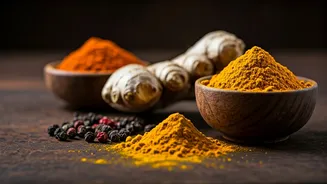
Here’s the secret that elevates this trio from a group of helpful spices to a truly powerful team. On its own, black pepper (kali mirch) is a fantastic digestive aid and has properties that help clear chest congestion by loosening phlegm. But its true superpower is unlocked when it plays a supporting role for turmeric. The star compound in turmeric, curcumin, is notoriously difficult for the body to absorb effectively through the bloodstream; much of it gets metabolised before it can do its good work. This is where black pepper stages a brilliant intervention. It contains piperine, an alkaloid that acts as a potent bio-enhancer. In simple terms, piperine slows down the liver's process of breaking down curcumin, allowing it to remain in the body for longer and at higher concentrations. Scientific studies have shown that piperine can increase the bioavailability of curcumin by an astonishing 2,000%! This means that a tiny pinch of freshly ground black pepper added to your turmeric milk or 'kadha' ensures you are getting the maximum possible anti-inflammatory and immune-boosting benefits. This synergy is the cornerstone of the trio's power: ginger warms and soothes, turmeric heals and protects, and black pepper acts as the key, unlocking turmeric’s full potential.