





A High-Stakes Spacewalk
Working in the vacuum of space is one of the most dangerous jobs imaginable. On August 18 and August 25, 2026, NASA astronaut Anil Menon and European Space Agency (ESA) astronaut Sophie Adenot ventured outside the International Space Station (ISS) for
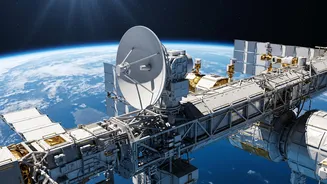
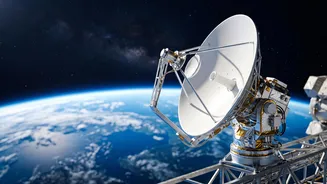
a pair of gruelling extravehicular activities, or EVAs. Their goal was to replace a faulty Space-to-Ground Antenna (SGANT), a critical piece of hardware responsible for sending high-speed data, including video and scientific results, back to Earth. The first spacewalk, which lasted six hours and 23 minutes, saw Adenot become the first French woman to perform an EVA. The pair successfully removed the failed unit, but the task proved more complex than anticipated; wrestling with stubborn bolts and electrical cables took longer than planned, forcing the installation of the new antenna to a second spacewalk.
The Silent Failure
The ISS is equipped with several communication systems, but the S-band antennas are workhorses for reliable contact with Mission Control. Operating in the 2 to 4 GHz frequency range, this system provides a steady link for voice communications and telemetry—the essential health and status updates from the station and the astronauts themselves. When one of the station's primary S-band dishes failed months ago, flight controllers had to rely on a backup. While the station was never out of contact, losing that redundancy was a significant concern. Restoring the two-antenna system was deemed a high priority to ensure the continuous flow of information and to maintain robust communication links for future operations and emergencies.
A Meticulous Two-Part Mission
The first EVA on August 18 was a lesson in the challenges of orbital repair. Menon and Adenot managed to detach the broken antenna but had to secure it to a temporary spot on the station's truss as their allotted time ran out. A week later, on August 25, they ventured out again for a second spacewalk lasting six and a half hours. This time, the objective was to install the spare antenna retrieved from an external storage platform. With Menon positioned on the end of the Canadarm2 robotic arm for precise maneuvering, the duo carefully guided the new dish into place, connected the complex wiring, and bolted it down. They then moved the failed unit to a more permanent storage location. Initial checks from the ground confirmed the new antenna was receiving power and transmitting data successfully, a moment met with relief both in orbit and in Houston.
The Human Element in Orbit
This complex repair highlights the irreplaceable role of skilled astronauts in maintaining the sophisticated orbital laboratory. The spacewalks were the third for Anil Menon, bringing his total time working in the vacuum of space to over 19 hours. For Sophie Adenot, it was her second EVA, building on her historic first outing the week prior. Spacewalks are physically and mentally exhausting, requiring immense focus while wearing bulky, pressurized suits and handling tools with thick gloves. The successful completion of this two-part repair is a testament to the extensive training and expertise of the astronauts and the ground teams who support them. Following the intense work, the crew spent the next day cleaning up equipment and resting before turning their attention to the next round of scientific research and station maintenance.