





Heed the Red Alert Warning
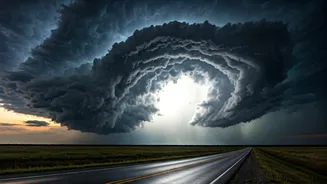
First and foremost, understand what a 'Red Alert' from the India Meteorological Department (IMD) means. It is the highest level of warning, issued when extremely heavy rainfall (often over 204.5 mm in 24 hours) is expected. These conditions pose a significant
threat to life and property, with high risks of flooding, landslides, and major disruptions to transport. Authorities advise against all non-essential travel. If you absolutely must drive, you must be prepared for the worst-case scenario. Check forecasts and official advisories before you even consider starting your journey.
Prepare Your Vehicle Meticulously
Before you set off, a thorough vehicle check is non-negotiable. Your tyres are your only contact with the slippery road, so ensure they have adequate tread depth and are correctly inflated. Worn-out tyres significantly increase the risk of skidding and hydroplaning. Check your brakes to ensure they are responsive; wet conditions increase stopping distances. Also, test your headlights, taillights, and fog lamps, as visibility can drop to near-zero in a downpour. Finally, make sure your windshield wipers are in perfect condition and your defroster is working to prevent the windows from fogging up.
Master Defensive Driving on Slopes
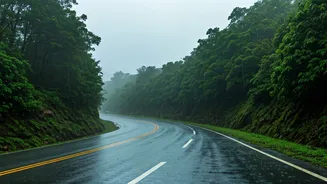
Ghat roads require a specific driving style, especially in the rain. The most important rule is to slow down significantly. This gives you more time to react to hazards like potholes hidden by water or sudden blockages. When going downhill, do not coast in neutral or rely solely on your brakes, as they can overheat and fail. Instead, shift to a lower gear (the same one you would use to climb that slope) and let the engine braking control your speed. Maintain a much larger following distance than you would on a dry road. Be gentle and smooth with the steering, accelerator, and brakes to avoid losing traction.
Navigate Hazards with Extreme Caution
Heavy rains create specific dangers on ghat roads. Be vigilant for signs of landslides, such as falling rocks or mud flows. Honk around blind curves and hairpin bends to alert oncoming traffic. As a rule, traffic going uphill has the right of way, as it is much harder for them to regain momentum if they stop. Avoid driving through large puddles or flooded sections of road, as you cannot know their depth or what hazards they conceal. Just a foot of water can be enough to carry a car away. If visibility becomes too poor, the safest action is to find a secure spot to pull over—well away from the road and any steep slopes—and wait for the rain to subside.
Pack a Monsoon Emergency Kit
Being stranded is a real possibility during a red alert. Your car should be equipped with a monsoon-specific emergency kit. This includes a well-stocked first-aid kit, a powerful waterproof flashlight with extra batteries, and a tow rope. A portable tyre inflator and a puncture repair kit can be lifesavers. Also, pack high-visibility reflective jackets, a reflective triangle, non-perishable snacks, and plenty of drinking water. A fully charged power bank for your phone is essential for communication. Having dry clothes, a towel, and an umbrella will also be crucial if you need to step out of your vehicle.