




Many new to green tea are put off by a harsh, bitter taste, assuming that is just how it is. The good news is that the problem isn't the tea, but the water. A simple adjustment to your brewing method can unlock its true, delicate flavour.
The Science Behind the Bitterness
If your cup of
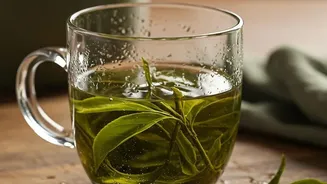
green tea tastes unpleasantly sharp, astringent, or grassy, you have likely scalded the leaves. Green tea leaves are delicate and contain compounds called tannins, or polyphenols. While these compounds are responsible for many of green tea’s health benefits, they are also a primary source of bitterness. When you pour boiling water (100°C) over the leaves, it causes an excessive and rapid release of these tannins. The result is a brew that is unbalanced and harsh, masking the subtle sweet and vegetal notes that make green tea so prized. The goal is not to avoid tannins altogether, but to extract them gently and in harmony with the other flavour compounds in the leaf.
Finding the Sweet Spot: The Ideal Temperature
The secret to a smooth, flavourful cup is to use water that is significantly below boiling. The ideal temperature range for most varieties of green tea is between 70°C and 85°C. This lower temperature is hot enough to extract the desirable flavours and antioxidants but gentle enough to prevent the over-extraction of bitter tannins. Think of it as waking the leaves up rather than shocking them. Within this range, you can experiment. A slightly cooler temperature might bring out more sweetness, while a slightly warmer one might yield a more robust flavour profile. For particularly delicate and high-grade Japanese green teas, such as gyokuro or sencha, the ideal temperature can be even lower, sometimes closer to 60°C.
How to Get It Right Without a Gadget
You do not need a fancy variable-temperature kettle to achieve the perfect brew, though they certainly make it convenient. The simplest method is to bring your water to a full boil and then let it cool down. A good rule of thumb is to let the water rest in the kettle with the lid off for about two to three minutes after it clicks off. This will typically bring the temperature down into that ideal 70°C to 85°C range. You can also look for visual cues. Water at the right temperature will have small bubbles just beginning to form and rise, rather than the aggressive, rolling boil you see at 100°C. If you own a kitchen thermometer, you can use it for precise control, but the 'boil and wait' technique is reliable enough for a great daily cup.
Temperature's Partner: Steeping Time
Controlling the water temperature is the most important step, but it works in tandem with steeping time. Even with perfectly heated water, leaving your tea to infuse for too long will eventually lead to bitterness. Green tea requires a much shorter brewing time than black tea. For most varieties, a steep time of one to three minutes is sufficient. Start with a shorter time, perhaps just 60 seconds, and taste it. You can always let it steep for another 30 seconds if you want a stronger flavour. It is always better to err on the side of under-steeping, as you cannot undo an over-steeped, bitter brew. Many high-quality green teas are also designed to be infused multiple times, with each subsequent steep revealing new layers of flavour.
Putting It All Together for a Perfect Brew
Now that you understand the principles, you can create a simple routine. Start with good quality tea leaves, as this will make a significant difference in the final taste. Use about one teaspoon of leaves per 200 ml of water. Heat your water and let it cool for a few minutes. Pour the water over the leaves and let them steep for one to three minutes. Strain the leaves out completely to stop the brewing process. With this method, you will find your green tea transforms from something you endure into something you truly enjoy, revealing a world of complex and satisfying flavours.