

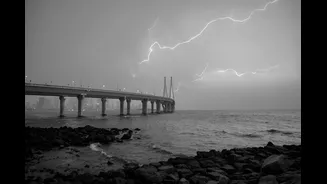



A City Built on Water
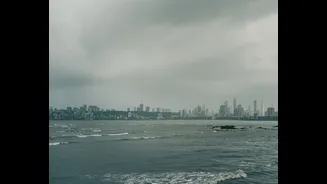
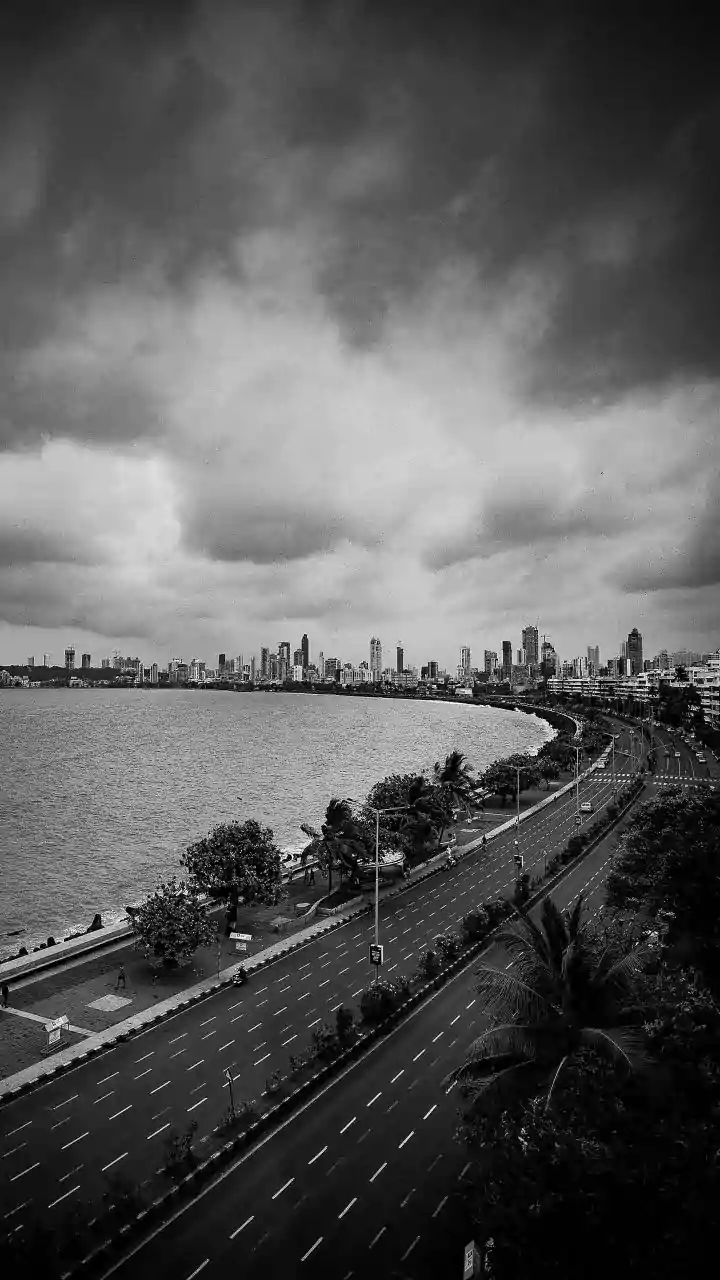
To understand Mumbai's monsoon struggle, you have to look at its geography. The city is a collection of what were originally seven separate islands, stitched together over centuries through land reclamation. This history means that large parts of the metropolis
are low-lying, with some areas even sitting below the high tide level. When it rains, water naturally flows towards these lower central areas. This saucer-like topography is the first major factor in the city's annual battle with waterlogging.
The Gravity-Fed Drain Dilemma
Mumbai's primary defence against rainwater is a sprawling, century-old network of stormwater drains. This system, largely a colonial-era legacy, was designed to handle about 25 mm of rain per hour and works primarily on the principle of gravity. Rainwater collected across the city flows through thousands of kilometres of open and closed drains, eventually emptying out into the Arabian Sea through numerous outfalls. During a low tide, when the sea level is lower than the drain outlets, this system works as intended, allowing stormwater to flow out freely.
When Rain and Tide Collide
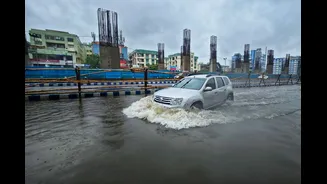
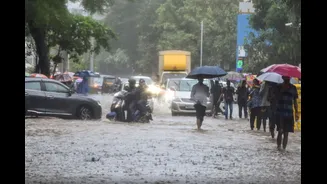
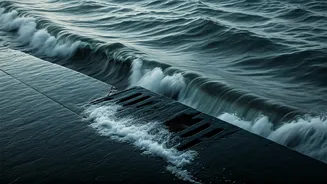
The real problem begins when a period of heavy rainfall coincides with a high tide. During high tide, the sea level rises, sometimes becoming higher than the drainage outfalls. This creates a reverse-flow scenario; instead of water draining out, seawater can push back into the city’s drainage system. To prevent this, the city uses floodgates at its major outfalls. These gates are closed during high tide to stop the sea from inundating the city. However, this necessary action creates a new problem: with the gates closed, the rainwater from the downpour has nowhere to go. The city's drainage network effectively becomes a sealed container, filling up rapidly and leading to widespread waterlogging.
The Bathtub Effect
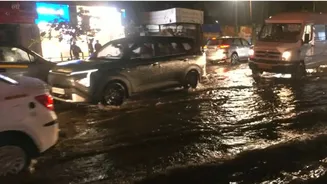
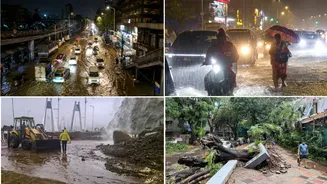
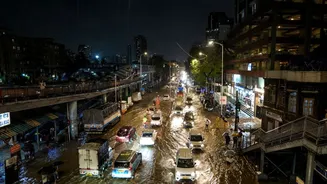
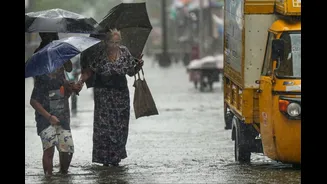
This combination of heavy rain and closed floodgates creates what can be described as a bathtub effect. Water is pouring in from the sky, but the drain is plugged. The city's low-lying areas quickly become submerged. It's only when the tide recedes and the floodgates can be safely opened that the accumulated water begins to drain. This process can take hours, during which roads become impassable, public transport grinds to a halt, and daily life is thrown into chaos. Studies have shown that intense bursts of rain combined with high tides are the deadliest combination, significantly increasing health risks and mortality in the following weeks.
Battling the Inevitable
The Brihanmumbai Municipal Corporation (BMC) is not idle in this fight. The city's strategy has evolved, particularly after the devastating floods of 2005 highlighted the inadequacy of the old drainage system. The key countermeasures include a growing network of powerful pumping stations. These stations are designed to mechanically pump out excess rainwater into the sea, even when the floodgates are closed during high tide. In recent years, the BMC has significantly increased the number of dewatering pumps deployed in flood-prone spots. There are also proposals for more floodgates and the creation of underground holding ponds to temporarily store excess rainwater.
An Ongoing Challenge
Despite these efforts, the challenge is immense. Climate change is leading to more intense, short bursts of rainfall, which can overwhelm even upgraded systems. Furthermore, continuous urban development, encroachment on natural floodplains like mangrove forests, and clogged drains filled with silt and waste reduce the drainage system's efficiency. The BRIMSTOWAD project, an ambitious overhaul of the drainage system, remains incomplete decades after it was proposed. The BMC has started using technology like AI to monitor desilting work more effectively, but it's a race against time, topography, and the changing climate.