



Serving Size vs. Portion Size
First, it's crucial to understand the difference between a 'serving size' and a 'portion size'. A serving size is a standardized amount of food determined by the manufacturer, as seen on the nutrition label. A portion size is the amount of food you actually
choose to eat in one sitting. The two are often not the same. For example, the serving size on a bag of chips might be 15 chips, but your portion might be two handfuls. The key to smart snacking is aligning your portion with a sensible serving.
The 100-Gram Gold Standard
The most effective way to compare different snacks is to ignore the 'per serving' information at first. Brands can set their own serving sizes, which makes direct comparison difficult. A packet of biscuits might list a serving as two cookies, while another lists it as four. To get a true comparison, use the 'per 100g' column on the nutrition label. This is a mandatory, standardized measure under FSSAI regulations and allows for an apples-to-apples comparison of calories, fat, sugar, and sodium between any two products, regardless of their suggested serving size.
A Tale of Two Snacks: Chips vs. Biscuits
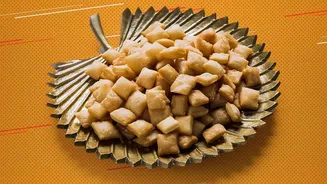
Let's apply this to some popular Indian snacks. A serving of Lay's Magic Masala (28g) has about 155 calories. A serving of four Britannia Good Day Cashew cookies (34g) has 175 calories. The serving sizes are different in weight, making it hard to judge which is more energy-dense. Now let's look at the per 100g value. Good Day Cashew cookies have about 515 calories per 100g. Haldiram's Aloo Bhujia has around 520-577 calories per 100g, depending on the specific batch and data source. By using the 100g value, you can clearly see their calorie density is quite similar, despite how different the snacks seem.
Watch for Weight, Not Just Volume
It's easy to be misled by the size of a snack. A cup full of a light, airy snack like puffed corn seems like a lot more than a small handful of nuts or bhujia, but the denser snack often packs more calories by weight. Always check the net weight on the package. When the label says a serving is 30 grams, it's helpful to occasionally weigh that amount on a kitchen scale. This gives you a visual idea of what a true serving looks like, which is often smaller than we imagine. For example, a single handful of Aloo Bhujia can be around 30g, containing about 156 calories.
Decoding Front-of-Pack Claims
Phrases like "baked, not fried," "multigrain," or "low-fat" on the front of a package are marketing terms. While regulated, they don't always mean a product is healthy. A 'low-fat' snack might compensate with a higher sugar content to improve taste. Always turn the packet over and trust the nutrition information panel on the back. The ingredient list, which is in descending order of weight, is also revealing. If sugar, salt, or refined flour (maida) are among the first three ingredients, it’s a sign that the snack is likely not the healthiest choice.
Practical Tips for Mindful Snacking
Once you've used the label to determine a reasonable portion, the challenge is sticking to it. A simple strategy is to never eat directly from the bag or box. Instead, portion out the amount you intend to eat into a separate bowl and put the package away. This prevents mindless overeating while watching TV or working. Using smaller plates and bowls can also make portions appear larger, leading to greater satisfaction. For a quick visual guide, a 3-ounce serving of a dense snack is about the size of a deck of cards, while a cup of a lighter snack is about the size of a baseball.