






The Vertical Backdrop: Using Fabric and Flora
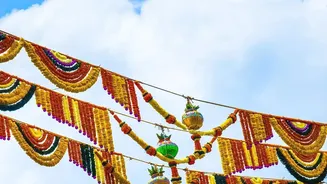
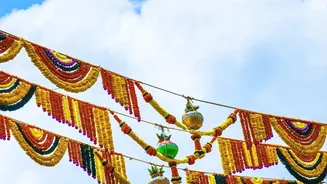
In a small room, decorating upwards is the key. Instead of a bulky, space-consuming mandap, create a stunning backdrop on a designated wall. An old silk saree or a vibrant dupatta can be hung as a rich, colourful base. This reuses beautiful textiles that
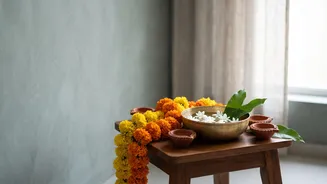
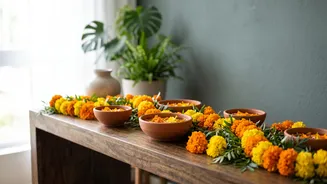
are often stored away. You can then create a frame for your idol using garlands of fresh flowers like marigolds and jasmine, or even strings of mango and banana leaves for a traditional, fragrant touch. This method concentrates the decor in one area, leaving floor space free and creating a powerful focal point without any thermocol or plastic.
Embrace the Idol: Small and Sustainable
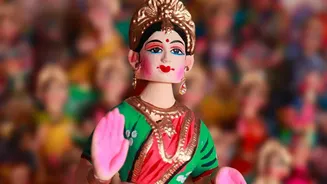
The centrepiece of your celebration is the idol itself. Opting for a smaller, eco-friendly Ganesha made of natural clay (shaadu maati) is the most impactful low-waste decision you can make. These idols dissolve easily in water, preventing pollution of lakes and rivers. A smaller idol requires less space and encourages a more intimate, personal setup. You can even find or make idols infused with seeds that can be grown into a plant after immersion, creating a beautiful living memory of the festival. Some families also choose a permanent idol made of materials like brass or stone, eliminating waste year after year.
DIY Decor: Paper, Clay, and Coconuts
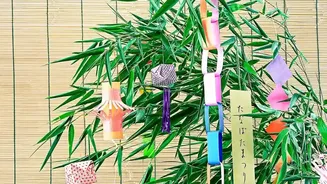
Engage the whole family by creating your own decorations. This not only reduces waste but also adds a personal, heartfelt touch to your celebrations. Old newspapers or recycled paper can be transformed into beautiful flowers, fans, and wall hangings. Small, handcrafted clay ornaments or diyas can be painted and placed around the idol. Even coconut shells can be polished and used as unique, natural diyas. These DIY activities are budget-friendly and a wonderful way to teach younger family members about sustainability.
The Glow of Tradition: Diyas and Fairy Lights
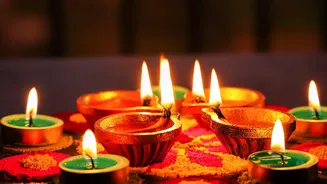
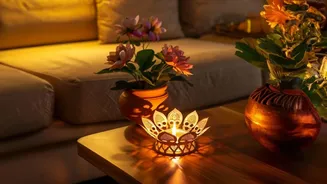
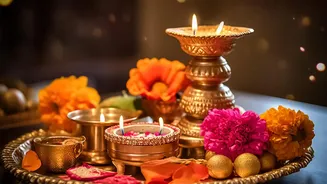
Lighting is essential for creating a festive atmosphere, and it requires minimal space. Instead of elaborate plastic lighting, turn to traditional brass or clay diyas. Their warm, flickering light adds a serene and sacred ambience. For a more modern but still low-impact touch, use warm-toned LED fairy lights. These are reusable, consume less energy, and can be draped elegantly around the backdrop, plants, or the chowki (small table) where the idol is placed, creating a magical glow without clutter.
Go Green with Potted Plants
Bring nature indoors by incorporating potted plants into your Ganpati mandap. This is one of the simplest yet most effective ideas for small spaces. Placing your idol amidst a cluster of household plants creates a lush, green, and vibrant setting. You can use a mix of foliage and flowering plants. They act as natural decorations, purify the air, and continue to beautify your home long after the festival is over. This approach celebrates nature and avoids single-use decor items entirely.
Aromatic Rangoli: Petals and Powders
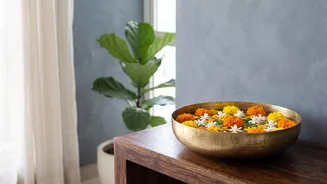
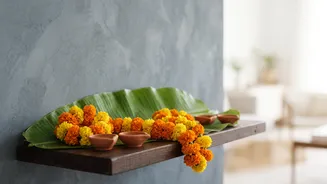
A rangoli at the entrance or near the mandap is a welcoming sign of festivity. To make it zero-waste, ditch chemical colours. Instead, create a beautiful rangoli using fresh flower petals, such as those from roses, marigolds, and jasmine. You can also use natural powders from your kitchen, like turmeric for yellow, rice flour for white, and kumkum for red. This not only looks beautiful and smells wonderful but is also completely biodegradable and safe for the environment.