





A New Foundation for Exploration
Before the next generation of astronauts sets foot on the lunar surface, a different kind of pioneer will be hard at work: teams of autonomous robots. As part of NASA's ambitious Artemis program, the strategy for establishing a long-term human presence
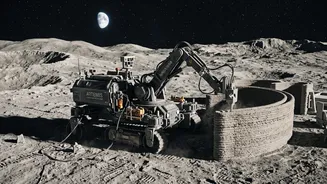
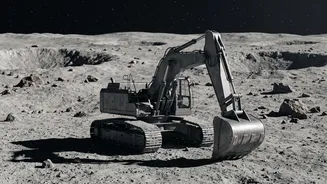
on the Moon has fundamentally shifted. Instead of astronauts arriving and then beginning the arduous process of construction, robotic systems will be deployed first to handle the heavy lifting. These machines are tasked with preparing landing pads, building protective berms, and even beginning the assembly of habitats. This 'robots-first' approach is a cornerstone of creating a sustainable lunar base, designed to mitigate risks to human life and maximize the efficiency of crewed missions when they finally arrive. The entire effort is a massive undertaking, involving not just NASA but also commercial partners who are developing the specialized hardware and software needed to turn this vision into reality.
Meet the Robotic Workforce
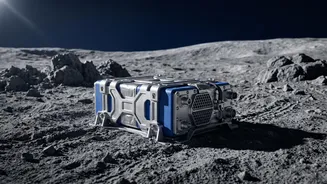
The robotic vanguard destined for the Moon is not a single, all-purpose machine, but a coordinated team of specialists. One key technology demonstration is NASA’s Cooperative Autonomous Distributed Robotic Exploration (CADRE) mission, scheduled to land on the Moon in 2026. This mission features a trio of suitcase-sized rovers that will operate autonomously, communicating with each other to map the terrain in 3D using ground-penetrating radar. The CADRE rovers are designed to demonstrate how a multi-robot team can work together without constant commands from Earth, assigning a 'leader' and distributing tasks among themselves to explore an area. Beyond exploration, other robots are being designed for pure construction. Companies like GITAI are developing inchworm-like robotic arms and rovers capable of excavation, installing solar panels, and even performing maintenance tasks like changing a rover's tire. The goal is to create a fleet of machines that can survey a site, dig, haul, and build collaboratively.
Building with Moon Dust
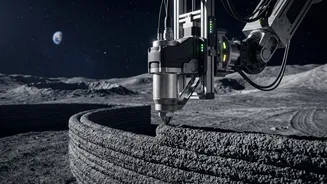
One of the biggest challenges in off-world construction is the immense cost of launching materials from Earth. The solution is to 'live off the land' through a process called In-Situ Resource Utilization (ISRU). This means using the Moon's own soil, or regolith, as the primary building material. Texas-based construction technology company ICON, through its NASA-funded Project Olympus, is at the forefront of this effort. They are developing 3D-printing systems that can melt lunar regolith with powerful lasers, fusing the loose dust into a hard, ceramic-like material suitable for building landing pads, roads, and habitats. This technology has already been tested using simulated lunar soil, proving that it's possible to create strong, durable structures that can also provide protection from radiation and micrometeorites. By turning local dust into bricks and building elements, these robotic systems can dramatically reduce the mass and cost of future missions.
Why Send Robots First?
Sending robotic construction crews ahead of astronauts offers several major strategic advantages. First and foremost is safety. The initial phases of construction, from landing heavy equipment to excavating and assembling structures in a harsh, vacuum environment, are inherently risky. Using robots eliminates the danger to human life during this critical setup period. Second, robots are incredibly efficient. They don't need life support, can withstand extreme temperatures, and can operate for extended periods—potentially around the clock during the long lunar day, which lasts about 14 Earth days. This allows mission planners on Earth to oversee progress without the immense overhead and cost associated with supporting a human crew. Finally, it allows astronaut time on the Moon to be dedicated to high-value scientific research rather than manual labor. When the crew arrives, they can step into a prepared, functional outpost and get straight to work on the primary goals of their mission.