







The Monsoon Cleaning Challenge
The Indian monsoon, a welcome relief from summer heat, presents a unique set of household challenges. High humidity, often exceeding 80%, means mopped floors take longer to dry, clothes smell musty, and leather goods develop fuzzy mould. This persistent
dampness creates a perfect breeding ground for mould and mildew, especially in kitchens, bathrooms, and wardrobes. Muddy footprints become a daily fixture, and the reduced ventilation from closed windows can trap allergens and the fumes from conventional chemical cleaners, potentially aggravating respiratory issues. This combination of moisture and dirt is why a standard cleaning routine that works in dry weather often proves insufficient during the rainy season.
Why Go Low-Chemical?
The growing interest in low-chemical cleaning is driven by several factors. Health is a primary concern, as conventional cleaners can contain ingredients that trigger allergies, asthma, or skin irritation. With homes often sealed against the rain, indoor air quality becomes more important, and reducing chemical fumes is a priority for many families. Environmental consciousness also plays a role; many are seeking to reduce the flow of harmful substances like phosphates and chlorine into waterways. Finally, cost and accessibility are appealing. The core ingredients of many natural cleaning solutions—vinegar, baking soda, and lemons—are inexpensive and readily available in most Indian kitchens.
Your Natural Cleaning Toolkit
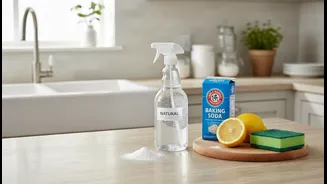
Switching to low-chemical cleaning starts with a few basic, powerful ingredients. White vinegar is a star player; its acidic nature helps to kill a significant percentage of mould species and cut through grease. Baking soda acts as a gentle abrasive for scrubbing away grime and is excellent at absorbing moisture and neutralising odours. Lemon juice, with its natural bleaching properties and fresh scent, is effective against mould and mildew stains, especially on tiles and white fabrics. Essential oils like tea tree, eucalyptus, and lemongrass not only add a pleasant fragrance but also possess natural antifungal and antibacterial properties that are ideal for the damp monsoon environment.
Checks to Make Before You Start
Before you begin your natural cleaning journey, a few precautions are essential. Always perform a patch test on a small, hidden area of any surface to ensure your DIY solution won't cause damage or discolouration. This is especially important for materials like marble, which can be damaged by acidic cleaners like vinegar. Be aware of the limits of natural cleaners; while effective for everyday grime and minor mould, severe mould infestations may require professional intervention. Most importantly, never mix certain chemicals. For instance, mixing vinegar with bleach creates toxic chlorine gas. Stick to proven recipes and avoid combining different store-bought cleaners or mixing them with homemade solutions unless the label explicitly states it is safe.
Simple Recipes for Monsoon Problems
For an all-purpose surface cleaner, mix equal parts white vinegar and water in a spray bottle. To tackle mould on bathroom tiles or walls, spray undiluted white vinegar, let it sit for an hour, then scrub and wipe clean. For a scrubbing paste that works on grimy surfaces, combine baking soda with a small amount of liquid soap and water. To freshen musty wardrobes and cupboards, place small cloth pouches of dried neem leaves or bowls of baking soda inside to absorb moisture and deter pests.
Decoding 'Green' Product Labels
If you prefer to buy ready-made products, navigating the world of 'green' and 'natural' labels can be confusing. The term 'natural' isn't strictly regulated, so it’s important to look beyond marketing claims. Beware of 'greenwashing,' where companies use eco-friendly imagery or vague terms like 'plant-based' without being transparent. A truly eco-conscious brand will typically disclose its full ingredient list. In India, recent guidelines from the Central Consumer Protection Authority (CCPA) require brands making claims like 'eco-friendly' or 'natural' to provide verifiable evidence, often through a QR code on the packaging. Look for this transparency as a sign of a trustworthy product.