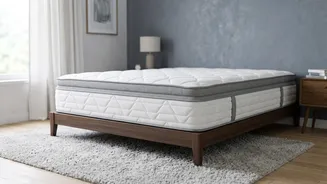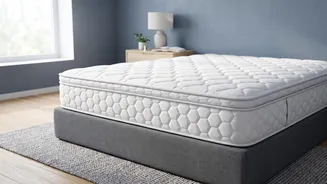






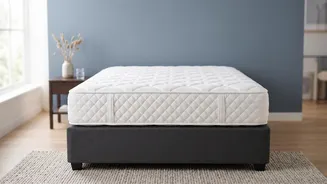

Shopping for a spring mattress can be confusing, with endless talk of firmness ratings and universal scores. But the secret to a great night's sleep isn't a number on a chart; it's finding a mattress that fits you personally.
Why Universal Ratings Fall Short
Many mattress brands use a 1-to-10
scale to rate firmness, where 1 is the softest and 10 is the firmest. While this seems helpful, 'firmness' is subjective. How a mattress feels depends heavily on your body weight, shape, and primary sleeping position. A mattress rated a '7' (firm) might feel perfect for a heavier person but like a wooden plank to a lighter individual. Similarly, a '4' (soft) might provide plush comfort for a side sleeper but cause a back sleeper to sink uncomfortably. Because these ratings aren't standardised across brands, a 'medium-firm' from one company can feel very different from another's. This is why focusing on the components of comfort is far more effective.
The Heart of the Mattress: Understanding Coils
The support system in a spring mattress is its coil unit. The type of coil used dramatically affects feel, durability, and motion transfer. Traditional 'Bonnell' coils are interconnected, hourglass-shaped springs that move as one unit. They are often found in more budget-friendly mattresses and provide a firm, bouncy feel, but they transfer motion easily, meaning you'll feel your partner's every toss and turn. By contrast, 'pocketed coils' are the modern standard for better comfort. Each spring is individually wrapped in a fabric pocket, allowing it to move independently. This design provides more targeted support that contours to your body's unique shape and significantly reduces motion transfer, making it an excellent choice for couples.
Decoding Coil Count and Gauge
Beyond the type of coil, two other numbers matter: count and gauge. Coil count is the total number of springs in the mattress. A higher count generally indicates better, more targeted support and durability, with a good range for a queen-size mattress being between 600 and 1,000 coils. Coil gauge refers to the thickness of the wire used for the springs. It's a bit counterintuitive: a lower gauge number means a thicker, firmer wire, while a higher gauge number means a thinner, more flexible wire. So, a mattress with a lower gauge (e.g., 12-13) will provide firmer support, ideal for heavier individuals or stomach sleepers, while a higher gauge (e.g., 14-15) will offer a softer, more contouring feel suitable for side sleepers.
It's Not Just Springs: The Role of Comfort Layers
The coils provide the deep support, but the layers on top are what create the initial feeling of comfort. These 'comfort layers' can be made from various materials like memory foam, latex, or polyurethane foam. A hybrid mattress, for instance, combines a spring core with substantial layers of foam or latex to offer the best of both worlds: the responsive support of springs and the pressure-relieving contour of foam. A thick comfort layer can provide cushioning for pressure points like shoulders and hips, while the springs below prevent you from sinking too far and keep your spine aligned. The quality of these layers is just as important as the coils for overall comfort and longevity.
Your Body Knows Best: Sleep Position and Weight
Ultimately, the right mattress is the one that fits your body. Your sleeping position is the most critical factor. Side sleepers need a softer, more contouring surface to cushion the shoulders and hips. Back sleepers generally do best with a medium-firm feel that supports the natural curve of the spine without letting the hips sink. Stomach sleepers require a firm surface to keep their hips elevated and prevent lower back strain. Your body weight also changes the equation; heavier individuals typically need a firmer, more supportive mattress to prevent excessive sinking, while lighter individuals may find the same mattress feels much firmer and may need a softer option for adequate pressure relief.