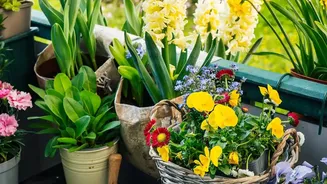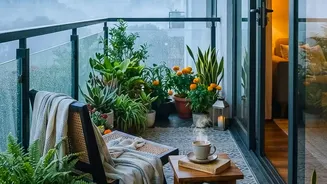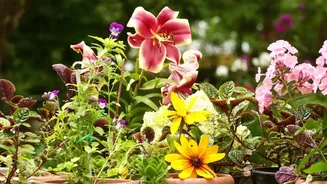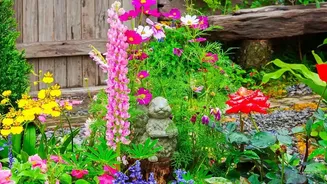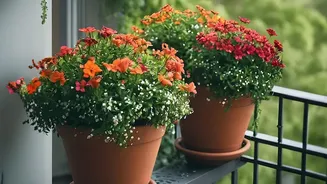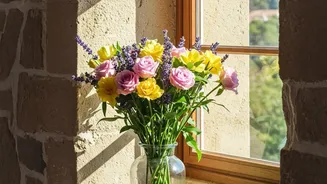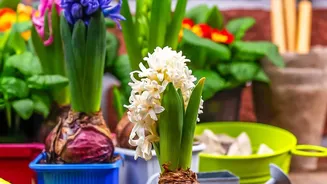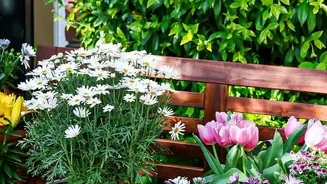




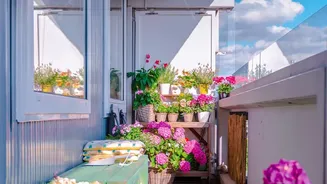
The mild Indian winter is the perfect season for gardening. With pleasant sunlight and cool temperatures, it's the ideal time to transform your balcony into a vibrant floral paradise, bursting with colour and life.
First, Assess Your Balcony's Conditions
Before you rush to the nursery, take
a moment to understand your balcony's unique environment. The single most important factor for flowering plants is sunlight. Most winter bloomers need at least five to six hours of direct sun to produce abundant flowers. Observe your balcony for a day to see which spots get full sun (6+ hours), partial sun (3-5 hours), or mostly shade. Also, consider your pot sizes. While small pots are fine for some plants, larger containers give roots more space and don't dry out as quickly. Finally, ensure you have a good quality potting mix. A well-draining mixture, typically containing soil, cocopeat, and compost, provides the right balance of aeration, moisture retention, and nutrients for healthy blooms.
Marigold (Genda)
An absolute classic in Indian gardens, the marigold is one of the easiest and most resilient winter flowers to grow. Its cheerful orange and yellow pom-pom blooms can brighten any space. Marigolds are beginner-friendly and thrive in containers, making them perfect for balconies. They are hardy plants that love full, direct sunlight and can tolerate cooler temperatures well. Their strong scent is also known to help repel common garden pests, making them a useful companion for other plants. For best results, water moderately and let the soil dry out slightly between waterings.
Petunia
Often called the queen of winter balcony gardening, the petunia is a prolific bloomer famous for its vibrant, trumpet-shaped flowers. Available in a huge variety of colours including pink, purple, red, and white, they create a stunning visual. Petunias are particularly well-suited for hanging baskets and railing planters, where they can spill over the edges to create a cascading waterfall of colour. They are heavy feeders and require at least five to six hours of full sun to flourish. Keep their soil consistently moist but avoid waterlogging.
Pansy
Known for their charming, face-like markings, pansies are a delightful addition to any winter garden. These low-growing plants thrive in cool weather and can tolerate partial shade better than many other winter flowers, making them a great choice for balconies that don't receive sun all day. They grow well in window boxes and shallow planters. While they handle light frost, intense heat is their main enemy, so the cool Indian winter is their ideal season. Keep their soil moist and feed them regularly for a continuous display of their whimsical blooms.
Chrysanthemum (Guldaudi)
A winter favourite in many Indian homes, chrysanthemums offer a spectacular show of colour in various forms, from small buttons to large, intricate blooms. They are a symbol of the season and can make a bold statement on a balcony. These plants require a spot with at least five to six hours of daily sunlight to set buds properly. They prefer slightly larger pots to accommodate their root systems. One key tip is to stop feeding them once the flower buds have formed to encourage the best possible blooms.
Dianthus
Dianthus, also known as 'Sweet William', produces clusters of attractive flowers, often with a pleasant, clove-like fragrance. They come in shades of pink, red, and white, frequently with fringed petals. Dianthus is a hardy choice for winter balconies, performing well in pots with good drainage. These plants prefer full sun. A great feature of Diantus is its ability to re-bloom; if you remove the faded flowers, the plant can produce several flushes of blooms throughout the season, from October to April.
Calendula (Pot Marigold)
Not to be confused with the common marigold, calendula offers cheerful, daisy-like flowers in shades of bright yellow and orange. It is an incredibly easy and low-maintenance flower to grow, making it perfect for beginners or busy gardeners. Calendula thrives in full sun and well-draining soil and is quite resilient. It often self-seeds, meaning you might see new plants pop up the following year. Its petals are also edible, adding a peppery flavour to winter salads.