


A Mid-Air Security Scare
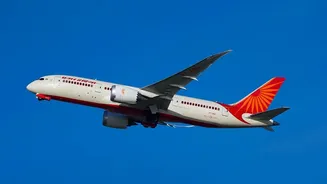
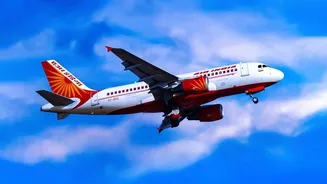
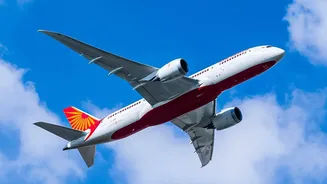
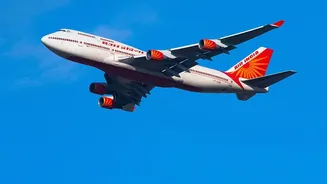
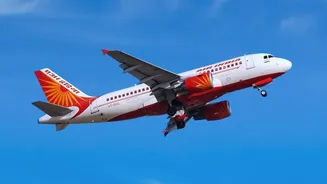
On October 14, passengers aboard Air India flight AI 2030 were anticipating a routine landing in Delhi. Instead, the crew announced a diversion to Jaipur for 'security reasons'. The aircraft, a Boeing 787-9 with 293 passengers and 13 crew members, had
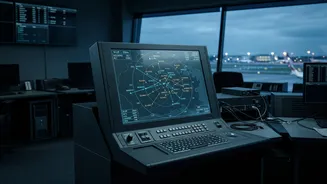
triggered a 'Squawk 7500' alert—an internationally recognized transponder code for unlawful interference or hijacking. This signal, received by air traffic control while the plane was in the Mumbai Flight Information Region, prompted an immediate diversion. The flight landed safely at Jaipur International Airport and was directed to an isolation bay, where security agencies awaited.
Confusion and Concern on the Ground
For those on board, the situation was bewildering. Passengers described seeing firefighters and heavy security upon landing, initially suspecting a technical failure like an engine fire. They were de-boarded and subjected to another round of security checks. The process led to a delay of several hours before the flight was cleared to reboard and finally continue its journey to Delhi. In its official statement, Air India cited a 'perceived security concern' and stated that it worked with authorities to minimize passenger inconvenience, though travelers experienced significant disruption to their plans.
Was the Diversion 'Unnecessary'?
The hijack alert was quickly confirmed to be false. Officials now believe the 'Squawk 7500' signal was activated not by the pilots, but by a technical glitch. Some reports point towards a possible malfunction in an air traffic control radar system, which is now a focus of the investigation by the Directorate General of Civil Aviation (DGCA). While any hijack alert must be treated with utmost seriousness, the term 'unnecessary' in this context refers to the fact that there was no actual threat aboard the plane. The diversion was a mandatory safety protocol triggered by a false alarm, raising questions about the reliability of the systems designed to prevent such incidents.
The 'AI 2030 Alert': A Wake-Up Call
The phrase 'AI 2030 Alert' has come to symbolize more than just one flight number. It serves as a stark reminder of the delicate balance between security protocols and operational reliability. As India's aviation sector expands, incidents like this highlight potential vulnerabilities. For passengers, it underscores the fragility of travel plans and the critical need for clear communication from airlines during a crisis. For Air India, now under private management, it's another test of its crisis response and customer service. The DGCA investigation into the technical glitch will be crucial in preventing similar false alarms that cause widespread disruption and passenger distress.
Passenger Rights and Compensation Rules
When a flight is diverted, passengers are often left wondering about their rights. According to DGCA regulations, a diversion is not treated the same as a cancellation. Airlines are not required to pay a fixed cash compensation simply for landing at a different airport. However, they are obligated to provide care, including meals, refreshments, and, if necessary, hotel accommodation. The airline must also arrange for onward travel to the original destination. Cash compensation, as specified in DGCA rules for cancellations and long delays, typically only applies if the airline fails to arrange an alternate flight within a specific timeframe. In the case of AI 2030, since passengers were re-boarded and flown to their destination the same day, the primary obligation was care during the delay in Jaipur.