


The Legendary Coastal Railway
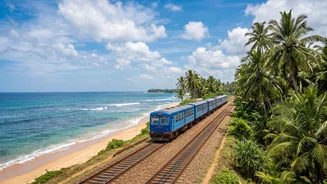
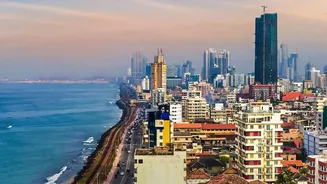
One of the most beautiful train journeys in the world isn't in the Swiss Alps; it's right next door in Sri Lanka. The Coastal Line runs south from Colombo, hugging the Indian Ocean so closely that you can almost taste the sea spray. This historic line
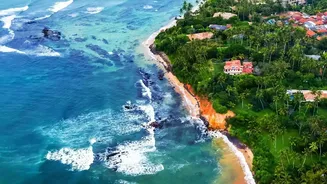
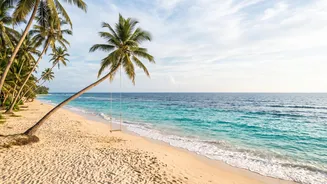
connects the capital with the sun-drenched beach towns of the south, ending in Matara and Beliatta. For much of the journey, the tracks are just metres from the shoreline, offering breathtaking, uninterrupted views of swaying palm trees, bustling fishing villages, and the vast, blue expanse of the ocean. It’s not just transport; it’s a core part of the Sri Lankan travel experience.
Tickets, Classes, and Costs
Train travel in Sri Lanka is astonishingly affordable. The journey from Colombo to Galle can cost as little as a few hundred Sri Lankan Rupees, which is less than the price of a coffee in a city cafe. There are typically three classes. Third class is the most basic and often crowded, but offers an authentic local experience. Second class provides more comfort, and like third class, features open windows perfect for photography. First class is often air-conditioned with reserved seats, but can feel more disconnected from the scenery. For the full experience, second or third class unreserved tickets are the way to go. You can buy these at the station on the day of travel; just be prepared to stand during peak times. For guaranteed seats, especially in first or second class on popular routes, it is advisable to book in advance online or at a major station.
Key Stops Along the Route
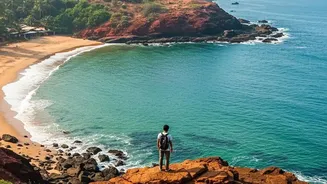
The coastal train is a hop-on, hop-off adventure waiting to happen. While the final destination might be Galle, the journey is dotted with charming towns worth a stop. Bentota is famous for its serene beaches and water sports. A little further down, Hikkaduwa is a vibrant hub known for its coral reefs, surfing, and lively nightlife. Unawatuna, just before Galle, boasts a beautiful crescent-shaped beach and a more relaxed vibe. Other notable stops include Mount Lavinia, with its colonial-era hotel, and Mirissa, renowned as a starting point for whale-watching tours. Each stop offers a unique slice of Sri Lankan coastal life, from tranquil retreats to bustling tourist centres.
The Crown Jewel: Galle Fort
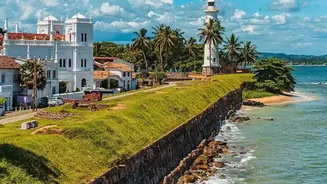
The major destination on this line is the historic city of Galle. The train station is a short walk from the magnificent Galle Fort, a UNESCO World Heritage Site. Originally built by the Portuguese and later fortified by the Dutch, this sprawling stone fortress is a city within a city. Spend a day wandering its cobblestone streets, which are lined with colonial-era villas, chic boutiques, art galleries, and charming cafes. You can walk the entire circumference of the fort walls, watching the sunset over the Indian Ocean from the ramparts. The fort is not a sterile museum; it's a living, breathing community and an essential Sri Lankan experience.
Stretching Your Rupee Further
Sri Lanka is a paradise for budget travellers, and costs can be kept remarkably low. Beyond the cheap train fares, embrace local food. A plate of rice and curry from a local eatery is not only delicious and filling but also incredibly cheap, often costing just a couple of hundred rupees. For accommodation, look for homestays and guesthouses run by local families. They are more affordable than hotels and offer a wonderful opportunity to experience Sri Lankan hospitality. For short distances, tuk-tuks are ubiquitous, but always agree on a price before you start your journey. Using local buses for longer stretches between towns is another extremely cost-effective option.
Planning Your Coastal Adventure
For Indian citizens, getting to Sri Lanka is straightforward, with an Electronic Travel Authorization (ETA) available online. Flights from southern Indian cities like Chennai or Kochi are short and often inexpensive. The best time to visit the south coast is from December to April when the seas are calm and the weather is dry. While many Sri Lankans speak English, learning a few words of Sinhala, like 'Ayubowan' (a greeting wishing a long life), will be warmly received. Carry enough Sri Lankan Rupees (LKR), especially for smaller guesthouses and local shops, although ATMs are widely available in towns.