


A Threat Unlike Any Other
The idea of a nuclear detonation in space sounds like science fiction, but recent research has brought the threat into sharp focus. A study by researchers from the University of Wisconsin-Madison and Princeton University simulated the effects of a 1-megaton
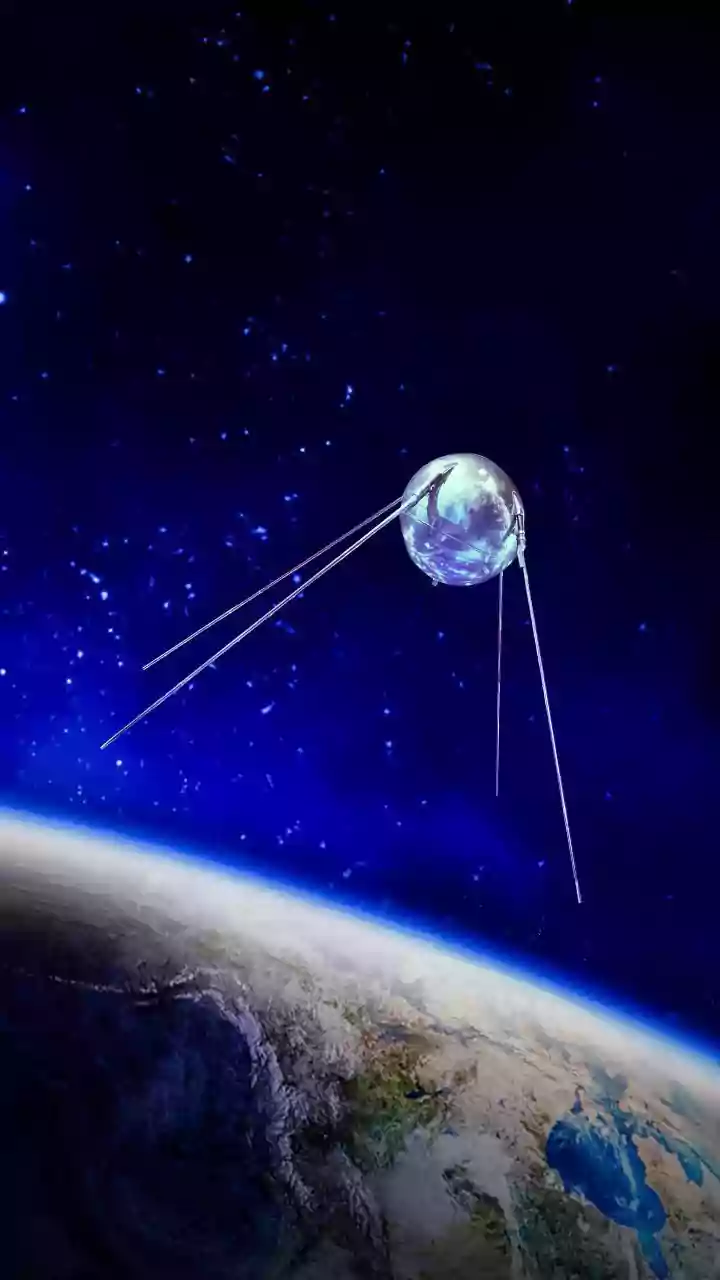
nuclear bomb exploding 500 kilometres above the Earth. The results are staggering: such an event could disable approximately 98% of all satellites in low-Earth orbit (LEO) within a single week. This isn't about a targeted attack on one satellite; it's an indiscriminate event that would cripple the entire global space infrastructure, affecting military and civilian assets of all nations.
It's the Belt, Not the Blast
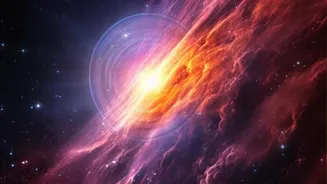
Contrary to what movies might suggest, the immediate blast of a nuclear bomb is not the primary danger to satellites in the vacuum of space. The real threat comes from what happens next. The detonation releases a massive pulse of radiation and high-energy electrons. These charged particles are then trapped by Earth's magnetic field, creating a vast, artificial, and intensely radioactive belt that can persist for years. Satellites in low-Earth orbit, which circle the planet every 90 minutes or so, would repeatedly fly through this lethal zone. With each pass, their sensitive electronics would absorb a cumulative dose of radiation, leading to widespread failure.
A Lesson From History: Starfish Prime
This terrifying scenario is not just theoretical. On July 9, 1962, the United States conducted a high-altitude nuclear test called Starfish Prime. A 1.4-megaton warhead was detonated 400 kilometres over the Pacific Ocean. The resulting electromagnetic pulse (EMP) knocked out streetlights in Hawaii, nearly 1,500 kilometres away. More significantly, the test created an artificial radiation belt that damaged or destroyed at least a third of the world's small satellite fleet at the time, including the pioneering communications satellite Telstar 1. Starfish Prime provided a stark, real-world demonstration of how a nuclear detonation can poison the space environment for years.
The Modern World's Achilles' Heel
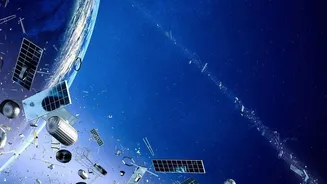
In 1962, the loss of a few satellites was a scientific curiosity. Today, a similar event would be a global catastrophe. There are now over 13,000 satellites in LEO, forming the backbone of modern civilization. Our reliance on them is absolute. A mass satellite failure would disrupt GPS navigation, global financial transactions, internet connectivity, weather forecasting, and critical military communications. Furthermore, the disabled satellites would become uncontrolled space junk, dramatically increasing the risk of collisions that could create even more debris, a cascading effect known as the Kessler Syndrome. This would make launching replacement satellites incredibly difficult.
The Race For Resilience
The growing awareness of this threat has spurred a new focus on satellite resilience. Building 'hardened' satellites, with electronics shielded against radiation, is a key area of study. Techniques include using radiation-resistant materials like gallium nitride, adding physical shielding with materials like aluminum or tantalum, and designing systems with redundancy and error-correction codes. Another strategy is 'deterrence by denial'—creating proliferated constellations of smaller, cheaper satellites. The idea is that if the network is distributed across thousands of units, it becomes much harder to disable completely with a single event. However, the recent study warns that even tripling the radiation tolerance of satellites only delays widespread failure by a matter of days, suggesting that hardening alone is not a foolproof solution.