




The Race to Net-Zero Emissions
As the fourth-largest rail network globally and the backbone of India's transport system, Indian Railways has a colossal carbon footprint. Recognizing its environmental responsibility, it has set a bold target to become a net-zero carbon emitter by 2030.
This goal is a cornerstone of India's broader climate commitments. The strategy is multi-pronged, focusing on 100% electrification of its broad-gauge network, improving energy efficiency across the board, and aggressively adopting renewable energy sources for both its trains and facilities. While electrification is the primary focus, hydrogen fuel cell technology offers a clean and efficient alternative for routes where laying overhead electric lines is difficult or not cost-effective, such as on heritage and hill routes.
How Do Hydrogen Trains Actually Work?
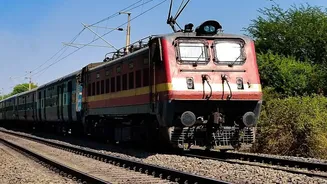
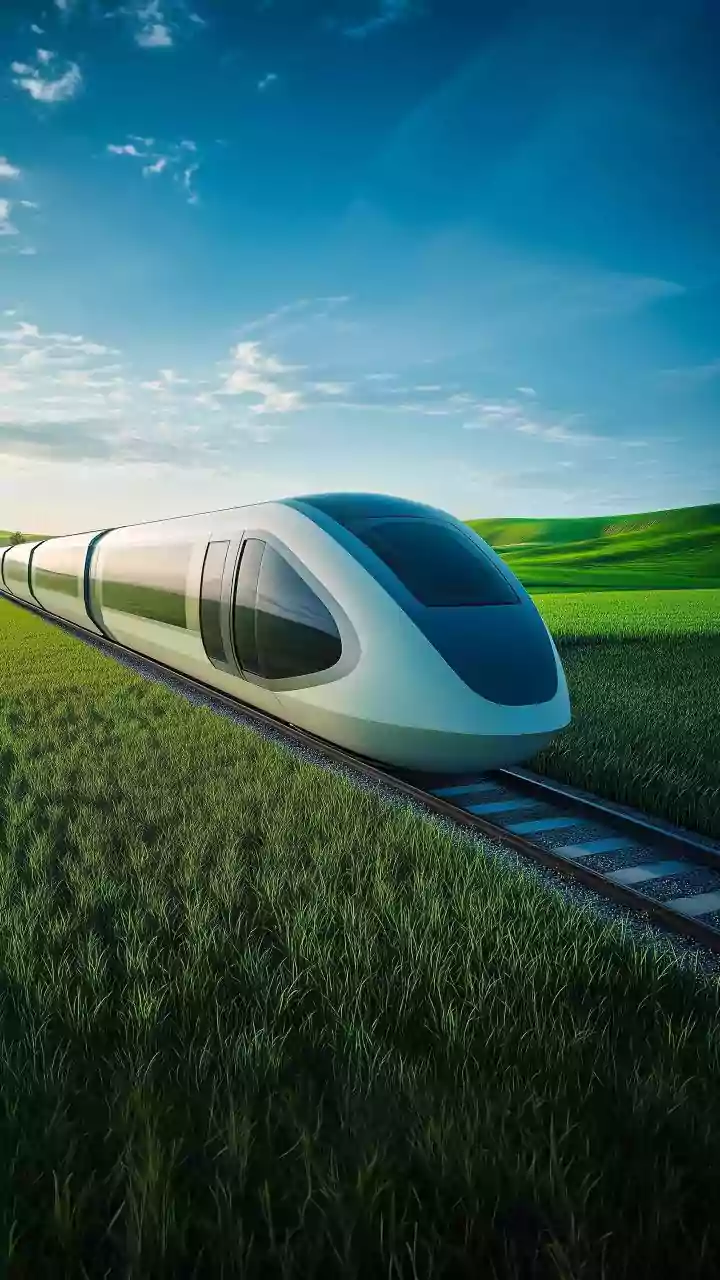
A hydrogen train is essentially an electric train that carries its own power plant. Instead of drawing electricity from overhead wires, it uses onboard fuel cells. Inside these cells, a quiet electrochemical reaction takes place: compressed hydrogen stored in tanks is combined with oxygen taken from the air. This process generates electricity to power the train's motors. The only byproduct is water vapor, making it a zero-emission mode of transport at the point of use. This stands in stark contrast to conventional diesel trains, which burn fossil fuels and release harmful pollutants and greenhouse gases. The technology allows for quieter, cleaner journeys without the need for extensive and costly electrification infrastructure everywhere.
From Blueprint to the Main Line
India's first indigenous hydrogen-powered train began its journey from concept to reality with extensive trials. A prototype, developed as a retrofitted Diesel Electric Multiple Unit (DEMU) train, has been undergoing rigorous testing on the Jind-Sonipat section in Haryana. These tests, which successfully reached speeds of 120 kmph in June 2026, were crucial for evaluating performance, safety, and operational readiness. The project includes not just the train itself—a 10-coach set built by the Integral Coach Factory—but also the necessary ground infrastructure, such as a dedicated hydrogen production and refueling facility established at Jind. Following successful trials, pilot passenger services were launched on the route in July 2026, placing India among an elite group of nations exploring hydrogen rail technology.
Early Days and Emerging Lessons
While the hydrogen train has been a technological success, its initial run on the 89-km Jind-Sonipat route has seen lower-than-expected passenger numbers. Officials note that this is partly because the route itself has historically low commuter traffic. In response, Indian Railways is now considering extending the service to Delhi to improve its utilization and serve a larger population. This highlights a key lesson from the pilot project: technology demonstration is only half the battle. For long-term success, deployment must align with high-demand corridors where it can offer maximum benefit. The current train has a range of about 250-300 km on a full tank, making a trip to Delhi feasible, but its 10-coach size is smaller than the 18-20 coach trains typically required for high-density routes out of the capital.
The Challenges on the Track Ahead
The journey to a hydrogen-powered future is not without significant obstacles. The single biggest challenge is the cost and production of 'green' hydrogen—hydrogen produced using renewable energy like solar or wind. This is essential to ensure the entire cycle is environmentally friendly. Another major hurdle is the high initial capital investment required for both manufacturing the trains and, more importantly, building a widespread and safe refueling infrastructure across the vast rail network. The technology itself, while proven, is still maturing and needs to be tested for resilience against India's diverse and demanding climate and operating conditions. Scaling up from a single pilot project to a nationwide fleet will require sustained investment, domestic manufacturing capacity, and clear safety regulations.