







What is Microgravity?
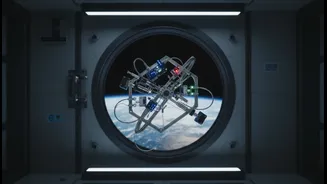
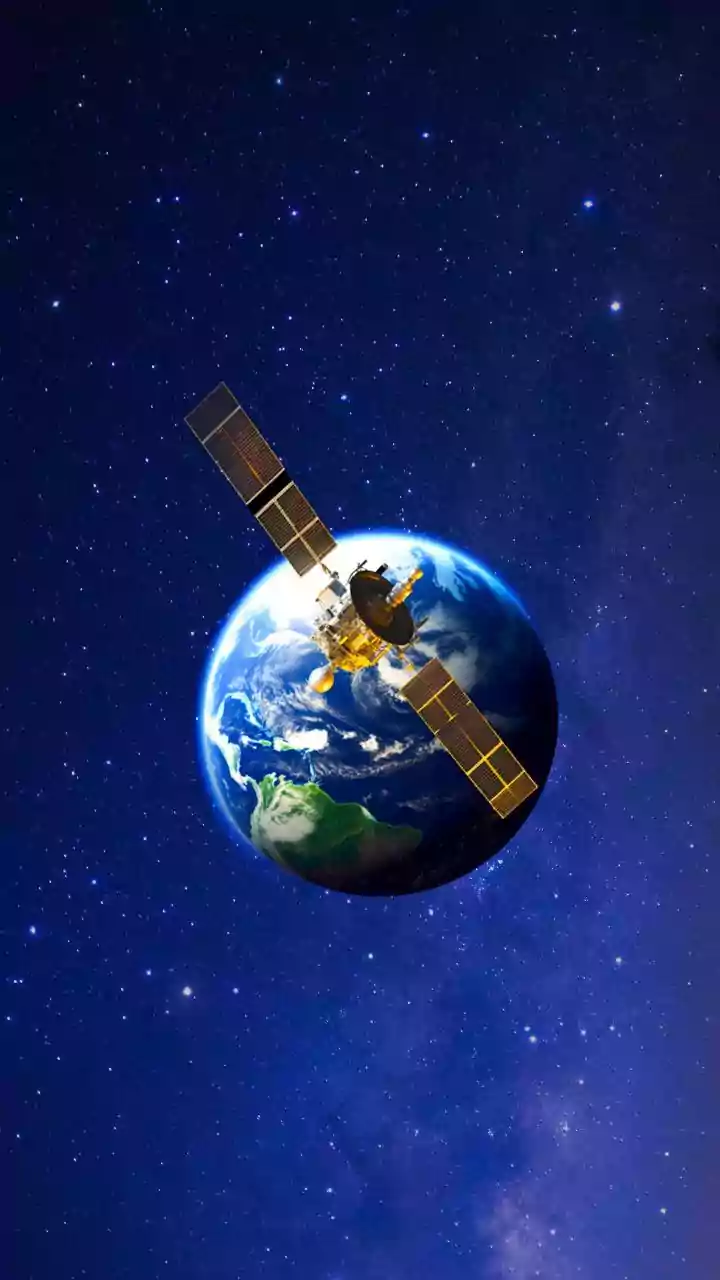
Often mistaken for 'zero gravity', microgravity is the condition of near-weightlessness experienced by objects in freefall. Astronauts and spacecraft in orbit are continuously falling towards Earth, but they have so much sideways momentum that they keep
missing it, creating a state of persistent freefall. This environment dramatically alters fundamental physical and biological processes. Forces like buoyancy and sedimentation, which are dominant on Earth, nearly vanish, while gentler forces like surface tension and diffusion take over. This unique setting provides a pristine laboratory to study phenomena in ways that are impossible on our planet.
A Goldmine for Scientific Breakthroughs
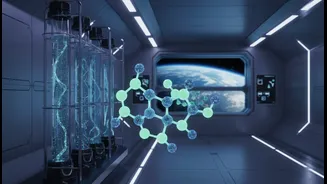
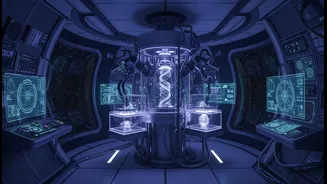
The near-absence of gravity is a goldmine for research with profound benefits for life on Earth. In medicine, studying how human cells and tissues behave in microgravity offers insights into muscle atrophy, bone density loss (osteoporosis), and immune system responses. This research can fast-track treatments for diseases. In materials science, the lack of sedimentation allows for the creation of perfectly mixed metal alloys and higher-quality crystals for use in electronics and pharmaceuticals. Even cancer research benefits, as cancer cells grown in microgravity can form three-dimensional clusters that more closely resemble tumours in the human body, providing better models for testing new therapies.
ISRO's Growing Microgravity Portfolio
The Indian Space Research Organisation (ISRO) is actively cultivating a robust ecosystem for microgravity research. Through its "Indian Microgravity Experiments" (IMEx) program, ISRO is inviting the national research community to develop experiments for future missions. The focus areas are broad, covering everything from materials science and fluid physics to space agriculture and pharmacology. Early successes, like the CROPS mission which germinated cowpea seeds in orbit, demonstrate India's growing capability in this domain. ISRO is also leveraging international collaborations, with several Indian experiments slated for missions like Axiom-4, studying everything from the growth of edible microalgae to how astronauts interact with electronic displays in space.
Paving the Way for Gaganyaan and a Home in Space
This focus on microgravity is not an academic exercise; it is a foundational pillar for India's most ambitious space projects. For the upcoming Gaganyaan mission, understanding the effects of microgravity on human physiology is critical for astronaut health and safety. The experiments being conducted now will inform life-support systems and countermeasures for long-duration flights. Looking further ahead, this research is essential for the Bharatiya Antariksha Station (BAS), India's planned modular space station set to be operational by 2035. The BAS is envisioned as a permanent platform for cutting-edge microgravity research, cementing India's place as one of the few nations with a sustained human presence in orbit.
The New Commercial and Strategic Frontier
Mastering microgravity science also unlocks significant economic and strategic advantages. It opens the door to commercial activities like in-space manufacturing of high-value products, from life-saving drugs to advanced semiconductors. By developing its own platforms like the BAS, India reduces its reliance on foreign space stations for research and creates opportunities to offer these capabilities to other nations and private companies. This strategic autonomy is crucial as space becomes an increasingly vital arena for technological innovation and global influence. The research conducted today will not only help Indian astronauts thrive in space but also has the potential to strengthen agriculture, improve healthcare, and drive industrial innovation back on Earth.