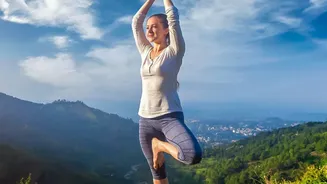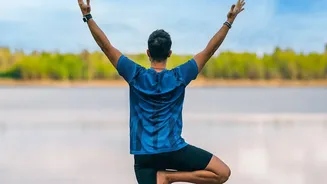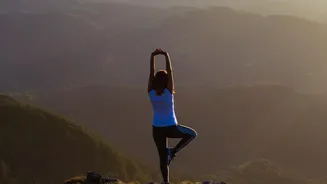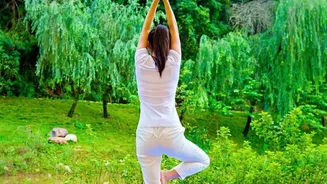


Tree Pose, or Vrksasana, is a cornerstone of yoga that builds physical stability and mental focus. Yet, this iconic balancing act can be wobbly and strain-inducing if done incorrectly. This guide will help you find your roots and grow.
The Foundation: Mastering Basic Tree Pose
To begin, stand
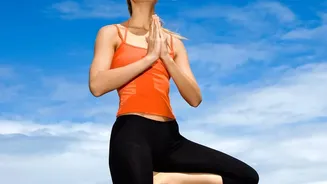
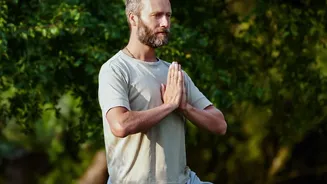
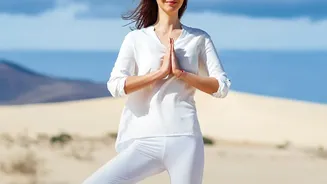
tall in Mountain Pose (Tadasana) with your feet together. Start to shift your weight onto your left foot, feeling all four corners of the foot press firmly into the ground. Bend your right knee and place the sole of your right foot on your inner left leg. The key is to find a placement that works for you: the inner ankle, the calf, or the upper inner thigh. Press your foot and leg into each other to create a stable connection. Keep your hips level, avoiding the common mistake of letting one hip jut out. Bring your hands to a prayer position at your heart. Find a fixed point in front of you to gaze at (your 'drishti') to help maintain balance. Hold for five to ten deep breaths before releasing and switching sides.
Common Mistakes and How to Avoid Them
One of the most frequently taught rules is to avoid placing your foot directly on the side of your knee. The knee is a hinge joint, and applying pressure from the side can create instability. Place your foot either above or below the knee joint. Another common error is hiking up the hip of the bent leg. To correct this, consciously drop the hip down to keep your pelvis level; placing your hands on your hips can help you feel this alignment. Also, be mindful not to lock the knee of your standing leg; keep it straight but not hyperextended by engaging the thigh muscles. Finally, remember to breathe. Holding your breath creates tension and makes balancing more difficult.
Beginner Variations for Finding Stability
If you feel unsteady, there are many ways to modify Tree Pose to build confidence. The simplest modification is to place your lifted foot on your inner ankle, keeping your toes on the floor like a kickstand for extra support. Using a wall is another excellent option. You can stand with your back against it or simply place a hand on the wall for balance. A chair can also provide support, either by holding onto the back or by practicing a seated version of the pose. In a chair, you can sit tall and cross one ankle over the opposite knee to mimic the hip-opening action. These variations allow you to focus on proper alignment and hip opening without the intense challenge of balancing.
Intermediate and Advanced Variations
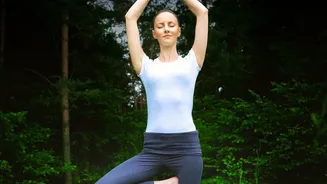
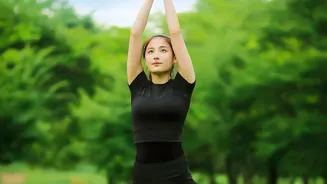
Once you feel stable in the basic pose, you can explore different arm positions to challenge your balance further. Try reaching your arms overhead like branches, either in a 'V' shape or with palms together. You can even gently sway your 'branches' to simulate a tree in the wind, which forces your core to engage more deeply. For a deeper hip opener, you can work toward Half-Lotus Tree Pose (Ardha Padma Vrksasana), where the top of the lifted foot rests on the opposite hip crease. This should only be attempted if you have significant hip flexibility and no knee pain. Another way to increase the difficulty is to practice with your eyes closed, which removes your visual point of reference and forces you to rely entirely on your internal sense of balance.
The Mental Side of Balance
Ultimately, Tree Pose is as much a mental exercise as it is a physical one. The ability to balance comes from a calm, focused mind. Your 'drishti', or steady gaze, is a powerful tool for concentration. When your eyes wander, your mind tends to follow, and your body is likely to wobble. Consistent practice improves your focus and teaches patience. Some days you might feel as steady as an ancient oak; on others, you might feel like a sapling in a storm. The goal isn't to achieve a perfect, motionless pose but to embrace the process of finding your equilibrium, breath by breath. This practice of finding stillness and stability on the mat can translate to a greater sense of poise and calm in your daily life.