






A Museum Above the World
The Moon has been our constant companion in the night sky, a source of myth, poetry, and scientific curiosity. But since July 20, 1969, it has also been something more: a historical site. When Neil Armstrong descended the ladder of the Apollo 11 lunar
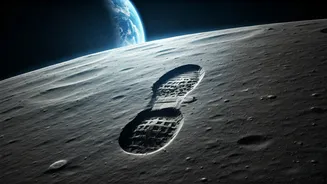
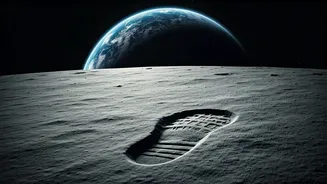
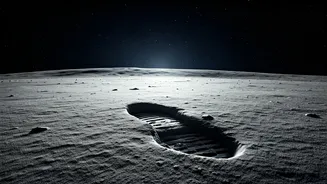
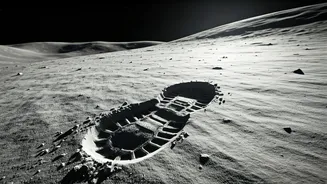
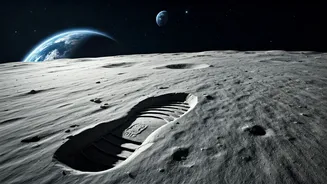
module, he left a bootprint in the fine, grey dust. That single print, followed by those of Buzz Aldrin and ten other astronauts over the next three years, transformed the Moon into a repository of human history. These are not just indentations in the soil; they are monuments to one of humanity’s most audacious achievements. The six Apollo missions that successfully landed on the lunar surface created a scattered, unintentional museum across a world with no curator, no entry fee, and no closing time.
The Science of Eternal Silence
Why have these footprints survived for over half a century when a footprint on a sandy beach on Earth vanishes in minutes? The answer lies in the Moon's unique and desolate environment. Here on Earth, erosion is a constant force. Wind scours surfaces, water washes away soil, and atmospheric processes relentlessly weather every feature. The Moon has none of these. There is no air to create wind and no liquid water to wash away the fine lunar regolith. Its surface is a near-perfect vacuum. The only significant force of erosion is the constant bombardment of micrometeorites, tiny particles of space dust that pepper the surface. While these microscopic impacts will eventually, over an immense timescale, erase the footprints, scientists estimate they could remain clearly visible for millions of years. They are frozen in time, preserved in a silent, unchanging landscape.
More Than Just Footprints
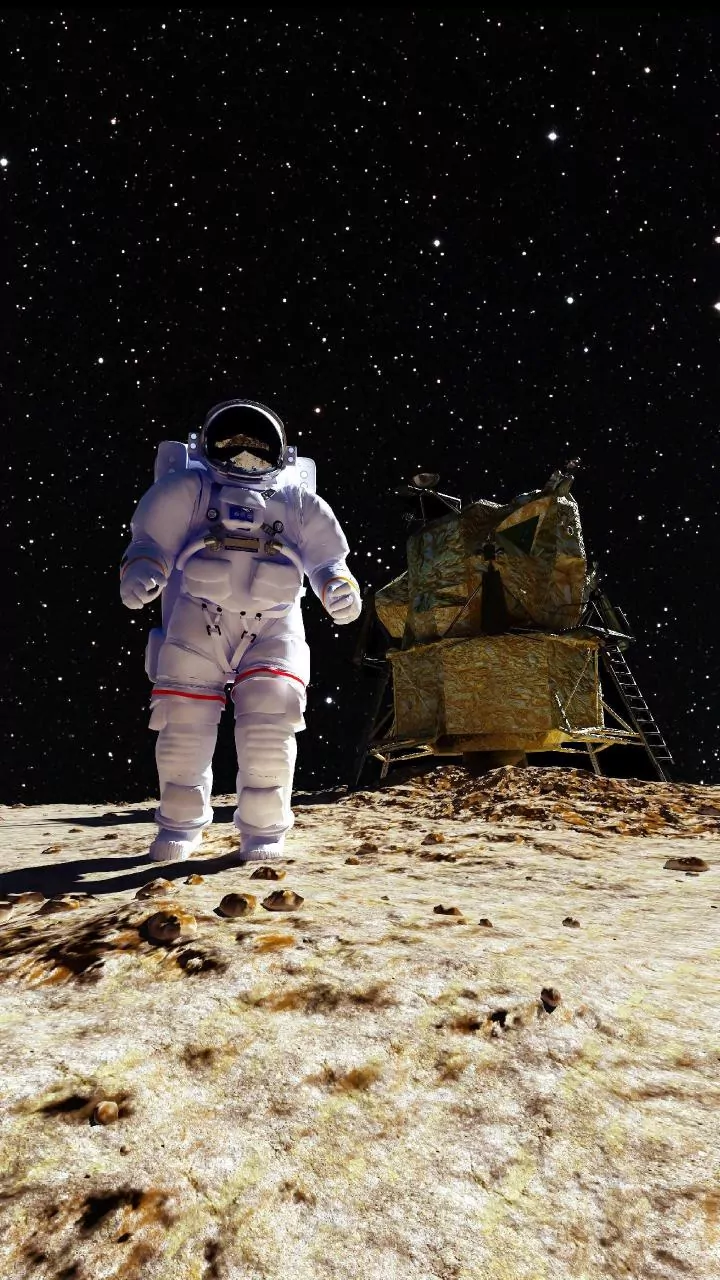
The legacy left by the twelve men who walked on the Moon is far more extensive than just their bootprints. The lunar surface is dotted with artifacts from the Apollo era, creating a unique archaeological site. There are six American flags, though decades of intense, unfiltered solar radiation have likely bleached them completely white. There are the bases of the lunar landers, three lunar rovers, and a host of scientific instruments, including seismometers and laser retroreflectors that scientists on Earth still use to take measurements. There are also discarded items like backpacks, camera parts, and even more personal mementos. Apollo 16 astronaut Charles Duke left a framed photograph of his family on the lunar soil. Apollo 14’s Alan Shepard famously hit two golf balls. These objects paint a vivid picture of the missions, capturing both the scientific purpose and the human spirit of the explorers who ventured 384,400 kilometres from home.
The Twelve Who Walked
While Neil Armstrong and Buzz Aldrin of Apollo 11 are the most famous, ten other American astronauts followed in their footsteps across six missions. The crew of Apollo 12, Pete Conrad and Alan Bean, explored a region called the Ocean of Storms. Alan Shepard and Edgar Mitchell of Apollo 14 spent over nine hours working on the surface. David Scott and James Irwin of Apollo 15 were the first to use the Lunar Roving Vehicle, dramatically extending their range of exploration. They were followed by John Young and Charles Duke on Apollo 16, and finally, Eugene Cernan and Harrison Schmitt on Apollo 17 in December 1972. Cernan, as the commander of the final mission, holds the distinction of being the last person to step off the surface. His final words before climbing back into the lander were a hope for a peaceful return for all mankind. Together, these twelve men left the first and, so far, only human marks on another world.