



From Flat Image to Cosmic Journey
For decades, we’ve marvelled at the Hubble Space Telescope’s stunning, two-dimensional portraits of the universe. Ethereal clouds of gas and dust, sprinkled with newborn stars, have wallpapered computer screens and inspired wonder. But the teams behind
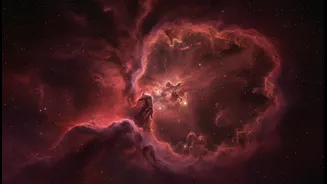
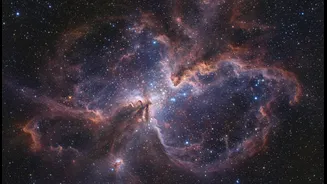
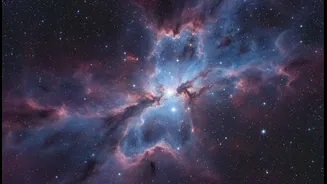
Hubble are no longer just presenting static pictures; they are turning them into dynamic narratives. Using a blend of scientific data and sophisticated visualization techniques, astronomers are creating three-dimensional 'fly-through' videos that take viewers on a journey into the heart of these stellar nurseries. Iconic targets like the Pillars of Creation and the star cluster Westerlund 2 are being reimagined as explorable landscapes, allowing us to experience these distant objects not as flat images, but as places.
The Art and Science of Spaceflight
Creating a 3D tour of a nebula 20,000 light-years away is not simple. Since Hubble can’t see in true three dimensions, scientists build these experiences using what they call 'scientifically reasonable interpretation'. The process involves taking a high-resolution 2D image and meticulously separating its elements—foreground stars, background gas, and dense pillars of dust. Then, using scientific knowledge about the object’s likely structure, they place these elements at different depths to create a 3D model. While the distances within the models are often compressed for dramatic effect, the goal is to provide an 'experiential view' that helps us better understand the complex, multi-layered structure of these cosmic formations. It's a fusion of scientific accuracy and artistic license designed to make the cosmos more tangible.
A Fireworks Display in a Stellar Nursery
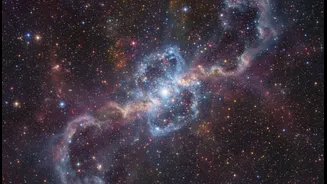
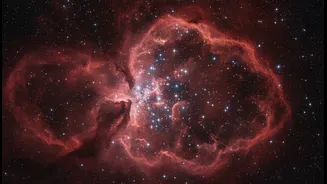
Beyond 3D models, Hubble’s storytelling also relies on powerful visual metaphors. A spectacular new image of LH 95, a bustling star-forming region in a neighbouring galaxy, was recently released and compared by NASA to 'fireworks shining through drifting smoke'. Located in the Large Magellanic Cloud, this stellar nursery is a chaotic and beautiful landscape where brilliant blue and white stars sparkle against glowing crimson clouds of hydrogen gas. This narrative framing isn't just for show. The colours themselves tell a story: the red glow comes from hydrogen gas heated by intense radiation from massive young stars, while the blue and white points of light are the hot, newly formed stars themselves. The image is a snapshot of a cosmic drama in progress.
Reading the Story of the Stars
The story within the LH 95 image is one of cosmic birth, life, and influence. The region contains thousands of developing stars, some still in their infancy as 'pre-main-sequence' objects that are pulling in gas and dust to grow. But it’s not a story of a single event. Astronomers have found evidence of multiple generations of stars living side-by-side. The most massive stars in the cluster, some 60 to 70 times the mass of our Sun, are actually younger than their neighbours, suggesting star formation has been happening in waves. These powerful giants blast out stellar winds and radiation that sculpt the surrounding gas, both creating the beautiful shapes we see and potentially triggering the next wave of star birth in a continuous cycle of creation.
Why Tell Stories with Science?
Whether through an immersive fly-through of the Carina Nebula or a vividly described image of LH 95, the goal is the same: to make the universe more accessible and understandable. These storytelling techniques bridge the gap between abstract data and human intuition. They allow us to grasp the sheer scale of a star cluster and appreciate the dynamic, ever-changing nature of the cosmos. For most of us, space will remain an impossibly distant realm. But by turning star nurseries into stories, scientists are giving us a front-row seat to the greatest show in the universe, revealing not just what these objects look like, but the epic tales of creation they contain.