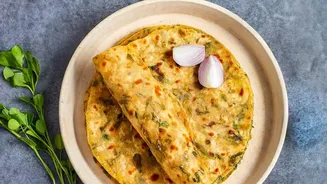






Craving a paratha that’s incredibly soft, flaky, and packed with nutrition? This Reshmi Paratha, which translates to 'silky' paratha, lives up to its name with a melt-in-your-mouth texture and a wholesome filling of everyday vegetables.
The Secret to 'Silky' Parathas
The term 'Reshmi'
means silk, and it perfectly describes the texture of this flatbread. The secret lies in the dough. While many parathas are made with just flour and water, the dough for Reshmi Paratha is often enriched with ingredients like milk, yogurt, or even boiled and mashed potatoes. This addition is what makes the dough incredibly soft and pliable, resulting in a paratha that remains tender long after it's cooked. The fat content in these ingredients weakens the gluten, creating a more delicate and less tough flatbread. For this recipe, we will use a combination of whole wheat flour and mashed potatoes, which not only provides the signature softness but also adds to the flavour and nutritional value.
Gather Your Ingredients
This recipe is all about using the vegetables you likely already have. The filling is versatile, but a classic mix provides a wonderful flavour and texture. For the dough, you'll need 2 cups of whole wheat flour (atta), 2 medium-sized boiled and mashed potatoes, 1 teaspoon of oil, and about half a cup of warm water, used as needed. For the vibrant vegetable filling, gather 1 cup of finely chopped or grated mixed vegetables. Excellent choices include carrots, bell peppers, green peas, French beans, and cauliflower. You'll also need one finely chopped onion, 1-2 finely chopped green chillies (adjust to your spice preference), 2 tablespoons of chopped coriander leaves, and a selection of spices: 1 teaspoon of cumin powder, 1 teaspoon of coriander powder, half a teaspoon of turmeric powder, half a teaspoon of garam masala, and salt to taste.
Step 1: Prepare the Dough and Filling
First, prepare the dough. In a large mixing bowl, combine the whole wheat flour, mashed potatoes, a pinch of salt, and a teaspoon of oil. Gradually add warm water and knead everything into a soft, smooth, and pliable dough. It should not be sticky. Cover the dough with a damp cloth and let it rest for at least 20-30 minutes. This resting period is crucial for a soft final product. While the dough rests, prepare your filling. Heat a tablespoon of oil in a pan. Add the finely chopped onions and sauté until translucent. Add the green chillies and all the mixed vegetables. Cook for 5-7 minutes until the vegetables are tender but still have a slight bite. Add all the powdered spices—turmeric, cumin, coriander, and garam masala—along with salt. Mix well and cook for another two minutes. Finally, stir in the fresh coriander leaves, turn off the heat, and let the filling cool completely.
Step 2: Assemble and Cook the Parathas
Once the dough has rested and the filling is cool, it's time to assemble. Divide the dough and the filling into equal-sized portions. Take one ball of dough, flatten it with your fingers, and dust it with dry flour. Roll it into a small circle about 4 inches in diameter. Place a portion of the vegetable filling in the centre. Bring the edges of the dough together, pleating as you go, to seal the filling inside. Gently flatten the stuffed ball and dust it with flour again. Carefully roll it out into a paratha of your desired thickness, applying gentle and even pressure to prevent the filling from tearing through the dough. Heat a tawa or skillet over medium heat. Place the paratha on the hot tawa and cook for about 30 seconds, or until small bubbles appear. Flip it over and apply a little ghee or oil to the top surface. Flip again and apply ghee or oil to the other side. Cook, pressing gently with a spatula, until both sides are golden brown and cooked through.
Serving and Variations
These Reshmi Vegetable Parathas are flavourful enough to be enjoyed on their own, perhaps with just a cup of hot chai. They also pair wonderfully with a side of cool yogurt (dahi), a tangy pickle (achar), or a simple raita. For a heartier meal, serve them alongside a dal or a light vegetable curry. Don't be afraid to experiment with the filling. You can add grated paneer for extra protein, finely chopped spinach or fenugreek (methi) leaves for a different flavour profile, or even leftover sabzi. The key is to ensure any vegetable used is finely chopped or grated and that the filling isn't too moist, which could make the parathas difficult to roll.