







The End of Messy Meeting Notes?
We’ve all been there: a fantastic, high-energy brainstorming session ends, and you're left with a messy whiteboard, scattered sticky notes, and a vague sense of 'what’s next?'. The task of manually collating, organising, and assigning actions from these
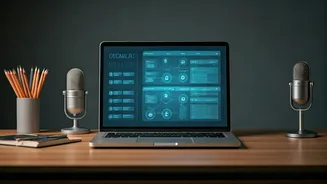
sessions can be so tedious that great ideas often get lost in translation. This is the problem AI workspace assistants are designed to solve. These aren't just simple transcription tools. They are integrated, intelligent systems designed to listen, understand context, and generate structured outputs. Think of them as a hyper-efficient project coordinator who never misses a detail, turning the fluid energy of a verbal brainstorm into a solid foundation for a project.
From Voice to a Viable Plan
The process seems like magic, but it’s rooted in layers of technology. First, the AI assistant meticulously transcribes the conversation in real-time, identifying different speakers. This is more advanced than basic dictation, as it's optimised for multiple voices and conversational overlaps. Next, using Natural Language Processing (NLP), the AI analyses the transcript to understand the key themes, concepts, and decisions being made. It identifies nouns (potential tasks), verbs (actions), and deadlines mentioned. Finally, it uses generative AI to synthesise this information into a structured format. This output can be a list of action items with assigned owners, a project brief with key objectives, a timeline of proposed milestones, or even a mind map visualising the ideas discussed. The tool doesn't just record what was said; it interprets intent and creates a usable document.
The Key Players in the Market
This capability is rapidly becoming a feature in the tools many of us already use. Microsoft’s Copilot for Microsoft 365 can summarise Teams meetings and draft project plans in Word or Loop. Google is embedding similar features in its Workspace suite, allowing its AI to create summaries and action items from Google Meet calls. Beyond these giants, specialised players have been perfecting this for years. Tools like Otter.ai and Fireflies.ai are popular for their powerful meeting transcription and summarisation features. They can automatically join your virtual meetings, record them, and send a detailed, searchable summary complete with key takeaways and action items. As competition heats up, expect these features to become more sophisticated and deeply integrated into our daily workflows.
The Tangible Benefits for Teams
The primary benefit is a massive time-saving. Instead of a project manager spending hours after a meeting deciphering notes, they get an AI-generated first draft in minutes. This dramatically shortens the gap between ideation and execution, allowing teams to move faster. It also democratises participation. A team member who is less assertive but has brilliant ideas can be confident their contribution is captured and considered. For remote and hybrid teams across India, this is a game-changer. It creates a single source of truth, ensuring everyone who missed the meeting or joined late is on the same page. This level of clarity reduces misunderstandings and boosts overall team alignment and productivity.
Challenges and Human Oversight
While impressive, this technology isn't flawless. AI can still misinterpret nuance, sarcasm, or culturally specific references. It might struggle with strong accents or technical jargon it hasn't been trained on. Therefore, the 'human in the loop' remains essential. The AI-generated outline should be treated as a first draft, not the final word. It requires human review, editing, and validation to ensure accuracy and to add the strategic context that an AI might miss. Furthermore, data privacy is a significant concern. Companies must be clear about where their conversational data is being stored and processed, especially when sensitive intellectual property is being discussed. Choosing trusted providers with robust security protocols is non-negotiable.