

The Unseen Dangers of a Closed Box
On Earth, our planet’s vast ecosystems naturally filter our air and water. In a sealed Martian habitat, there is no “outside” to open a window to. Contamination is a constant, internally generated threat. Humans themselves are a primary source, shedding
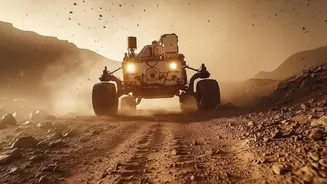
skin cells, hair, and releasing carbon dioxide with every breath. But the problem goes deeper. Studies of the International Space Station (ISS) have found a surprising number of chemical contaminants, from flame retardants used in electronics to perfluoroalkyl substances (PFAS) from fabrics and packaging. These particles, which on Earth might settle as dust, float in microgravity, eventually clogging filters. Then there is the infamous Martian dust itself—a fine, pervasive particulate that can get into equipment when astronauts bring it inside or when systems draw in the thin Martian atmosphere for processing. A contamination event isn't a one-time crisis; it's a continuous, compounding problem that life support systems must handle for years on end.
Why the Space Station Model Falls Short
The ISS has a sophisticated Environmental Control and Life Support System (ECLSS) that recycles about 98% of the water from sources like crew breath, sweat, and urine. It's an engineering marvel, but it relies on regular resupply missions from Earth to bring new filters and replacement parts. That is a luxury a Mars colony, millions of kilometers and a 6-9 month journey away, simply will not have. The filters on the ISS need frequent cleaning and replacement. For a long-duration mission on Mars, this approach is unsustainable. The sheer weight and volume of spare parts required would be enormous, taking up valuable space on rockets that could be used for science equipment or other critical supplies. A Mars habitat needs a truly “closed-loop” system, one that is not just highly efficient but also regenerative, meaning it can clean and restore itself without needing a constant stream of new parts from another planet. The goal is to create a system that can operate reliably for years, not just months.
The Quest for a 'Forever Filter'
Engineers are tackling this challenge by designing next-generation filtration that is self-cleaning and more robust. One promising area is advanced catalytic reactors that use high temperatures or chemical processes to break down contaminants into harmless molecules like water and carbon dioxide, rather than just trapping them. Instead of filters that get clogged, these systems would essentially incinerate impurities. NASA is also exploring bio-based solutions. Bioregenerative life support systems might use algae or specific microbes to process waste and purify water and air. These biological systems have the potential to be self-sustaining. Another avenue is developing advanced membranes and nano-filters that are far more durable and efficient than current technology. For dust, which is a major threat to equipment that needs to process the Martian atmosphere, NASA has been working on innovative, self-cleaning filtration systems specifically designed for the low-pressure environment of Mars. The common thread is moving from disposable components to sustainable, regenerative processes.
From the Red Planet to Our Blue One
The extreme requirements of a Mars mission are accelerating innovation that has direct applications back on Earth. The drive to create compact, low-power, and highly reliable water purification systems for space is already leading to new technologies for providing clean water in remote or disaster-stricken areas where resources are scarce. Tech developed for space has been adapted for use in at-risk communities, turning contaminated water sources into safe drinking water. Nano-fiber filters developed with NASA's help are not only faster and longer-lasting for space travel but also have applications in home and office water systems. Similarly, the development of advanced air purification to remove volatile organic compounds and fine particulates in a sealed habitat could lead to better air filters for our homes, offices, and cities, helping to tackle pollution and improve public health. Solving the problem of survival on another world forces us to perfect the technology of sustainability for our own.