



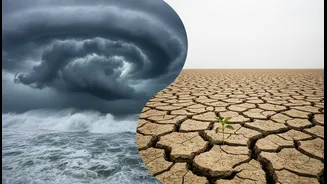


What Exactly Is El Niño?
At its heart, El Niño is a climate pattern involving the unusual warming of surface waters in the eastern and central tropical Pacific Ocean. This phenomenon is one phase of a larger cycle called the El Niño-Southern Oscillation (ENSO). Think of the Pacific Ocean as a giant
bathtub. Normally, strong trade winds blow from east to west, piling up warm surface water in the western Pacific, near Asia and Australia. During an El Niño event, which occurs irregularly every two to seven years, these trade winds weaken or even reverse. This allows the massive pool of warm water to slosh back eastward, toward the coast of South America. This shift in ocean temperature, however small it may seem, is powerful enough to disrupt atmospheric patterns across the globe.
The Global Ripple Effect
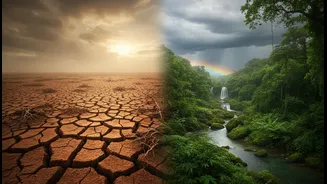
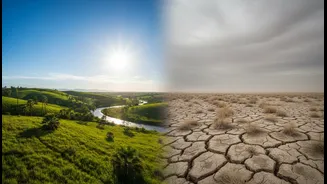
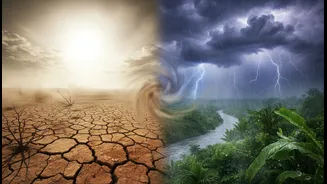
The warming of a vast area of the ocean releases a tremendous amount of heat into the atmosphere, altering the air circulation patterns that drive our weather. This creates a domino effect, known as a 'teleconnection', where changes in one part of the world influence weather in far-flung regions. For instance, an El Niño can bring unusually heavy rains and flooding to parts of South America while causing severe droughts in Indonesia and Australia. It changes the path of jet streams and can suppress hurricane activity in the Atlantic while fueling typhoons in the Pacific. It is a powerful demonstration of how interconnected our planet's climate system is.
The Critical Link to India's Monsoon
For India, the primary concern during an El Niño year is its impact on the vital southwest monsoon. The monsoon is the lifeblood of the nation's agriculture-driven economy. The atmospheric circulation changes triggered by El Niño tend to suppress the formation of a strong monsoon system. The same mechanism that pulls moisture towards the newly warmed eastern Pacific effectively pulls it away from the Indian subcontinent. This often results in a weaker monsoon, delayed onset, prolonged dry spells, and an overall deficit in rainfall across the country. Historically, many of India's most severe droughts, including those in 2002 and 2015, have coincided with strong El Niño events.
Beyond The Rains: Economic and Social Impacts
A weakened monsoon has cascading consequences. Reduced rainfall directly impacts the Kharif crop sowing season, affecting staples like rice, pulses, and cotton. This can lead to lower agricultural output, putting a strain on farmers' incomes and rural demand. The ripple effects are felt across the economy, potentially fueling food inflation as the supply of essential commodities dwindles. Furthermore, El Niño years are often associated with higher average temperatures and more intense heatwaves, increasing electricity demand for cooling and putting a strain on power grids and water reservoirs. These combined pressures can impact everything from household budgets to the country's overall GDP growth.
Is It Always a Guarantee of Drought?
While the correlation between El Niño and a poor monsoon is strong, it is not a perfect one-to-one relationship. There have been El Niño years where India received average or even above-average rainfall, such as in 1997. Other climatic factors, like the Indian Ocean Dipole (IOD)—a similar temperature variation pattern in the Indian Ocean—can sometimes counteract El Niño's drying effect. A 'positive' IOD, for instance, can bring good rains to India and potentially offset the negative impact. However, when a strong El Niño occurs without a counterbalancing force, the risk of a deficient monsoon increases significantly. Scientists are now also studying how global warming amplifies the effects of these natural cycles, making weather patterns more extreme and less predictable.