
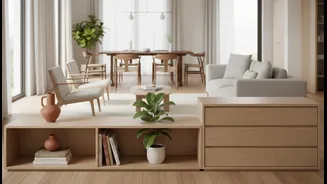



Beyond Decluttering: The Functional Shift
The idea of decluttering isn't new. For years, we've been told to tidy up for a tidier mind. Yet, this has often led to cycles of purging and re-accumulating. The philosophy of functional minimalism offers a more sustainable path. It’s not about owning
as little as possible, but about ensuring every single item in your home has a distinct purpose in your daily or frequent routines. This approach shifts the focus from what to get rid of to what truly earns its place. Instead of a home that looks like a sterile catalogue, the goal is a space where every object is a quiet, reliable partner in your day-to-day life. It's a move from aesthetic minimalism to practical minimalism.
The Psychology of a Purposeful Home
Our brains are wired to find chaos stressful. A cluttered environment can increase cortisol, the body's primary stress hormone, keeping us in a state of low-grade anxiety and making it difficult to focus. When our surroundings are filled with items we don't use—piles of 'just in case' gadgets and clothes that no longer fit—our brain interprets this as unfinished business, which can be mentally exhausting. Conversely, an environment where every object has a clear function reduces 'visual noise' and cognitive load. This clarity restores a sense of predictability and control, which signals safety to our nervous system and allows the mind to shift from a reactive, stressed state to a calm, regulated one. A home where everything is useful becomes a sanctuary, a place of rest and mental recharge.
How to Identify Your Daily Essentials
Making this shift requires honest self-reflection. The goal is to audit your belongings not for what you might use one day, but for what serves you now. A practical way to start is by category, not by room. Tackle all your clothes, then all your kitchen gadgets, then all your books. As you handle each item, ask practical questions: When was the last time I used this? Does this item make a daily or weekly task easier? Is its function essential to my current lifestyle? It can be helpful to create a 'maybe' box for items you're unsure about. Store it away for a month. If you haven’t needed anything from it during that time, it's a strong sign you can let it go. This process isn't about deprivation; it's about making space for the things that genuinely support and simplify your life.
The Art of Intentional Acquisition
Creating a functional, calm home is an ongoing practice. Once you've curated your space, the challenge is to maintain it. This means becoming a mindful consumer. Before making a new purchase, pause and evaluate its purpose. Will it serve a daily need? Does it replace a less functional item you already own? A helpful guideline is the 'one in, one out' rule: for every new item that comes into your home, a similar item must leave. This prevents the slow creep of clutter and ensures that your home remains a curated collection of useful objects. Over time, you begin to favour quality over quantity, investing in durable, versatile pieces that will serve you well for years, rather than succumbing to impulse buys that create future clutter.