






What Is the PJ.2.1 Variant?
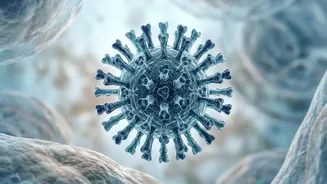
PJ.2.1 is a new lineage of the SARS-CoV-2 virus, first identified in Canada in May 2026. Since then, it has been detected across North America, Europe, Asia, and Australia. Scientists have labelled it a 'saltation variant', which means it appeared with
a large number of genetic changes at once, rather than evolving slowly over time. This variant is a descendant of the JN.1 family, which was a dominant lineage in the past. Its rapid spread across continents has made it a subject of close scientific watch, even though it has not yet been classified as a variant of concern by the World Health Organization.
The Mutations Making It Different
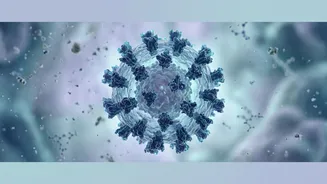
The primary concern with any new variant lies in its mutations, particularly in the spike protein, which the virus uses to enter human cells. PJ.2.1 has over 25 mutations in its spike protein. The most significant finding from early laboratory research is that these changes appear to help the variant bind more effectively to the ACE2 receptor on human cells. In lab tests, PJ.2.1 showed a stronger ability to attach to these receptors compared to several other circulating variants. This enhanced binding capability could be one reason for its growth, but scientists caution that lab results don't always predict how a virus will spread in the real world.
How Do Antibodies Respond?
The central question for the public is whether our existing immunity from vaccines or previous infections still works. Early findings are cautiously optimistic. Studies show that PJ.2.1 does not display significant 'immune escape'. In fact, antibodies from people who received updated, variant-adapted vaccines were found to effectively neutralise PJ.2.1 in lab settings. One study noted that its sensitivity to these antibodies was only slightly lower (1.8 times less) than the reference variant the vaccine was designed for, a much smaller reduction compared to other variants tested. This suggests that while PJ.2.1 is spreading, its growth is likely driven more by its efficient cell entry rather than a major ability to evade our immune defenses.
Should We Be Worried in India?
Currently, there is no evidence to confirm that the PJ.2.1 variant has been detected in India. However, health experts are calling for strengthened genomic surveillance to monitor its potential arrival. India's INSACOG, the consortium that tracks genetic changes in the virus, continues to monitor the situation. Importantly, research has not linked PJ.2.1 to more severe disease, hospitalisations, or deaths. Its symptoms are reported to be similar to other common COVID-19 variants, including fever, sore throat, cough, and fatigue. Experts stress the distinction between transmissibility and severity; a variant can spread more easily without necessarily making people sicker.
What Experts Advise Now
The emergence of PJ.2.1 serves as a reminder that the virus is still present and actively evolving. Public health officials and doctors advise continued vigilance over alarm. The WHO continues to recommend vaccination for those at highest risk of severe disease, such as older adults and individuals with underlying health conditions. There is no specific set of symptoms that can distinguish a PJ.2.1 infection from a common cold or flu, so testing remains the only reliable way to know. For now, the standard precautions remain the most effective tools: maintaining good hygiene, ensuring proper ventilation, and staying home and testing if you feel unwell. These measures help protect against all circulating respiratory viruses, not just this new variant.