





Understanding That 'Crunching' Sound
The medical term for joint sounds like popping, cracking, or grinding is 'crepitus'. In many cases, these noises are perfectly harmless. They can be caused by tiny gas bubbles bursting within the joint fluid or ligaments and tendons gliding over the bone.
If there's no pain, swelling, or stiffness, a noisy knee isn't usually a cause for immediate alarm. However, when crepitus is persistent and accompanied by discomfort, it can tell a different story. This type of painful grinding may indicate that the smooth cartilage cushioning the ends of your bones is becoming rough or starting to wear down, which is an early sign of joint changes that can lead to osteoarthritis.
How Your Posture Affects Your Knees
It might seem unrelated, but the way you sit and stand has a direct impact on your knees. Your body operates as a connected chain; a problem in one area can create stress elsewhere. Poor posture, such as slouching, a forward-leaning head, or an improperly tilted pelvis, alters your body's centre of gravity. This misalignment forces your body weight to be distributed unevenly, placing excessive and unnatural strain on your knees. Over time, this constant, improper load can lead to abnormal movement patterns, muscle imbalances, and increased pressure on specific parts of the knee joint, speeding up the wear and tear of precious cartilage.
The Real Meaning of 'Joint Wear'
Your joints are lined with cartilage, a tough, flexible tissue that allows bones to glide smoothly against each other. 'Accelerated joint wear' simply means this cartilage is breaking down faster than it should. This process is the hallmark of osteoarthritis, the most common form of arthritis. Early signs of this degeneration often include morning stiffness, aching pain that worsens with activity, mild swelling, and a reduced range of motion. Repetitive stress, previous injuries, genetics, and excess body weight can all contribute to this process. When poor posture consistently forces your knee to move inefficiently, it acts as a form of repetitive stress, contributing to this accelerated breakdown.
Connecting the Dots: A Clear Warning
Taken alone, painless knee crepitus or the occasional slouch might not be significant. However, when they occur together, they should be seen as a clear call to action. Research indicates that persistent crepitus can be a predictor for the future development of symptomatic knee osteoarthritis. When you combine that predictive signal with the known mechanical stress of poor posture, the risk of accelerated joint damage becomes much clearer. Think of it this way: poor posture puts the joint under constant, unhealthy pressure, while the crepitus may be the audible evidence of the early damage being done. Ignoring this combination is like continuing to drive a car with misaligned wheels after hearing a grinding sound from the axle.
Steps to Protect Your Joints Now
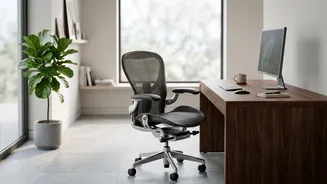
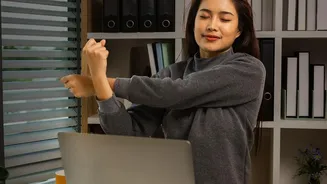
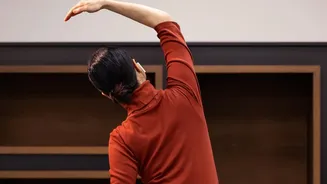
The good news is that these warning signs give you an opportunity to be proactive. First, focus on improving your posture. Simple cues like sitting up straight, keeping your shoulders back, and ensuring your computer screen is at eye level can make a huge difference. Second, strengthen the muscles that support your knees and hips, such as your quadriceps, hamstrings, and glutes. Exercises like straight leg raises, half squats, and hamstring curls can help stabilise the joint. Low-impact activities like swimming and cycling are excellent for maintaining fitness without stressing the joints. Finally, maintaining a healthy weight is one of the most effective ways to reduce the daily load on your knees.