
A Human-Made Star
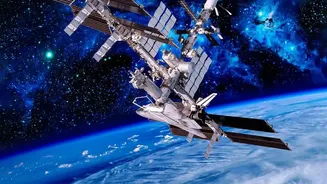
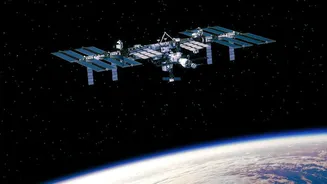
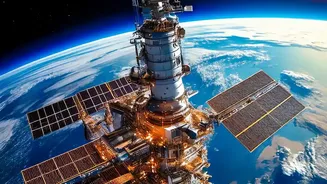
Spotting the International Space Station is a surprisingly simple yet profound experience. From almost anywhere on Earth, it’s possible to see this orbiting laboratory where astronauts live and work. The ISS appears as a very bright, steady point of light,
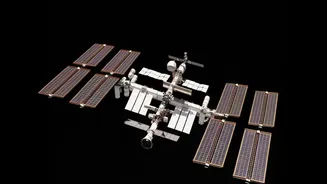
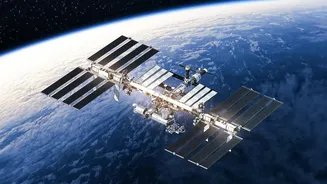
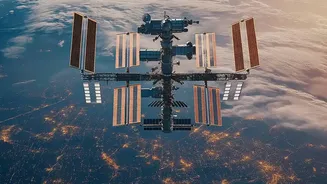
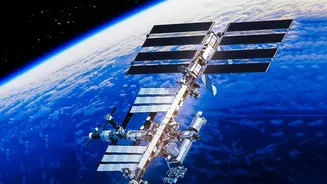
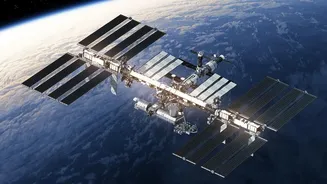
similar to a star but moving much faster. Unlike an airplane, it doesn't have flashing lights and travels in a consistent, deliberate arc across the sky. Its brightness isn't from its own lights, but from its massive solar arrays reflecting sunlight. This is why the best times to see it are shortly after sunset or just before sunrise, when the sky is dark on the ground, but the station, orbiting about 400 kilometres up, is still bathed in sunlight. At its brightest, the ISS can outshine every star and planet, second only to the Moon.
Your Pocket Guide to the Cosmos
The key to a successful sighting is knowing exactly when and where to look, and thankfully, your smartphone is all you need. Several excellent apps are designed specifically for this purpose. NASA's official "Spot The Station" app is a great starting point, available for both iOS and Android. It provides a list of upcoming sighting opportunities for your location, sends you alerts, and tells you where to look in the sky. Another popular and powerful choice is "ISS Detector". Its free version tracks the ISS and provides a simple interface showing the quality and path of upcoming passes. For a small fee, it can be expanded to track thousands of other satellites. Many of these apps also include augmented reality (AR) features, allowing you to point your phone at the sky and have it guide you directly to the station as it flies over.
Setting Up for a Perfect Sighting
Once you have an app installed, preparation is simple. First, allow the app to use your location to get accurate predictions. Then, enable notifications. Most apps, like Spot The Station, will only alert you for good passes, typically when the station will appear high in the sky (above 40 degrees from the horizon), making it brighter and more visible for longer. A pass can last anywhere from a couple of minutes to over six. When you get an alert, find a spot with a clear view of the sky, away from tall buildings and bright city lights if possible. Go outside a few minutes before the scheduled time to let your eyes adjust to the darkness. The app will tell you which direction the ISS will appear from (often in the west) and where it will disappear. You don't need binoculars or a telescope; the station is easily visible to the naked eye.
More Than Just a Point of Light
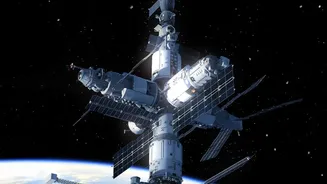
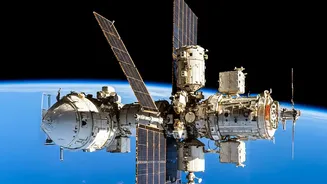
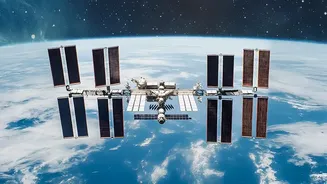
As you watch that silent, brilliant dot glide across the sky, remember what you are witnessing. The ISS is the largest structure humans have ever put into space, about the size of a football field. It travels at an astonishing 28,000 kilometres per hour, orbiting the Earth once every 90 minutes. This means the crew on board experiences 16 sunrises and sunsets every single day. For over two decades, it has been continuously inhabited by an international crew of astronauts conducting vital research that helps us understand everything from climate change to the effects of microgravity on the human body. It is a floating laboratory, a home in orbit, and a testament to international collaboration, involving five space agencies and 15 countries. That moving light is a beacon of human curiosity and ingenuity.