





The Peacock's Mythic Dance
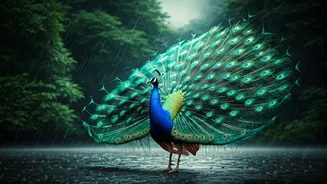
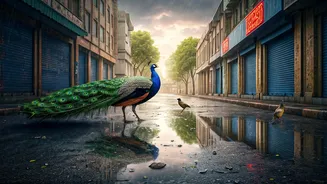
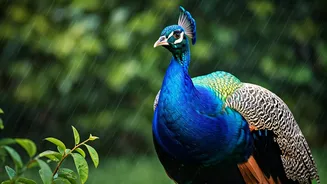
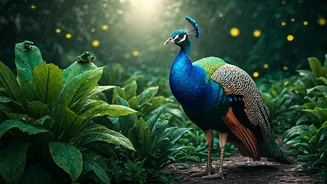
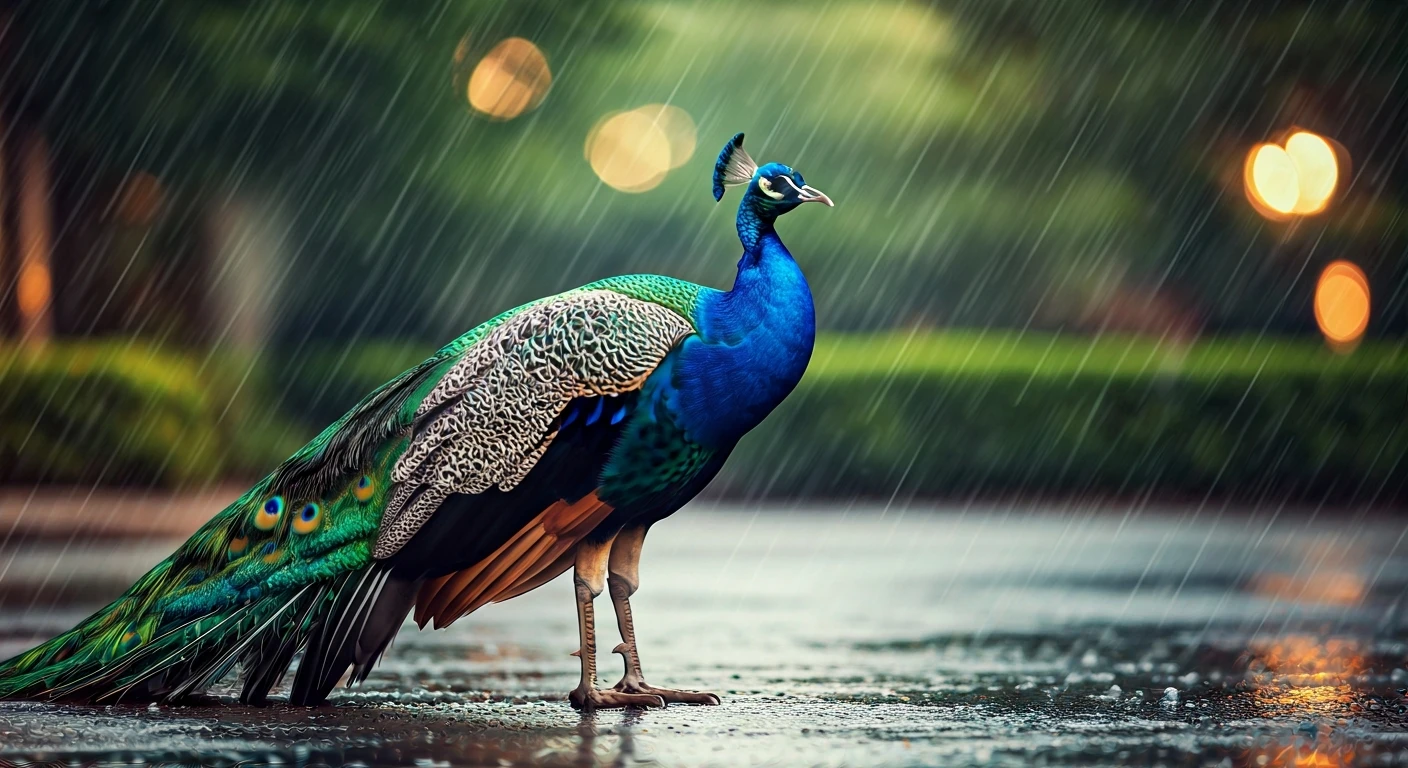
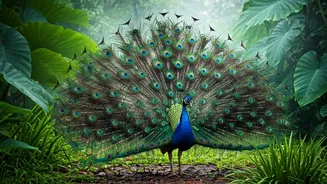
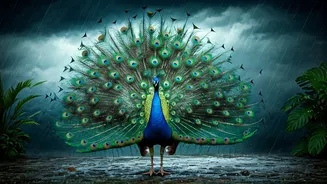
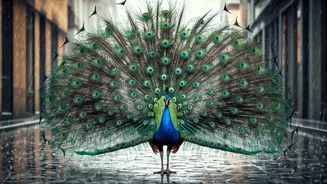
Perhaps the most iconic image of the Indian monsoon is that of a peacock, its magnificent tail fanned out in a vibrant display. For generations, this has been seen as a dance to welcome the rains. The scientific truth is a bit less romantic, but no less fascinating.
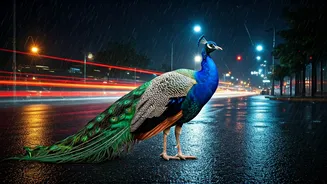
The monsoon season coincides with the peacock’s breeding season. That spectacular dance, where the male rattles his feathers, is a courtship display to attract a peahen, showcasing his health and fitness. The arrival of the rains also means a surge in insects and other small creatures, providing ample food for the chicks that will soon hatch. So, while the peacock isn't dancing for the rain itself, its primal ritual has become inextricably linked with the season's arrival, lending a touch of regal beauty to an overcast day.
An Amphibian Chorus
As dusk falls after a downpour, a new soundscape fills the air: a loud, rhythmic chorus of croaks. Frogs and toads, which have been dormant during the dry, hot months, emerge with the life-giving water. Puddles, ponds, and waterlogged patches become frenetic breeding grounds. The Indian bullfrog, one of the most common species, undergoes a dramatic transformation; males turn a striking bright yellow to attract females. This nightly symphony is a powerful auditory reminder of the season's change. In many parts of India, the connection is so deep-rooted that frog wedding ceremonies are sometimes performed to invoke the rain gods. For city dwellers, this chorus is the definitive soundtrack of the monsoon, a pulsing, vibrant sound that signals life's renewal.
The World of Wings and Water
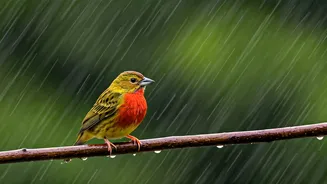
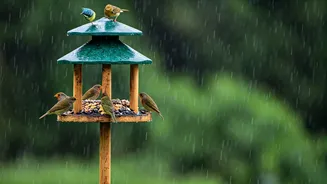
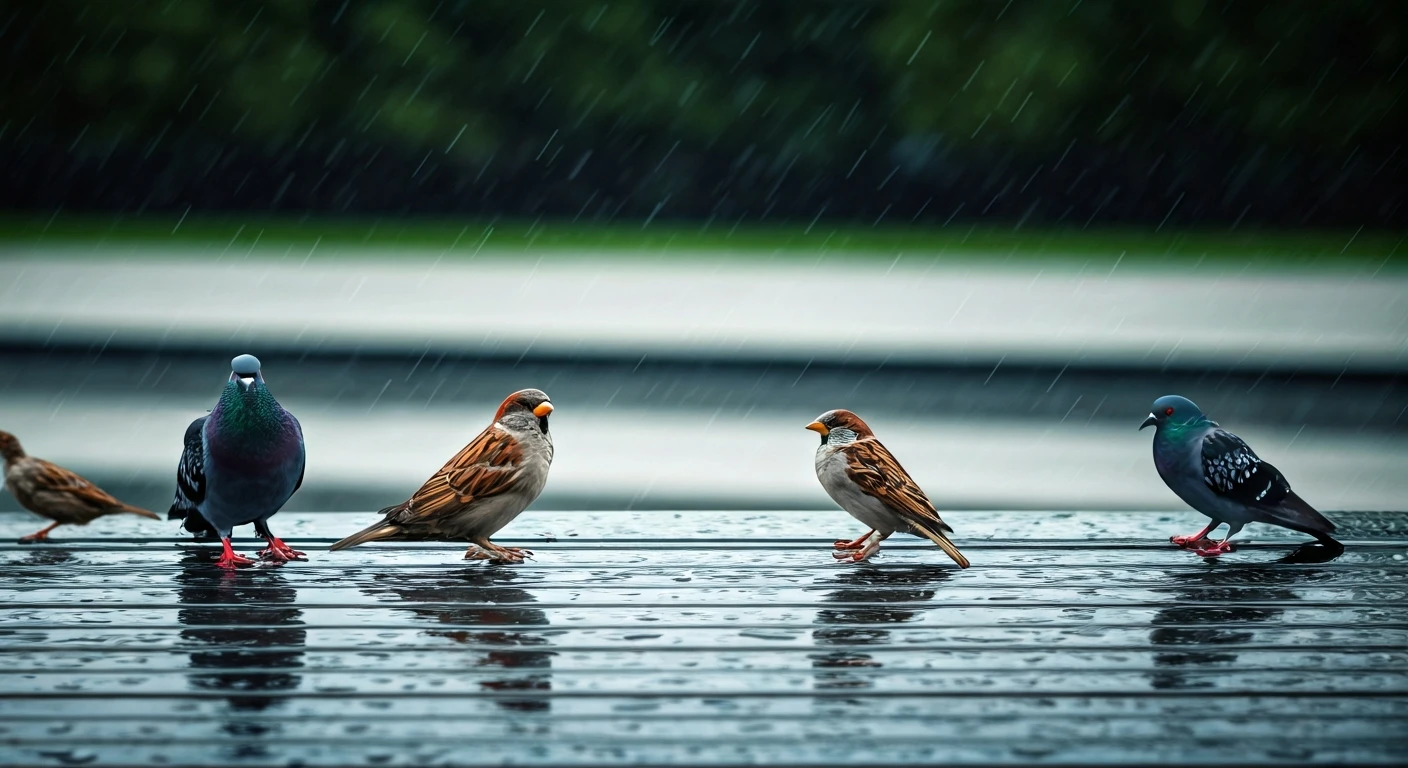
The monsoon brings mixed fortunes for the city’s bird population. While heavy downpours can be challenging, the season also offers a bounty. The rains trigger a boom in insect populations, providing a feast for birds like bee-eaters, drongos, and bulbuls. You might see a White-throated Kingfisher perched patiently near a freshly formed puddle, or Common Mynas confidently strutting on wet ground, foraging for food. Some birds, like the Pied Cuckoo, are known as harbingers of the monsoon, migrating from Africa just ahead of the rains. Others, like the Baya Weaver, get busy, with the male weaving intricate nests from grass and palm fronds, his plumage turning a bright yellow to match the season's vibrancy. These moments of avian activity add flashes of colour and movement against the grey skies.
Life Emerging from the Soil
The rain awakens a world that is often unseen. After the first heavy showers, winged termites, or alates, emerge in massive swarms, often attracted to city lights. While their appearance can be startling, it's a sign of a healthy ecosystem and a critical part of their reproductive cycle. Snails and slugs venture out onto wet pavements, and gardens come alive with a new variety of insects and butterflies that were dormant. Many of these creatures, having spent the dry season in a state of 'diapause', are activated by the perfect conditions the monsoon brings. These smaller, often overlooked animals are a fundamental part of the seasonal transformation, contributing to the feeling of a world bursting with life.