





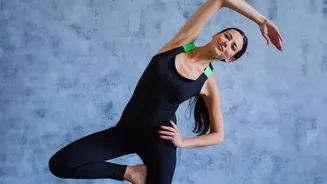
The workday is over, but your mind is still racing and your shoulders are tight. Instead of scrolling on your phone, a few minutes of gentle evening yoga can be the perfect way to signal to your body and brain that it’s time to unwind.
From Fight-or-Flight to Rest-and-Digest
Modern workdays,
with their constant emails, deadlines, and digital stimulation, often keep our sympathetic nervous system—the 'fight-or-flight' response—on high alert. This can leave you feeling wired and anxious even after you’ve logged off. Gentle yoga helps activate the parasympathetic nervous system, also known as the 'rest-and-digest' system. Through slow movements and conscious breathing, especially with extended exhalations, you send a direct signal to your body to calm down. This process helps lower levels of the stress hormone cortisol, reduces your heart rate, and shifts your entire being into a state of relaxation, making it easier to leave the day's stresses behind.
Counteracting the 'Desk Body'
Sitting for prolonged periods can lead to a host of physical issues, including tight hips, a stiff lower back, and rounded shoulders. An evening yoga practice is a fantastic way to counteract this 'desk body' phenomenon. Poses that involve gentle spinal flexion and extension, like Cat-Cow, help to mobilise the vertebrae. Forward folds release tension in the hamstrings and lower back, while gentle twists can help decompress the spine. It’s not about achieving a deep, intense stretch, but rather about bringing gentle movement back into areas that have been static all day, promoting better posture and alleviating common aches and pains.
Priming Your Mind for Quality Sleep
One of the most significant benefits of an evening yoga practice is its positive impact on sleep. Studies have consistently shown that yoga can help people fall asleep faster and improve overall sleep quality. A national survey found over 55% of yoga practitioners reported better sleep. By reducing stress and releasing physical tension, you create the ideal conditions for a restful night. The mindfulness aspect of yoga—focusing on your breath and bodily sensations—helps to quiet the mental chatter that often keeps people awake. Instead of tossing and turning with a racing mind, you can drift off with a sense of calm and physical ease.
Three Simple Poses to Get You Started
You don't need to be flexible or experienced to benefit. Start with these three beginner-friendly poses. First, Child's Pose (Balasana): Kneel on the floor, sit back on your heels, and fold forward, resting your forehead on the mat. This gently stretches the back and hips. Second, Cat-Cow Pose (Marjaryasana-Bitilasana): On your hands and knees, inhale as you drop your belly and look up (Cow), then exhale as you round your spine and tuck your chin (Cat). This flow warms up the spine. Third, Legs-Up-The-Wall Pose (Viparita Karani): Sit sideways against a wall, then swing your legs up so they rest against it as you lie on your back. This is incredibly restorative and calming for the nervous system. Hold each pose for several deep breaths.
Creating a Sustainable Evening Ritual
The key to reaping the benefits is consistency, not duration. You don’t need a full hour; even five to ten minutes each evening can make a difference. Create a calming atmosphere by dimming the lights and putting away your phone. You can use pillows or blankets for support to make the poses more comfortable and restorative. The goal isn't to push yourself or achieve perfect form, but to connect with your body and breath. Think of it less as a workout and more as a gentle act of selfcare to close out your day and prepare your body and mind for a peaceful night's rest.