




The Sun’s Unpredictable Temper
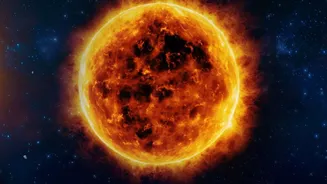
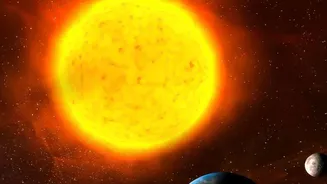
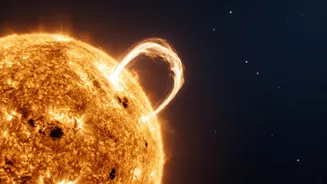
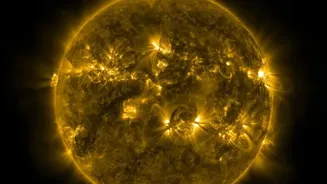
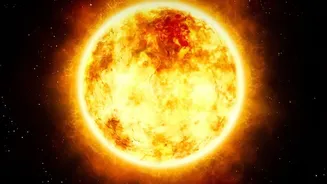
Space weather might sound distant, but its effects can hit very close to home. It refers to the changing conditions in space, driven by the sun. Our star constantly sends out a stream of charged particles called the solar wind. Occasionally, it erupts
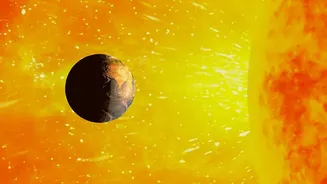
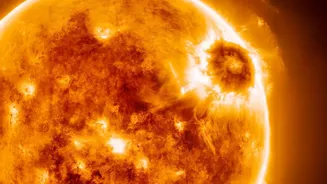
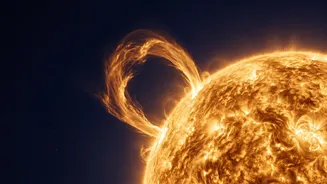
with much greater force, launching solar flares and massive clouds of plasma known as coronal mass ejections (CMEs). When a CME barrels towards Earth, it can slam into our planet's magnetic field, triggering a geomagnetic storm. While these events create beautiful auroras, they also pose a significant threat to our technological infrastructure.
Racing Against a Cosmic Clock
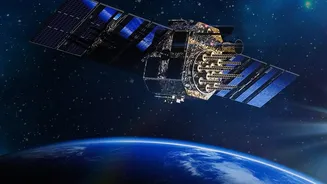
A severe geomagnetic storm can induce powerful electrical currents on Earth's surface. These currents can flow into and overload power grids, damage high-voltage transformers, and cause widespread, long-lasting blackouts. The infamous 1989 storm, for example, plunged Quebec, Canada, into darkness for 12 hours. Beyond the power grid, these storms can disrupt satellite operations, affect GPS navigation, corrode pipelines, and interfere with communications. Historically, predicting the precise location and intensity of these impacts has been a major challenge, with warnings often providing too little time to act. The most severe solar storm on record, the 1859 Carrington Event, occurred before the age of electricity, but a similar event today could have calamitous consequences, with potential economic losses estimated in the trillions of dollars in the U.S. alone.
A New AI Weather Forecaster
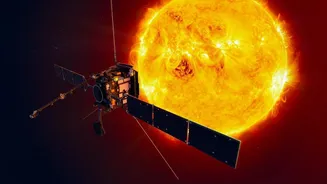
To address this vulnerability, NASA has pioneered a new computer model that acts like a planetary tornado siren for space weather. Called DAGGER (Deep Learning Geomagnetic Perturbation), the system uses artificial intelligence to provide a crucial 30-minute advance warning before a solar storm strikes anywhere on Earth. Developed in partnership with the Frontier Development Lab and researchers from institutions like the Inter-University Centre for Astronomy and Astrophysics in India, DAGGER represents a major leap forward. It is the first model to combine the speed of AI with real-time data from spacecraft and ground stations to generate prompt, precise, and global predictions.
How It Works: From Data to Warning
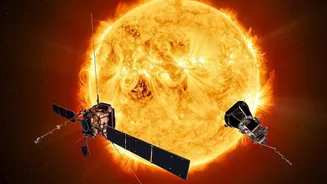
The power of DAGGER lies in its use of deep learning, a method where computers are trained to recognize complex patterns in vast amounts of data. Researchers fed the AI historical data from heliophysics missions that measure the solar wind, alongside records of the resulting geomagnetic disturbances on Earth. By analyzing these past events, the AI learned the intricate relationship between solar wind conditions and their terrestrial impact. Now, DAGGER can analyze live data from satellites measuring the solar wind and, in less than a second, predict the location and intensity of an impending geomagnetic storm. These predictions are then updated every single minute, offering a continuously refreshed forecast.
The 30-Minute Lifeline
While 30 minutes may not sound like much, in the context of protecting national infrastructure, it's a game-changer. This window gives power grid operators time to take preventative measures, such as temporarily taking sensitive systems offline to prevent catastrophic damage. Satellite controllers can move their assets into safer orbits to minimize harm from increased atmospheric drag or radiation. Telecommunications and aviation companies can also prepare for potential disruptions. By making the code open source, NASA is enabling these industries to adopt and adapt the model for their specific needs, transforming a scientific tool into a practical defense system.