






The Allure of the Wild
For a few short months, as the country is drenched in rain, the earth offers up a secret bounty. These are not the cultivated, year-round staples we are accustomed to. These are 'raan-bhaji' (forest vegetables), wild greens, strange-looking gourds, and
earthy tubers that are foraged from hillsides and forests. For generations, they have been a vital source of nutrition and culinary diversity, forming a deep connection between the season, the land, and the plate. Eating them isn't just about trying a new flavour; it's about participating in a tradition of discovery and appreciating the ephemeral gifts of nature. Here are a few treasures to look for at your local market.
1. Kantola (Spiny Gourd)
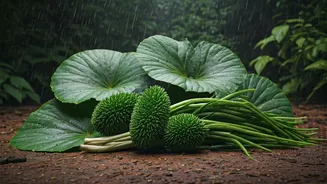
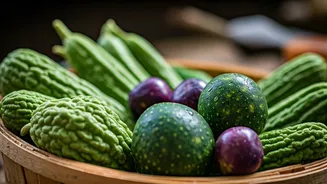
Perhaps the most recognisable of the monsoon vegetables, Kantola (also known as Kakrol or Teasle Gourd) looks like a small, green, spiky ball. Don't let its intimidating exterior fool you. Beneath the soft spines lies a crisp, tender flesh with a mild, slightly bitter taste that mellows beautifully when cooked. It’s incredibly versatile and a powerhouse of nutrition, rich in protein and iron. The simplest preparation is often the best: a quick stir-fry with mustard seeds, turmeric, and a hint of chilli. In other regions, it’s stuffed with spiced masalas or dipped in batter and fried into crunchy pakoras that are a perfect companion to a cup of chai on a rainy day.
2. Shevala (Dragon Stalk Yam)
This is a true monsoon delicacy, especially in Maharashtra. Shevala appears as long, mottled green stalks, often sold with their white, yam-like corm. It requires some skill to prepare—the stalks must be cleaned carefully—but the reward is a unique culinary experience. The texture is what makes it special: a delightful crunch that holds up even after cooking. Traditionally, it is made into a flavourful curry with the addition of a specific yellow pea flour (valachi dal flour) or tamarind and jaggery to balance its earthy notes. Finding a vendor who knows how to prepare and sell it is part of the adventure, making the final dish taste even more special.
3. Phodshi (Slender Leaf)
At first glance, you might mistake Phodshi for a bunch of long, wild grass or spring onions. These tender, slender leaves are a foraged green that surfaces in the Western Ghats during the monsoon. They have a delicate, slightly earthy taste that is entirely their own. Because the flavour is so subtle, it’s best cooked simply. A classic preparation involves chopping the leaves and stir-frying them with a little garlic, green chilli, and perhaps a sprinkle of grated coconut. Some cooks add a spoonful of gram flour (besan) towards the end to absorb moisture and add texture. It's a quick, healthy, and delicious way to eat the essence of the monsoon.
4. Bhanda or Taro Leaves
While taro root (arbi) is available year-round, its large, heart-shaped leaves are a monsoon speciality. These leaves are the star of dishes like 'Alu Vadi' in Maharashtra or 'Patrode' in coastal Karnataka. The preparation is a labour of love: the leaves are carefully de-veined, smeared with a thick paste of spiced gram flour, tamarind, and jaggery, then rolled into tight logs, steamed, and finally sliced and pan-fried until crisp. The key is proper cooking to neutralise the calcium oxalate crystals in the leaves, which can cause an itchy throat. When done right, it's a magnificent snack with a complex blend of sweet, sour, and spicy flavours.
5. Wild Mushrooms
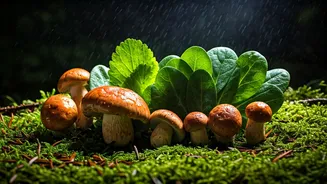
The damp forest floor is a fertile ground for a variety of wild, edible mushrooms that are impossible to cultivate. From the prized 'Olmi' of Goa that grows on termite hills to the various species found across central and eastern India, these fungi are the ultimate seasonal treasure. They have a meatier texture and a more intense, earthy flavour than their farmed cousins. However, foraging for them is a job for experts. For the rest of us, the safest bet is to buy them from a trusted tribal vendor at the local market. Cook them simply—sautéed with garlic and herbs or in a light coconut-based curry—to truly appreciate their rare and wonderful taste.