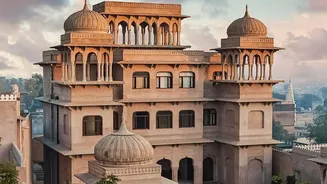







Beyond the Facade: What is a True Heritage Stay?
A heritage hotel is far more than an old building with antique furniture. In India, the official designation often applies to properties built before 1950, including palaces, forts, and havelis that have been converted into hotels. These properties are
meant to be living museums, offering an immersive glimpse into a region's history, culture, and architectural legacy. The goal is 'adaptive reuse'—preserving a building's soul while updating it for modern comfort, which provides economic, social, and environmental benefits. Unlike a modern hotel designed for transient stays, a genuine heritage property tells a story. Every corridor, courtyard, and jharokha window connects you to its past, whether as a royal residence, a colonial bungalow, or a wealthy merchant's home. The experience is about feeling the continuity between the past and present, making your stay a part of the building's ongoing narrative.
The First Pillar: Authentic Preservation
The most crucial element of a heritage stay is how faithfully it preserves its original character. True preservation goes beyond hanging a few old photographs. It involves maintaining the architectural integrity of the structure, from the layout and facade to smaller details like tilework and carvings. When booking, look for information on the property's restoration process. A serious project respects the original design and uses traditional materials and techniques where possible, rather than simply gutting the interior and adding period-style decor. A property that is officially listed or protected often adheres to stricter preservation standards. The best heritage stays balance preservation with comfort, integrating modern amenities like air conditioning and plumbing discreetly, without compromising the historical ambience. This commitment to authenticity is what separates a genuine historic experience from a new resort in period costume.
The Second Pillar: Meaningful Access
Access has two important meanings in the context of heritage travel. The first is physical accessibility. Given their historical nature, many heritage properties have inherent challenges like narrow staircases and uneven floors. However, a thoughtful property will be transparent about these limitations and may offer ground-floor rooms or have made sensitive adaptations where possible to accommodate guests with varying mobility needs. The second, and perhaps more profound, form of access is to the property's story. A great heritage hotel doesn't just house you; it educates and engages you. This can be achieved through guided tours led by a hotel historian, curated displays of artefacts and photographs, or simply well-trained staff who can share anecdotes about the building's past. The goal is to make the history of the place accessible, allowing you to connect with the lives of those who lived there before. When staff are empowered to be storytellers, the entire experience becomes more compelling and memorable.
The Third Pillar: Strong Local Links
A responsible heritage hotel acts as a positive force within its community. This connection, or 'local link', is a hallmark of sustainable and ethical tourism. It’s about ensuring that the economic benefits of tourism are shared with the local population. When choosing a stay, consider how the property engages with its surroundings. Does it employ staff from nearby villages, providing them with stable jobs and training? Does the restaurant kitchen source its ingredients from local farmers, offering guests an authentic taste of regional cuisine while supporting small-scale agriculture? Many exceptional heritage properties also champion local culture by hosting folk performances, showcasing the work of local artisans, or arranging for guests to visit community craft centres. This not only enriches the guest experience but also helps preserve traditional skills and cultural practices. By choosing a hotel with strong local links, you contribute to a model of tourism that is regenerative, not extractive.